
Updated for July 2026: Prepared for readers in the Philippines by IPL Betting Editorial Team. Match-day lineups, injuries, venue conditions, prices, and platform rules can change quickly, so confirm current details before you act.
This article is written as a decision guide, not a promise of results. If the reason for the bet is unclear after lineups and price checks, skipping the market is still a valid choice.
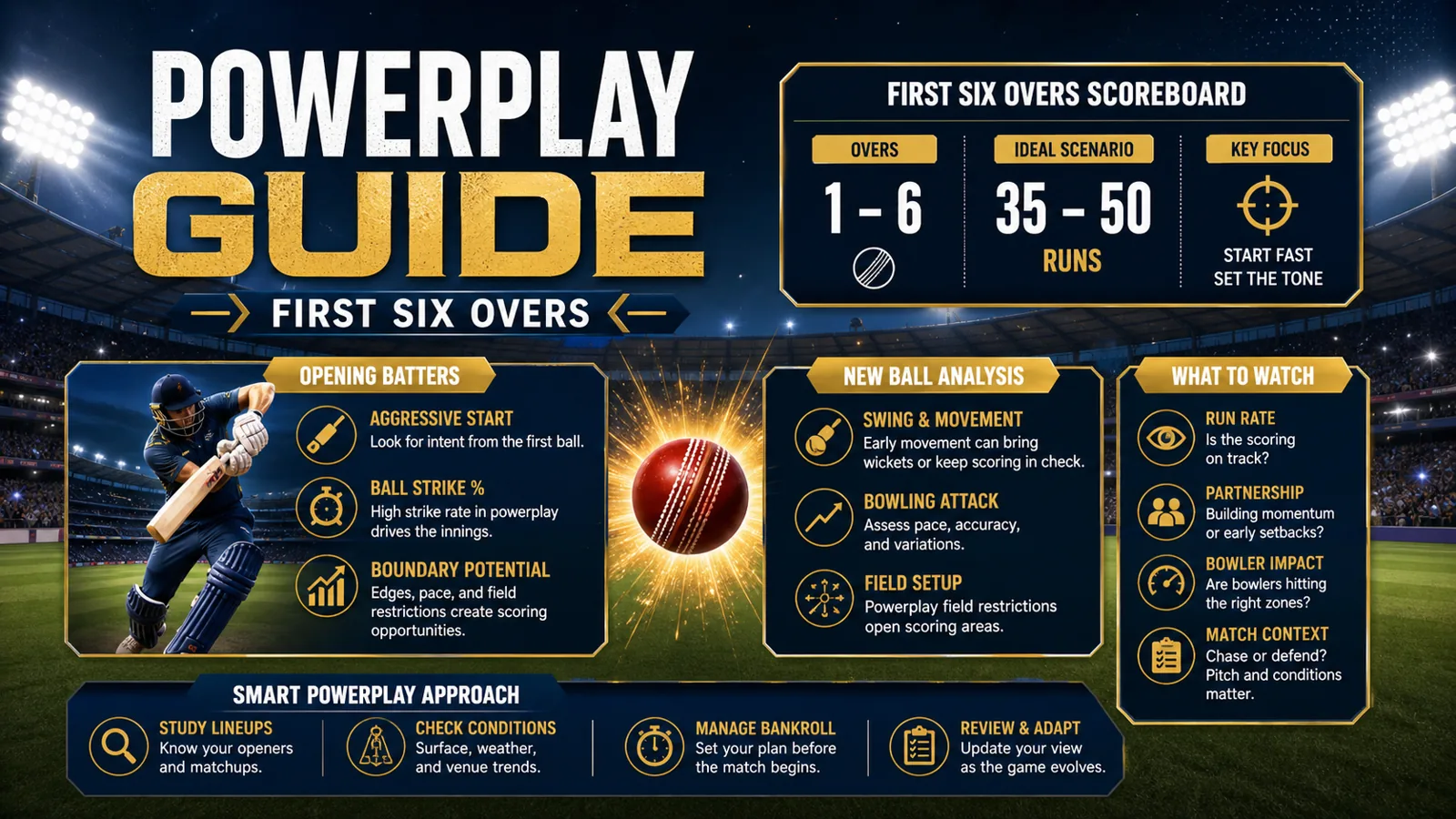
The powerplay is one of the easiest parts of a T20 match to feel strongly about and one of the quickest places to overreact. Six legal overs can look simple, but the market is shaped by roles, field restrictions, pitch pace, and wickets in hand.
For IPL readers in the Philippines, the useful approach is to treat the first six overs as a phase market. Study the openers, the new-ball plan, the venue, and the price before the toss and then test that note again once the innings order is clear.
Quick Answer
A powerplay market is best read through role clarity, not noise. Start with the likely openers, the new-ball bowlers, the venue pace, and whether the innings setup supports aggression or caution.
The first six overs can move quickly, but they still reward structure. If you cannot explain the role and pace story before the toss, the market is not ready.
What the First Six Overs Are Really Measuring
Powerplay markets look at a short phase, but that phase carries several moving parts. Openers may attack because of the field, or they may protect wickets on a tacky surface. The market should be read through those role choices, not through reputation alone.
| Powerplay Factor | Why It Matters | Reader Note |
|---|---|---|
| Opening pair | They decide early tempo and risk. | Check whether both openers are natural attackers. |
| New-ball bowlers | Swing, seam, and discipline shape early pressure. | One accurate seamer can slow the whole phase. |
| Venue pace | Some grounds reward clean early hitting. | Boundary size and surface pace change the read. |
| Wickets in hand | An attacking start still needs batting protection. | A quick wicket can change the phase plan immediately. |
Before the Toss
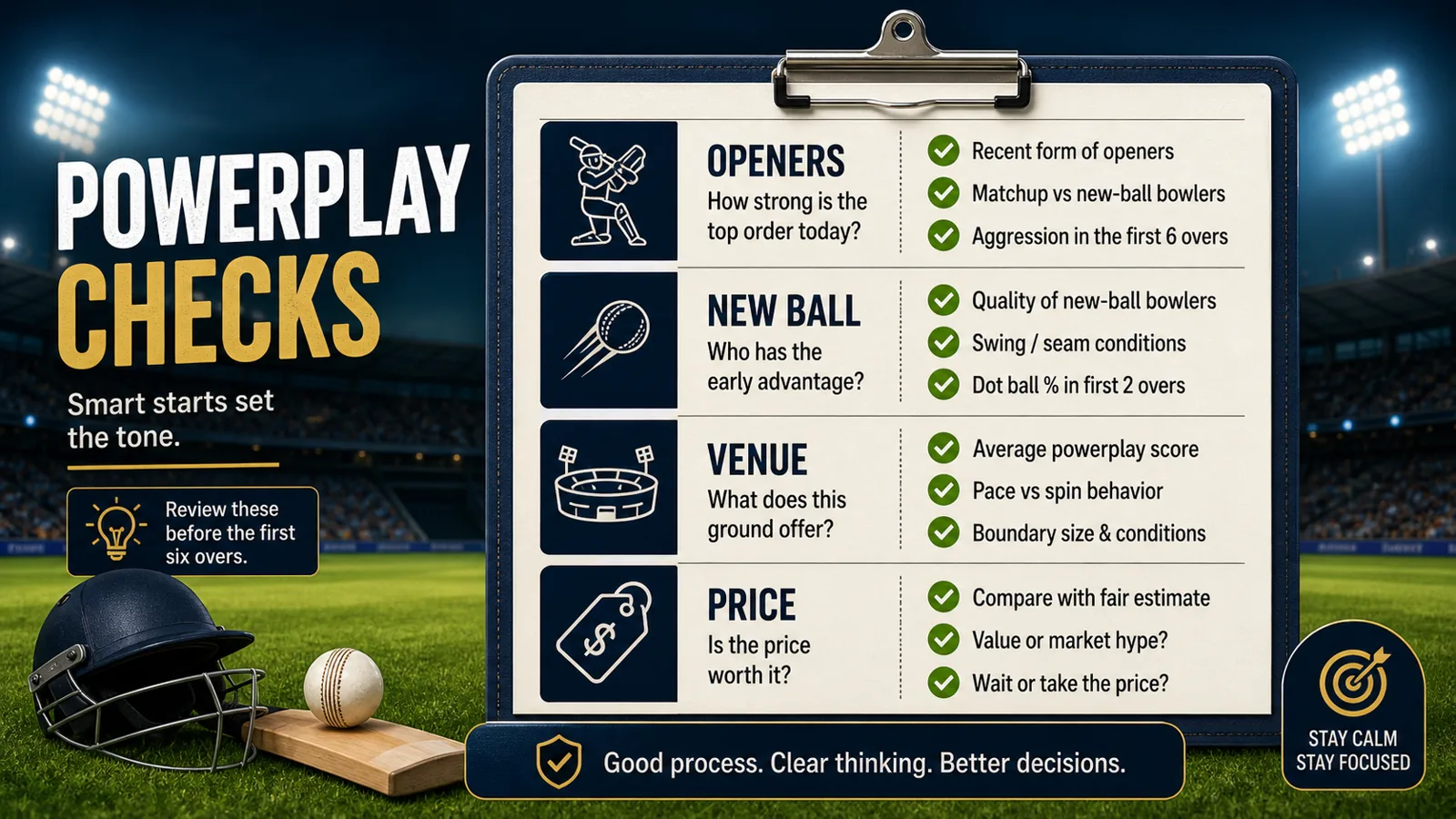
Before the toss, build a short note around likely openers, probable bowlers with the new ball, and the venue’s early-over pace. This is the part most readers skip, but it protects you from reacting only to the first price flash.
If batting roles are still unclear, downgrade the market. A powerplay idea without role clarity is usually just a guess wearing a market label.
Powerplay Match-Day Worksheet
Use this worksheet before committing to a powerplay angle.
| Check | Question | Decision Rule |
|---|---|---|
| Openers | Are the likely openers stable and suited to this phase? | Reduce confidence if the pair changed late. |
| New ball | Will the bowling side use control or attack first? | A control-heavy new-ball plan can slow the phase. |
| Toss | Does innings order change the early-over pressure? | Recheck if the toss shifts expected approach. |
| Venue | Does this ground reward quick starts or patience? | Do not assume all flat-looking grounds behave the same. |
| Price | Did the market already react to the obvious powerplay story? | Pass if the number no longer rewards the risk. |
After the Toss
The toss matters because innings order can change early risk. A team chasing may start differently from a team setting the innings, especially when dew or scoreboard pressure is expected later.
Do not let the toss replace the rest of the note. It should confirm or weaken the phase read, not become the whole case.
Live Powerplay Reading
A live powerplay market can move after one attacking over, but the better question is whether the tempo is supported by wickets in hand and repeatable shot quality.
If the move came from one over and the role story has not changed, be careful about chasing. A short phase can punish rushed entries faster than it rewards them.
Post-Match Review
Review whether the powerplay angle was driven by openers, new-ball quality, venue pace, or early wickets. That tells you which part of the phase note actually mattered.
The goal is not to predict every fast start. It is to understand which six-over stories are real enough to study next time.
Source and Update Note
This July 2026 refresh keeps the article focused on IPL powerplay betting guide, match-day process, and risk-aware decision making for IPL readers.
Readers should still verify current team news, line movement, match conditions, and the house rules shown on their chosen platform before placing any bet.
FAQ
What matters most in an IPL powerplay market?
The opening pair, new-ball bowling plan, venue pace, and how the innings is likely to start after the toss.
Does the toss matter for first-six-over betting?
It can matter because innings order changes pressure and approach, but it should confirm the phase note rather than replace it.
Should I chase a live powerplay move after one big over?
Usually not. Ask whether the scoring pace is supported by wickets in hand and a repeatable role story before reacting.
When should I skip a powerplay market?
Skip it when batting roles are unclear, the new-ball plan is hard to judge, or the price already moved beyond your comfort range.
Are popular teams easier to read in the powerplay?
No. Team popularity can create noise. The first six overs should still be studied through roles, pitch pace, and price discipline.