
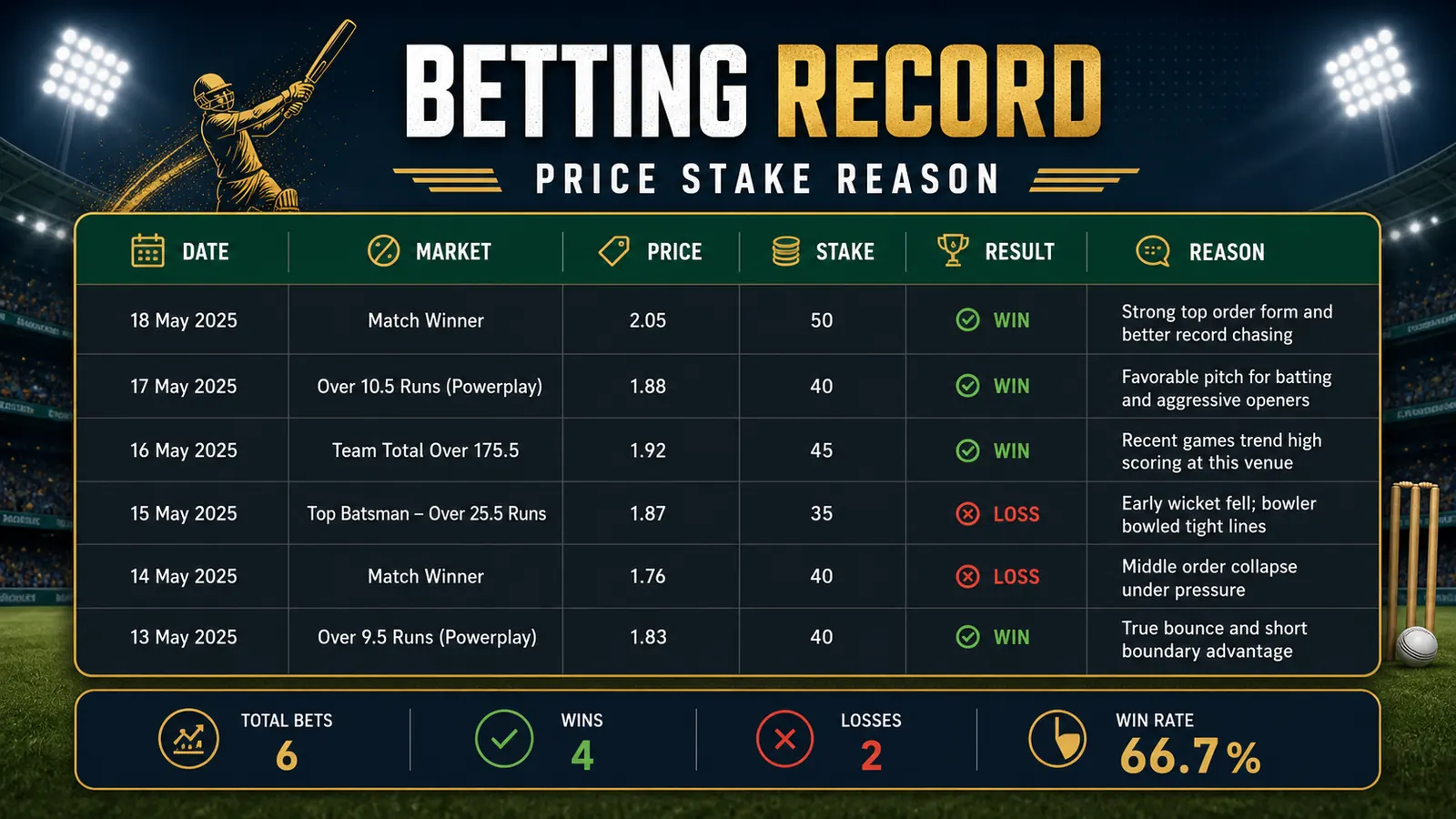
A record is useful when it explains the decision that was made, not just whether the result was positive or negative. Memory tends to keep the exciting matches and forget the ordinary mistakes.
A simple log can include the market, price, stake, source of the idea, and the reason for the decision. The purpose is review: identify what was known at the time and what was only assumed.
Editorial note: Reviewed by IPL Betting Editorial Team. Last updated: August 2026. Evidence method: compare published competition rules, current match information, and the exact market terms shown by your chosen platform. Match information, team news, weather, prices, and market terms can change, so keep every decision within a planned limit.
Record the Information Set
Start with the timestamp, match, market, line, and price. Add the information used at that moment, such as the confirmed XI, venue note, toss, or weather update.
This makes later review fairer. A decision should be judged against the information available then, not against a result that became obvious only after the match ended.
| Field | What to write | Why it helps |
|---|---|---|
| Market | Exact label and line | Avoids mixing similar markets |
| Price | Displayed number and time | Shows what was actually seen |
| Reason | One or two evidence points | Makes the decision testable |
| Stake | Planned amount or unit | Keeps size visible during review |
Separate Process From Result
A sound process can lead to an unwanted result, and a weak process can occasionally look successful. Keep those ideas separate so one match does not rewrite the whole record.
After the match, note whether the key reason was confirmed, changed, or never valid. That is more useful than simply writing “won” or “lost.”
| Review question | Useful answer | Weak answer |
|---|---|---|
| Was the input confirmed? | Yes, at 18:10 local time | It felt right |
| Did the role match? | Player bowled in the expected phase | The name looked strong |
| Did the plan change? | Price moved after toss | The market was unlucky |
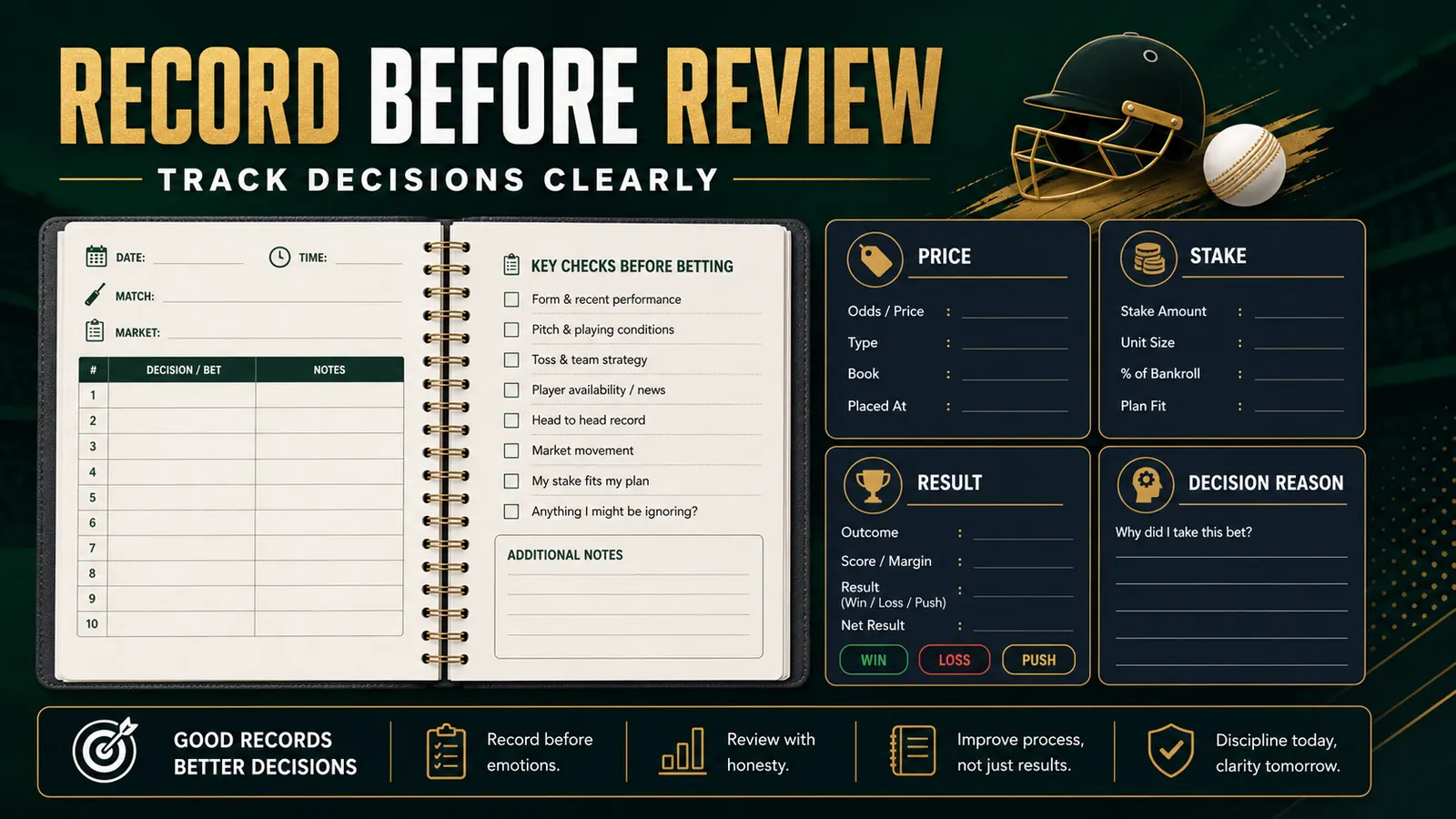
Use a Consistent Unit
A unit-based record makes different market types easier to compare without hiding the size of the decision. Set the unit before the match and do not change it because one event feels important.
The record should also include a stop rule. If the planned daily or weekly limit is reached, the log should show that the next decision was not taken.
Review in Small Batches
Review ten or twenty entries at a time instead of making a broad judgment after one match. Look for repeated issues: late entry, unclear market rules, missing lineup checks, or stakes that grew with emotion.
The strongest record is not the longest one. It is the one that makes the decision easy to understand without relying on a story created after the result.
FAQ
What should an IPL betting record include?
At minimum, record the match, market, line, price, time, planned stake, reason, and result. Add the evidence used for the decision.
Should results decide whether a process was good?
No. Review whether the information and reasoning were clear at the time, then consider the result separately.
Why record the price timestamp?
Prices change. The timestamp shows which number and market state were actually part of the decision.
How often should a record be reviewed?
Small batches such as ten to twenty entries are easier to review without overreacting to one unusual match.
Source and update note: This evergreen guide should be checked against current official match information, published competition rules, and the exact market terms shown by your chosen platform before you act.
Related Reading
- IPL Betting Prediction Checklist ↗
- IPL Betting Guide for Filipino Fans ↗
- IPL Odds Movement Guide ↗
- IPL Betting Tips: Practical Checks ↗
Take a pause when a material input is unconfirmed or a market rule is unclear. Clear information and a planned limit are more important than forcing a decision.