
Updated for July 2026: Prepared for readers in the Philippines by IPL Betting Editorial Team. Match-day lineups, injuries, venue conditions, prices, wallet rules, and platform limits can change quickly, so confirm current details before you act.
This article is written as a decision guide, not a promise of results. If the reason for the bet becomes weak after lineups, price checks, or account limits are reviewed, skipping the market is still a valid choice.
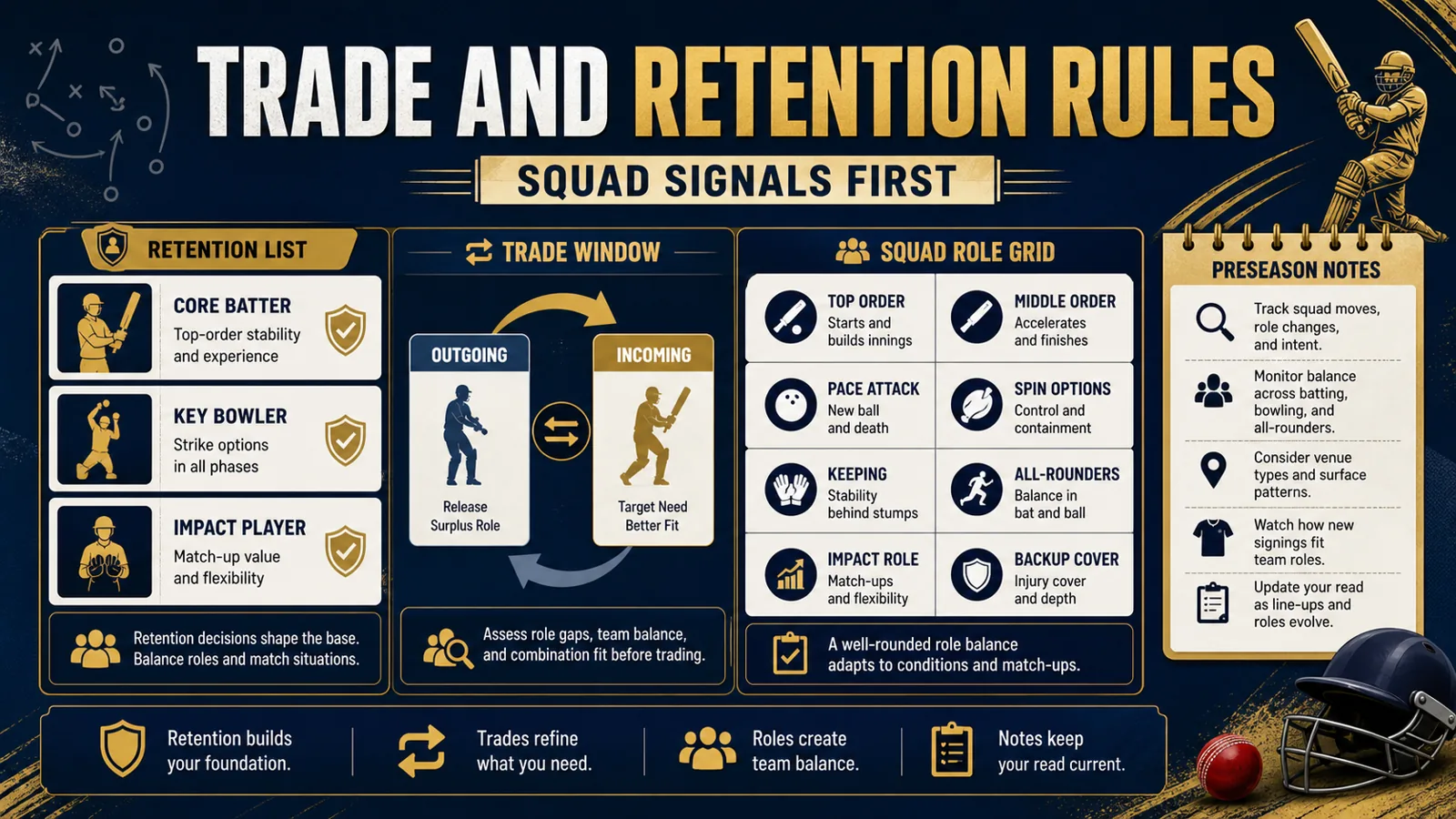
Trade and retention rules sound administrative until a reader notices how quickly they reshape the story around a team. A retained core can stabilize expectations before the season, while one aggressive move can make a squad look deeper, thinner, or simply noisier than it really is.
This page keeps the focus practical. Instead of treating every roster move like a finished verdict, it shows readers how to judge which rule-driven changes actually matter for later odds, matchup notes, and team pages.
Quick Answer
IPL trade and retention rules matter because they define which part of a squad stays stable, which roles must be rebuilt, and how much preseason uncertainty remains before the auction or early fixtures begin.
For readers, the real value is not memorizing every technical clause. It is learning how those rules change team balance, role clarity, and the speed at which the market reacts to roster headlines.
What Retention Really Tells You About a Team
Retention is not only about keeping famous names. It tells you which roles a franchise trusts enough to protect before wider squad movement begins. That can reveal whether a side wants continuity in batting shape, death bowling, spin control, or leadership tone.
A strong retained core usually makes preseason reading cleaner because the reader can anchor team identity around known roles. A thin retained list does not automatically mean trouble, but it does mean more later work is needed before broad judgments become useful.
| Retention Signal | What It Usually Suggests | Better Reader Response |
|---|---|---|
| Core batters retained | The franchise wants run-creation stability. | Check whether support roles still look complete before calling the top order settled. |
| Bowling spine retained | The team values phase control more than highlight names. | Review powerplay and death roles before assuming a full defensive edge. |
| Leadership group retained | Continuity in style and game management remains intact. | Use this as context, not as a shortcut for future results. |
| Few major retentions | The team may be keeping flexibility for later moves. | Wait for squad-building follow-through before reacting strongly. |
How Trades Change the Story Faster Than the Reality
Trade news travels quickly because it feels concrete. A player has moved, a role looks upgraded, and the conversation shifts immediately. But the real effect often depends on role fit, venue fit, lineup order, and whether the move solves a structural weakness or only adds a familiar name.
That is why trade headlines deserve a second layer of reading. Ask whether the move fixes an innings phase, adds matchup flexibility, or only creates the appearance of progress. In preseason coverage, surface-level excitement is common; balanced role analysis is rarer and more useful.
A Better Way to Read Rule-Driven Squad News
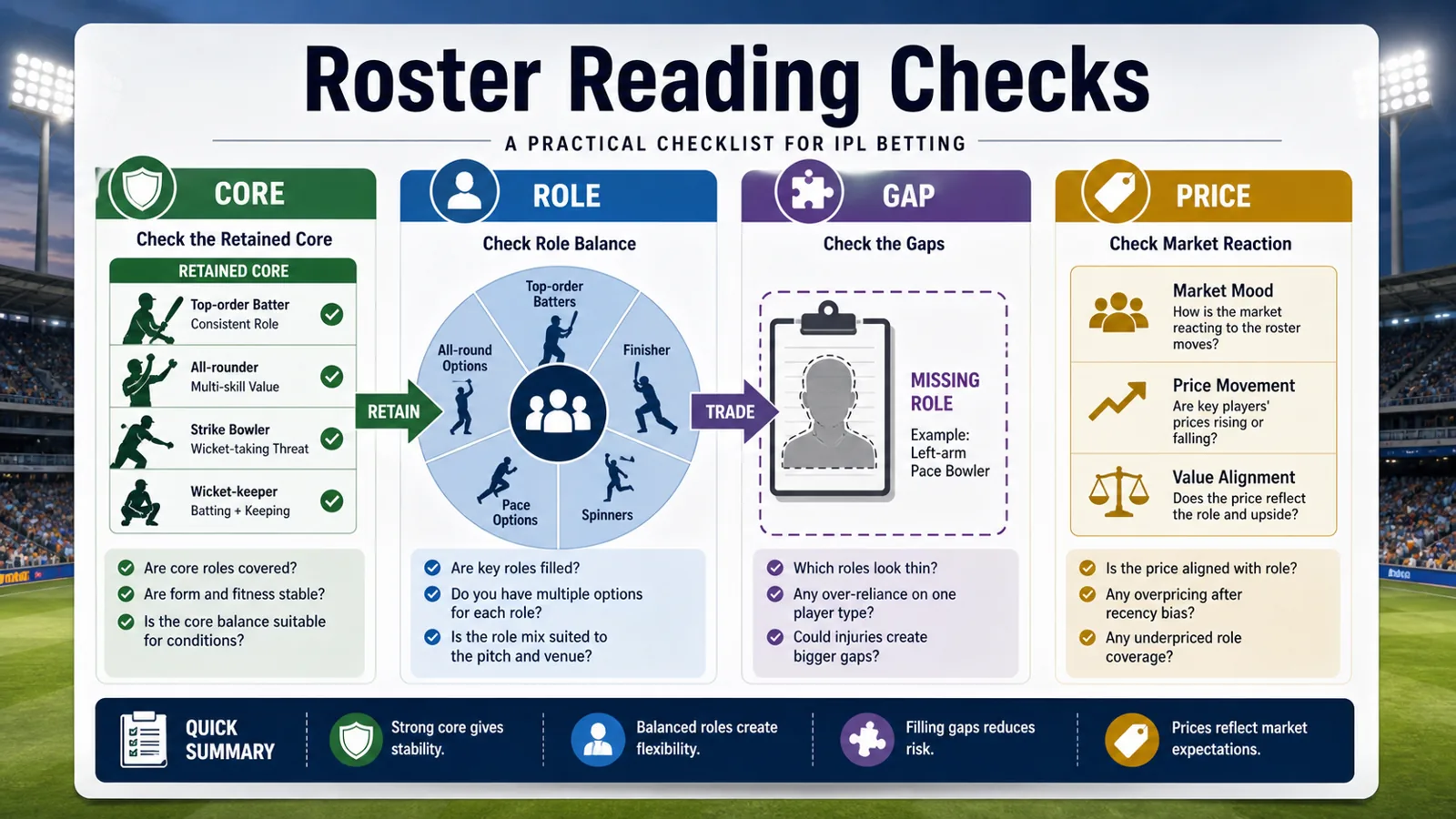
A useful roster note is built around what changed in the team picture, not around how loud the headline sounded. Readers do better when they write one line for the retained core, one line for the missing role, and one line for what still must be solved later.
That short method prevents offseason reading from turning into fandom-driven certainty. It also creates cleaner bridges into team guides, odds-movement pages, and later venue or matchup analysis.
| Reader Question | What To Check First | What To Avoid |
|---|---|---|
| Did the team keep its real spine? | Identify retained players by phase and role. | Do not rely on star appeal alone. |
| Does the trade fill a weakness? | Match the incoming player to a specific problem. | Do not treat any big name as a complete solution. |
| Is the market reaction too fast? | Look for price movement before role evidence is complete. | Do not confuse excitement with clarity. |
| What still needs building? | List the missing batting, bowling, or balance pieces. | Do not act as if the squad is finished too early. |
Why These Rules Matter to Betting Content
Rule-driven roster change matters because it shapes later reading habits. Team pages become stronger when the retained core is clearly defined. Odds pages become sharper when the reader understands which move was structural and which one was mostly narrative.
In other words, this page helps later match analysis stay honest. It keeps the reader from treating offseason movement like a final answer before lineups, form, and conditions exist.
What To Do Next After Reading This Page
The best next step is not another rumor thread. It is a team guide, a squad-balance explainer, or an odds-movement page that shows how preseason headlines turn into practical evaluation.
If a roster move still feels important after that second read, it probably deserves a note. If it fades once roles are mapped properly, the market may have done the overreacting for you.
Source and Update Note
This July 2026 refresh keeps the article focused on IPL 2026 trade and retention rules, practical match-day process, and risk-aware decision making for IPL readers.
Readers should still verify current team news, venue updates, line movement, wallet limits, and platform rules before placing any bet or transfer request.
FAQ
Why do IPL retention rules matter to readers?
Because they show which roles a team trusts enough to keep, which helps readers understand early squad identity before the season settles.
Does one major trade automatically improve a team?
No. A trade only matters fully when it fits the role, balance, and phase needs of the squad.
Why do roster headlines move opinion so quickly?
They feel concrete, but the real effect often depends on context that is not visible in the first wave of reactions.
What should I read after this guide?
Move next to team pages, squad-balance articles, or odds-movement guides that translate roster news into practical evaluation.
Can retention and trade rules help me on match day?
Indirectly, yes. They improve preseason understanding, which later makes team, role, and price reading more disciplined.