
Updated for July 2026: Prepared for readers in the Philippines by IPL Betting Editorial Team. Match-day lineups, injuries, venue conditions, prices, and platform rules can change quickly, so confirm current details before you act.
This article is written as a decision guide, not a promise of results. If the reason for the bet is unclear after lineups and price checks, skipping the market is still a valid choice.
Cricket can feel dense at first because one short over, one wicket, or one change of field setup can shift the tone of the whole innings.
The easiest way to learn IPL rules is not to memorize a long glossary. It is to understand which match moments change the scoreboard and why those moments keep showing up in pre-match and live analysis.
Quick Answer
Start with five ideas: a team bats for 20 overs, a wicket ends one batter’s turn, run rate shows scoring speed, the powerplay changes fielding restrictions, and the toss can shape how a captain wants to use the conditions.
Once those five ideas feel clear, the rest of an IPL match becomes much easier to follow.
How an IPL Match Works
A T20 match moves quickly, so beginners benefit from reading the innings in phases rather than trying to catch every term all at once.
| Term | Simple Meaning | Why It Matters |
|---|---|---|
| Over | A set of six legal balls from one bowler. | Twenty overs is the full batting limit, so every over carries more weight than in longer formats. |
| Wicket | A dismissal that ends one batter’s innings. | Wickets in hand often matter more than a short burst of runs. |
| Run rate | How fast a team is scoring on average per over. | It helps readers judge whether the innings is healthy or under pressure. |
| Powerplay | The first six overs with stricter fielding rules. | Batters often attack more early, which changes totals and wicket risk. |
| Death overs | The final overs of the innings, usually 16 to 20. | Late overs can swing totals very quickly in either direction. |
Rules That Change Match-Day Reading
Some cricket rules are basic. Others directly change how a fast IPL game should be read. These are the ones worth learning first.
| Rule or Situation | What It Changes | Reader Note |
|---|---|---|
| Powerplay fielding limits | More space pressure on bowlers and more attacking intent from batters. | A quick start can be meaningful, but wickets lost inside the powerplay still matter. |
| Wickets in hand | A team can attack harder later if key batters are still available. | A strong run rate with few wickets left can still be fragile. |
| Required run rate in a chase | Shows how fast the batting side must score from that point. | The target may look close, but a rising required rate can add pressure quickly. |
| Extras | Wides and no-balls give away free runs and sometimes extra deliveries. | A short over with poor discipline can change momentum fast. |
| Dew or wet outfield | Can make gripping the ball harder and chasing more comfortable. | Treat conditions as part of the scoreboard story, not background noise. |
Why Toss Matters But Does Not Decide Everything
The toss matters because captains may prefer chasing or setting a target based on venue behavior, weather, and how the pitch changes at night.
But toss should be read as one input, not the full answer. A weak lineup or poor fit for the venue can still matter more than batting first or second.
A Simple Scoreboard Checklist
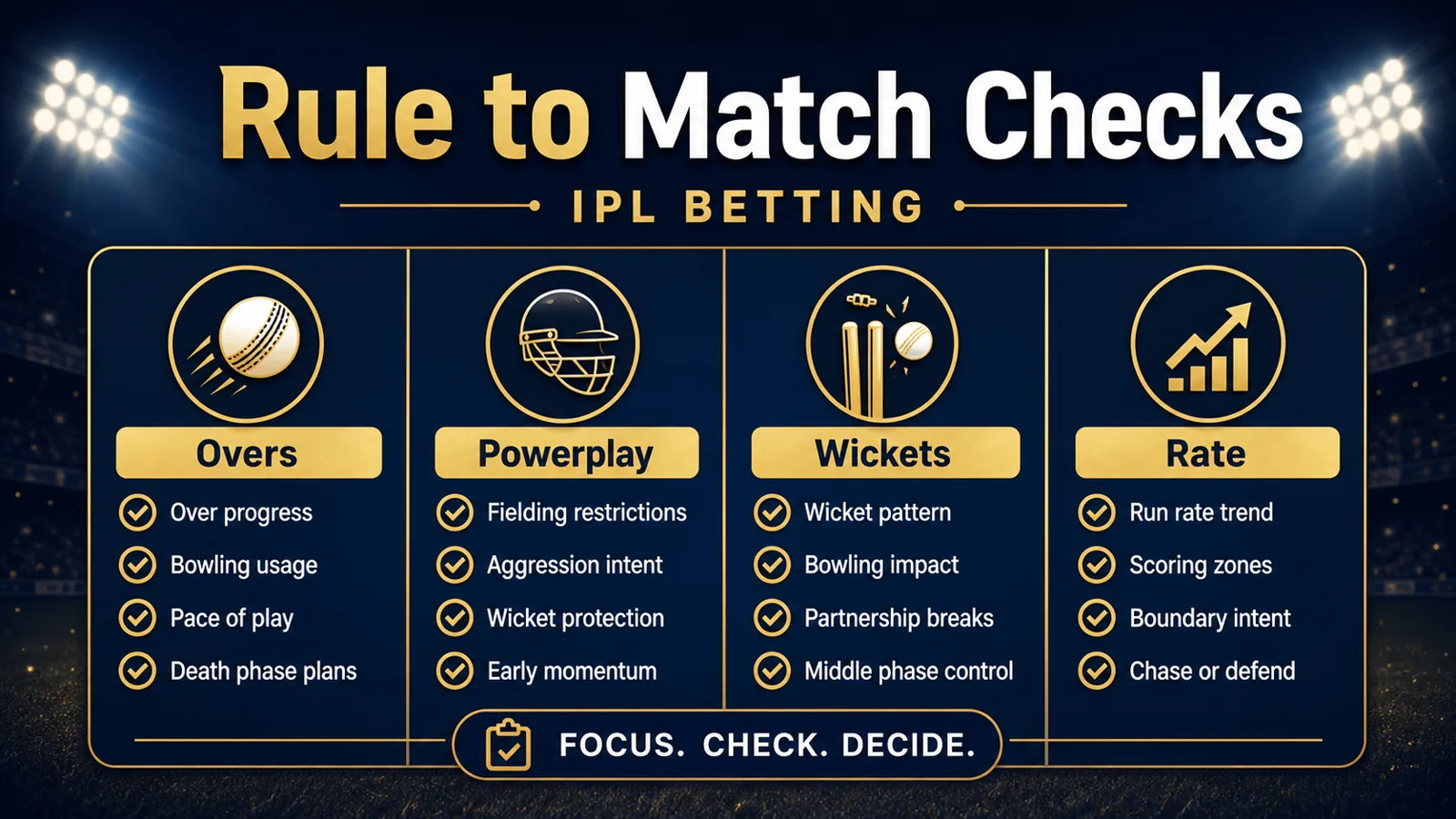
When the scoreboard starts moving fast, focus on four things: overs left, wickets left, current run rate, and whether the match is still in the powerplay or already in the late phase.
Those four checks are enough to keep most live situations understandable for a beginner.
When It Is Smarter to Watch Without Betting
If too many terms still feel unclear, use the match as a learning session. Watch how the innings changes after the powerplay, how wickets affect risk, and how captains use bowlers at the death.
That kind of viewing habit usually builds better decisions later than rushing into a market before the rules feel natural.
Source and Update Note
This July 2026 refresh keeps the article focused on cricket rules made simple for IPL fans, match-day process, and risk-aware decision making for IPL readers.
Readers should still verify current team news, line movement, match conditions, and the house rules shown on their chosen platform before placing any bet.
FAQ
What is the easiest cricket rule for a beginner to learn first?
Start with overs, wickets, and run rate. Once those are clear, the scoreboard becomes much easier to follow.
Why is the powerplay important in IPL matches?
Because fielding limits often encourage faster scoring and can create early wicket pressure at the same time.
Does winning the toss guarantee an advantage?
No. Toss matters, but lineup quality, venue behavior, and how the innings unfolds still matter just as much.
What does wickets in hand mean?
It refers to how many batters are still available. Teams with wickets left can often attack more confidently later in the innings.
Should a beginner use every cricket term in a betting decision?
No. Learn the core terms first, then focus on the ones that actually change the match picture, such as wickets, overs, powerplay, and required run rate.