
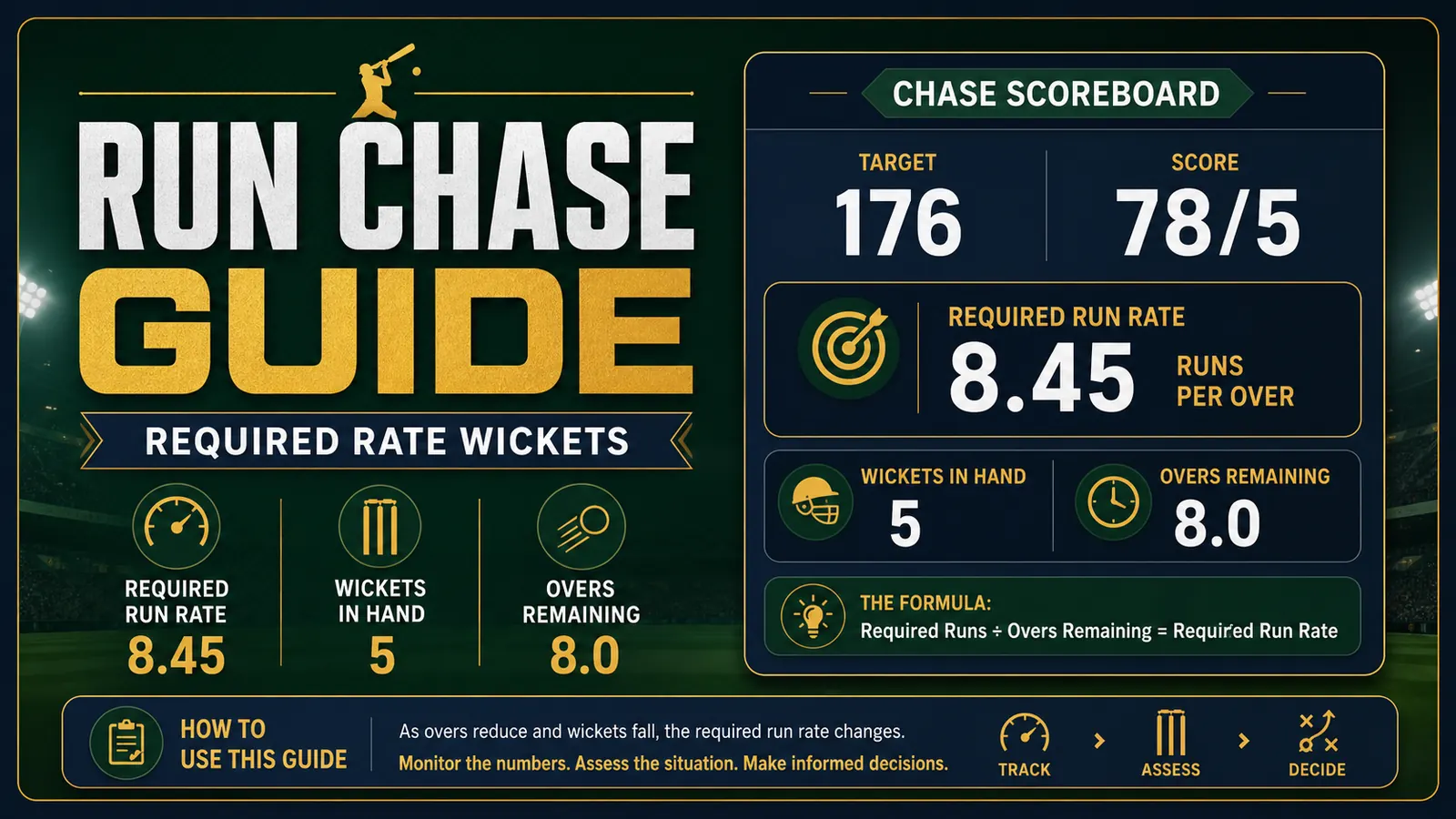
A chase is more than a current score and a required rate. The same rate can feel manageable with wickets in hand or fragile when a team has lost its main batting options.
This guide treats chase pressure as a moving picture. Check the rate, resources, field, matchup, and overs together, then allow for the fact that a T20 innings can change in one over.
Editorial note: Reviewed by IPL Betting Editorial Team. Last updated: August 2026. Evidence method: compare published competition rules, current match information, and the exact market terms shown by your chosen platform. Match information, team news, weather, prices, and market terms can change, so keep every decision within a planned limit.
Read the Chase Equation
Required rate is the runs still needed divided by the overs remaining. It is a useful description of the task, but it does not say how many wickets, boundaries, or set batters remain.
Write the target, current score, wickets, and overs remaining in one place. If any of those figures are stale, the required rate is stale too.
| Display | Question | Why it matters |
|---|---|---|
| Target | What total must be reached? | Defines the task |
| Score | How many runs are already made? | Shows progress |
| Wickets | Which batting resources remain? | Changes risk and options |
| Overs | How much time is left? | Sets the rate pressure |
Wickets in Hand Change the Meaning
A chase with a stable pair can use singles and wait for a favorable over. A chase with the lower order exposed may need riskier shots even if the required rate has not moved dramatically.
Do not use a generic “chasing advantage” line without looking at the current pair and the bowlers available. Resources are match-specific.
| Chase state | Possible reading | Caution |
|---|---|---|
| Set pair | More options to rotate strike | A wicket can change the plan |
| New batter in | Pressure may rise quickly | Do not use the old rate alone |
| Tail exposed | Fewer batting options remain | Role and order matter |
| Late surge | Rate may fall after boundaries | Check the price already moved |
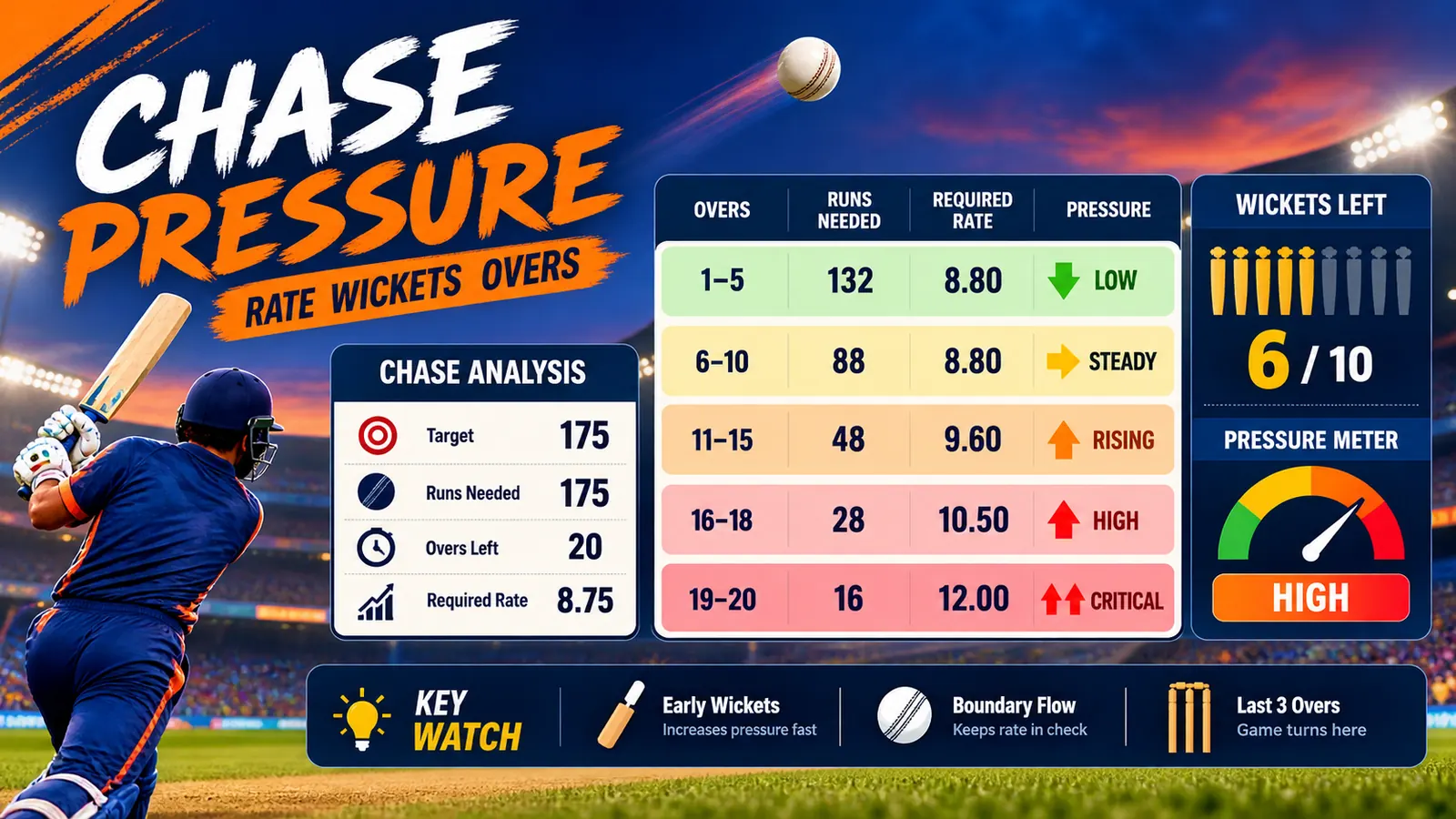
Watch the Next Matchup
The next over can matter more than the average over. A spinner facing a settled pair, a fast bowler with a new batter, or a field change can alter the options available to the chase.
Use matchup notes to explain pressure, not to claim a result. If the bowling plan is unclear, wait for the next confirmed phase rather than guessing at the turn.
Know When the Rate Is Not Enough
Two chases can show the same required rate while having very different conditions. Boundary size, dew, pitch pace, wickets, and batter quality all shape how realistic the task feels.
A sensible checklist ends with a question: what would make this chase view wrong? If there is no clear answer, the reading is probably too confident.
FAQ
What is required run rate?
It is the runs still needed divided by the overs remaining. It describes the task but does not include every resource or condition.
Why do wickets in hand matter?
They show how much batting depth remains and whether the team can choose lower-risk scoring options.
Is a lower required rate always better?
It is easier on the scoreboard, but pitch, bowlers, wickets, and current batters still matter.
What should be checked during a live chase?
Check target, score, wickets, overs, current pair, next bowler, and whether the market has already changed.
Source and update note: This evergreen guide should be checked against current official match information, published competition rules, and the exact market terms shown by your chosen platform before you act.
Related Reading
- IPL First Innings Betting Guide ↗
- IPL Toss Betting Guide ↗
- IPL Death Overs Betting Guide ↗
- IPL Betting Prediction Checklist ↗
Take a pause when a material input is unconfirmed or a market rule is unclear. Clear information and a planned limit are more important than forcing a decision.