
Father-son stories have always been part of NBA history because they connect family memory with the pressure of professional basketball. The story is familiar, but the right way to read it is careful: a surname can open attention, not guarantee a role.
For Filipino NBA fans, these stories are most useful when they explain development. Look at the player journey, team fit, minutes, health, and coaching trust before comparing one generation with another.
Updated: May 21, 2026. Editorial note: Family legacy is basketball context, not a prediction tool. Current betting decisions should still be based on current information and clear market rules.
Why NBA Father-Son Duos Matter
A family connection can bring attention, but the basketball still has to stand on its own.
| Legacy factor | What it can explain | What it cannot prove |
|---|---|---|
| Early exposure | Access to coaching, gyms, habits, and professional routines. | It does not prove that a player is ready for NBA minutes. |
| Basketball IQ | Understanding spacing, preparation, and how the league works. | It does not replace athletic fit or skill development. |
| Public pressure | More attention from media, fans, and opponents. | It does not make a role easier to earn. |
| Team context | How a franchise plans development and minutes. | It does not guarantee a fixed rotation spot. |
How to Read Legacy Without Overreacting
The best father-son discussions separate memory from evaluation. A father can shape a story, but the son still needs a role, a skill package, and a path to minutes.
Fans should also respect era differences. Rules, pace, spacing, player development, and medical care change over time, so direct comparisons can become unfair when they ignore context.
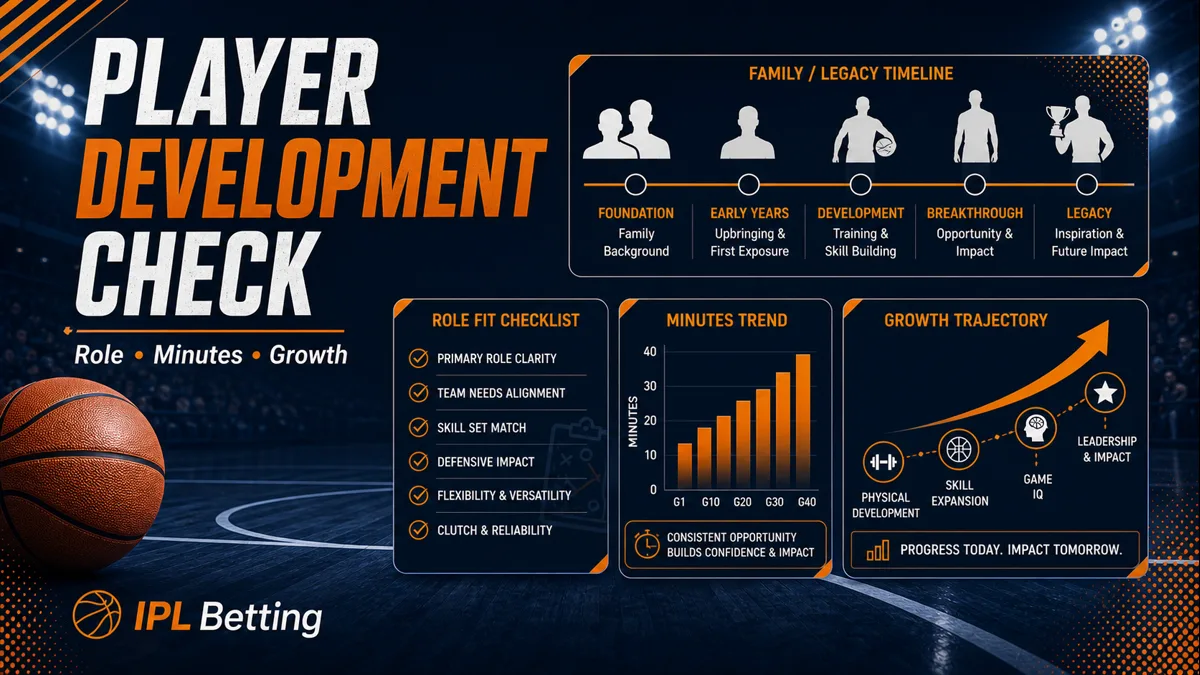
Draft and Development Checks for Fans
A clean player read starts with role and opportunity, not only the family name.
| Development check | What to review | Why it matters |
|---|---|---|
| Role clarity | Primary position, defensive assignment, and offensive usage. | A clear role helps a young player build repeatable habits. |
| Minutes trend | Stable rotation minutes, short stints, or development-league time. | Growth is hard to judge when opportunities are irregular. |
| Skill fit | Shooting, decision-making, defense, and physical development. | Family history cannot replace the skills a team needs. |
| Market caution | Official availability, roster role, and market settlement rules. | Legacy stories should not carry a betting decision by themselves. |
Common Mistakes to Avoid
- Assuming a famous surname equals immediate NBA impact.
- Comparing generations without considering era and role.
- Ignoring minutes and team development plans.
- Using legacy stories as a shortcut for current betting decisions.
FAQ
Why do NBA father-son duos get so much attention?
They connect league history, family pressure, player development, and fan memory in a way that is easy to follow across generations.
Does having an NBA father make a player ready for the league?
No. It can help with exposure and preparation, but role, skill, health, minutes, and team fit still matter.
How should fans compare father and son careers?
Compare era, role, minutes, rules, pace, and team context before using raw numbers or highlights.
Should legacy stories influence NBA betting?
They can add background, but current betting choices should rely on current rosters, injury news, matchup data, and market rules.