
Updated for July 2026: Prepared for readers in the Philippines by IPL Betting Editorial Team. Match-day lineups, injuries, venue conditions, prices, and platform rules can change quickly, so confirm current details before you act.
This article is written as a decision guide, not a promise of results. If the reason for the bet is unclear after lineups and price checks, skipping the market is still a valid choice.
A player watchlist helps only when it tells the reader what to notice beyond the name. In the IPL, the same player can mean something very different depending on role, phase, venue, and the kind of match unfolding around them.
That is why this page focuses on what each type of player changes on match day, not just who is famous enough to make the list.
Quick Answer
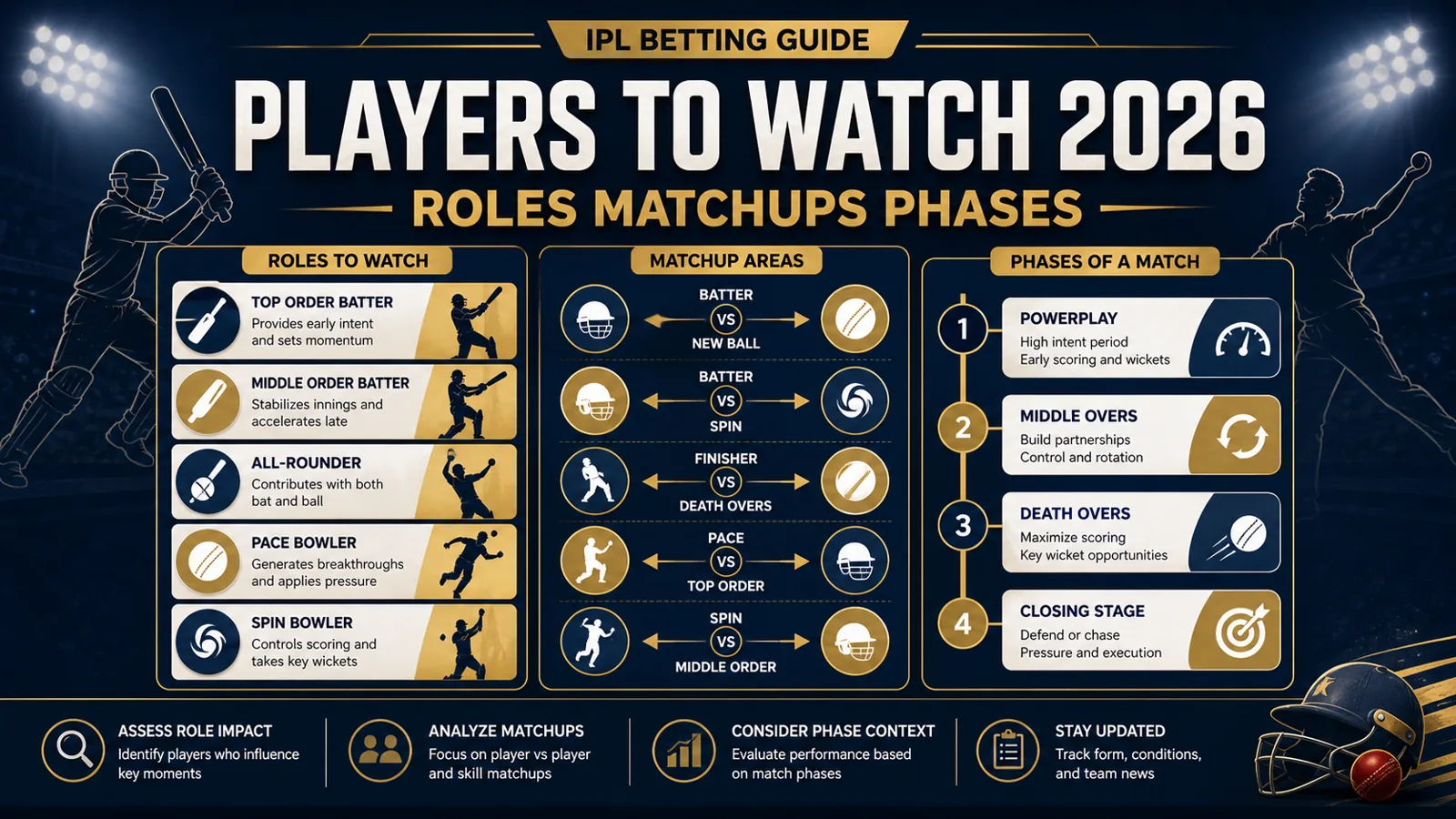
The best IPL players to watch are not just the biggest names. They are the players whose roles can reshape the innings: top-order setters, middle-overs stabilizers, late hitters, death bowlers, and flexible all-rounders.
A good watchlist helps the reader connect those roles to real match questions before the game starts.
Ten Player Types Worth Tracking
Use this list as a role map. The exact names may change during the season, but these are the player profiles that keep changing how matches feel.
| Player Type | What to Watch | Why It Matters |
|---|---|---|
| Powerplay opener | How aggressively the player attacks the first overs. | A fast start can change the run-rate picture before the middle overs even settle. |
| Top-order anchor | Whether the innings has a batter who can hold shape after an early wicket. | Anchors often decide whether a chase stays calm or becomes rushed. |
| Middle-overs accelerator | How a batter restarts the innings after a flat stretch. | This role often separates a stable total from a drifting one. |
| Late-innings finisher | Whether a side has real boundary power at the close. | Finishers change totals, live pressure, and death-over pacing. |
| Death-over bowler | Control under pressure and wicket-taking at the end. | Late overs often reshape both totals and chase confidence. |
| All-round stabilizer | A player who affects both batting balance and overs allocation. | This role gives teams flexibility when the original script breaks. |
| Spin matchup specialist | How a player handles the middle overs on slower surfaces. | Spin phases can slow scoring or flip momentum quietly. |
| Pace enforcer | A bowler who changes tempo through speed or hard lengths. | Useful when a batting side looks comfortable too early. |
| Fielding pressure player | Runs saved, catches taken, and urgency created. | Fielding can keep a team in the match when raw skill is not enough. |
| Impact role wildcard | A player whose role depends on game state and matchup. | This kind of player often matters more than pre-match headlines suggest. |
How to Turn a Watchlist Into Match Questions
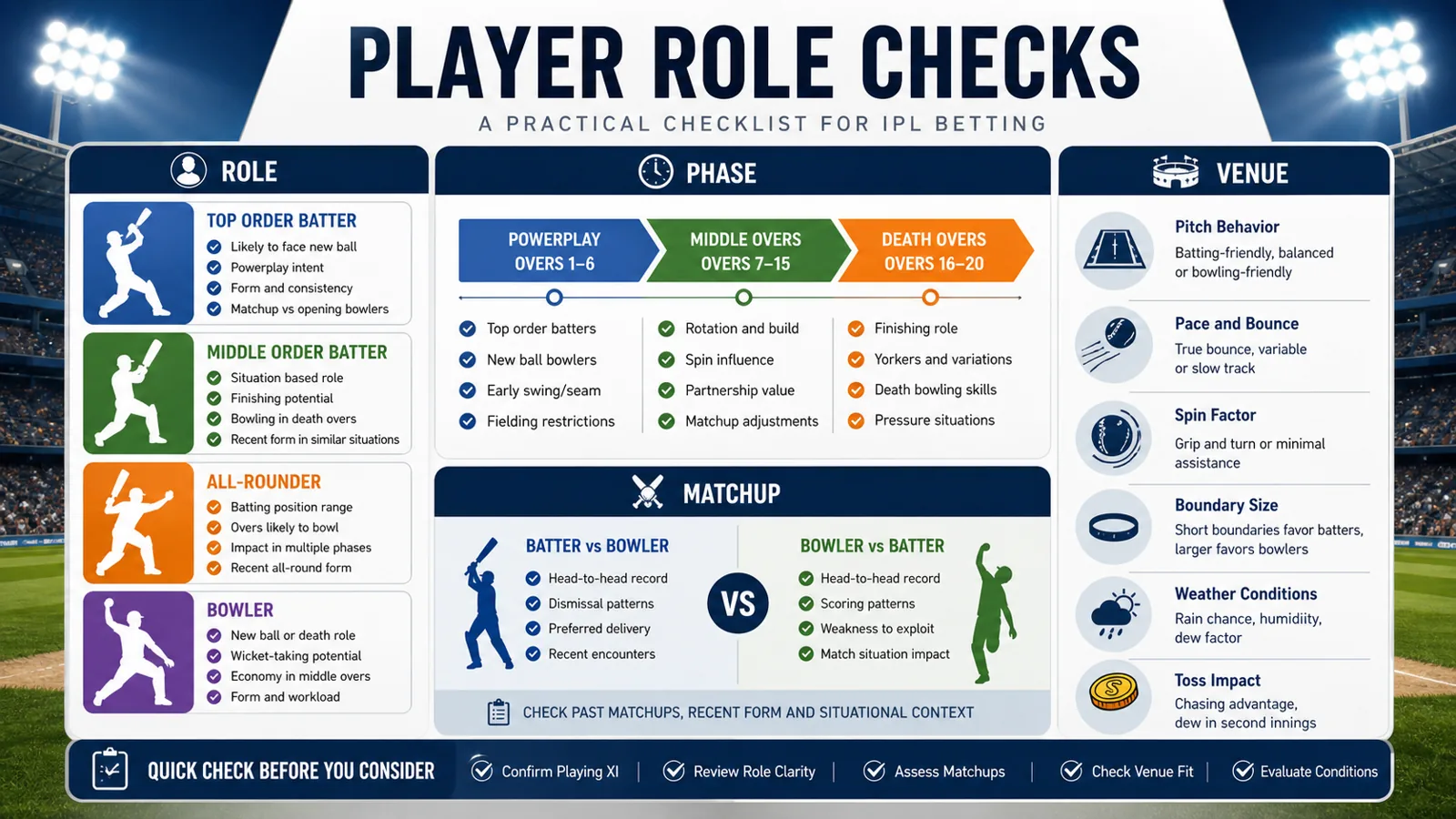
A player page becomes more useful when it leads to a question instead of a prediction. Ask whether the role is clear, whether the venue supports that role, and whether the opponent has an obvious answer.
If you cannot explain the role cleanly, the player note may still be entertainment, but it is not yet a strong match note.
Player Roles and the Pages They Connect To
This second table keeps the player page tied to the rest of the cluster instead of floating as a standalone list.
| Player Signal | Next Support Page | Why It Connects |
|---|---|---|
| Top-order role clarity | Teams guide | Team balance explains whether the player role is protected or exposed. |
| Prop-friendly player usage | Player prop guide | Role and likely involvement matter more than name value alone. |
| Surface-driven player value | Venue guide | Some player strengths matter more on certain grounds. |
| Trend versus matchup question | Stats guide | The right numbers help separate repeatable usage from one hot performance. |
| Opponent-specific pressure point | Head-to-head guide | Past matchup shape can help explain why one role matters more tonight. |
Avoiding Star-Name Bias
The easiest mistake on a player page is confusing fame with current role quality. A big name still needs the right batting position, bowling phase, and game script to matter the way the reader expects.
That is why player pages should always send the reader back to role, venue, and usage instead of leaving the name to do all the work.
A Better Post-Match Player Review
After the match, write whether the player changed the game through role clarity, timing, matchup fit, or simple form. That keeps the next watchlist note honest.
The goal is to remember what the role looked like in real conditions, not just what the highlight clip showed later.
Source and Update Note
This July 2026 refresh keeps the article focused on top 10 players to watch in IPL 2026, match-day process, and risk-aware decision making for IPL readers.
Readers should still verify current team news, line movement, match conditions, and the house rules shown on their chosen platform before placing any bet.
FAQ
Should I watch only the biggest star names?
No. The most useful players to track are often the ones whose current role changes the match shape, not only the most famous names.
What is the best first question to ask about a player?
Ask whether the role is clear. Batting position, phase usage, and likely involvement matter more than reputation alone.
How does a player watchlist help on match day?
It gives the reader better role questions before the match starts and cleaner review notes after it ends.
Why does venue matter on a player page?
Because the same player can look very different when the surface, scoring pace, or boundary setup changes.
What pages should I open after reading this one?
Usually the teams guide, player prop guide, stats guide, or venue guide depending on which role question is still open.