
Updated for July 2026: Prepared for readers in the Philippines by IPL Betting Editorial Team. Match-day lineups, injuries, venue conditions, prices, wallet rules, and platform limits can change quickly, so confirm current details before you act.
This article is written as a decision guide, not a promise of results. If the reason for the bet becomes weak after lineups, price checks, or account limits are reviewed, skipping the market is still a valid choice.
On match day, payment habits can quietly shape the whole session. When the wallet setup is unclear, limits are forgotten, or records are scattered, the reader ends up making financial decisions with the same urgency as live-market decisions. That is usually where discipline starts to slip.
This guide keeps the focus on process. It explains how GCash fits into an IPL betting routine in the Philippines, what to check before match time, and how a calmer wallet workflow supports better control across the full session.
Quick Answer
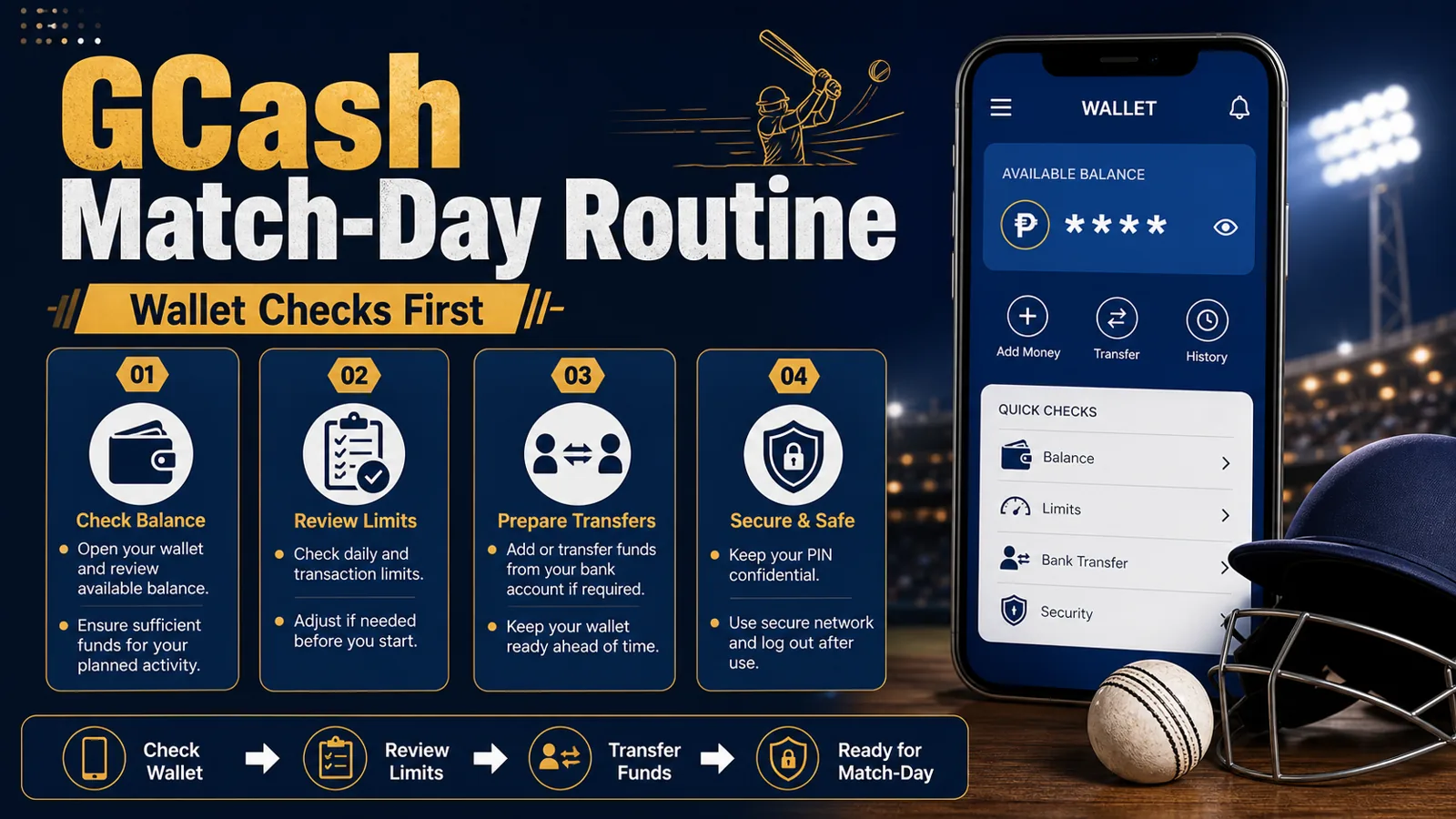
A useful GCash routine starts before the match. Verify wallet readiness, understand transfer timing, keep session funds separate from impulse top-ups, and record what moves in and out of the account.
The point is not speed for its own sake. The point is to make deposits, withdrawals, and balance checks boring enough that they do not distort the betting decisions around them.
What To Prepare Before Match Day
The best wallet routine begins early. Readers should know whether the account is ready, what identity or security steps may be required, and how long common transfer actions tend to take in their actual usage pattern.
That preparation matters because payment confusion often arrives at the same moment the market is moving. When the funding step becomes urgent, the match note usually gets weaker at exactly the wrong time.
| Preparation Check | Why It Matters | Better Habit |
|---|---|---|
| Wallet access ready | A delayed sign-in can create unnecessary pressure close to the match. | Check access well before the session starts. |
| Transfer plan in place | Knowing the amount and purpose reduces reactive funding. | Decide the session amount before the board becomes emotional. |
| Security and identity steps understood | Unexpected checks can interrupt the session. | Review requirements before a busy match night. |
| Records method ready | Untracked transfers blur bankroll discipline. | Keep a simple note of each movement. |
Why Payment Flow Is Part of Betting Discipline
Readers often treat deposits and withdrawals like separate admin tasks, but they shape behavior directly. A rushed top-up can turn a measured session into a reactive one. A missing record can hide how much pressure the night really created.
That is why payment flow belongs inside the same discipline framework as bankroll and psychology. The money route is part of the decision system, not a background detail.
A Cleaner Match-Day Wallet Routine
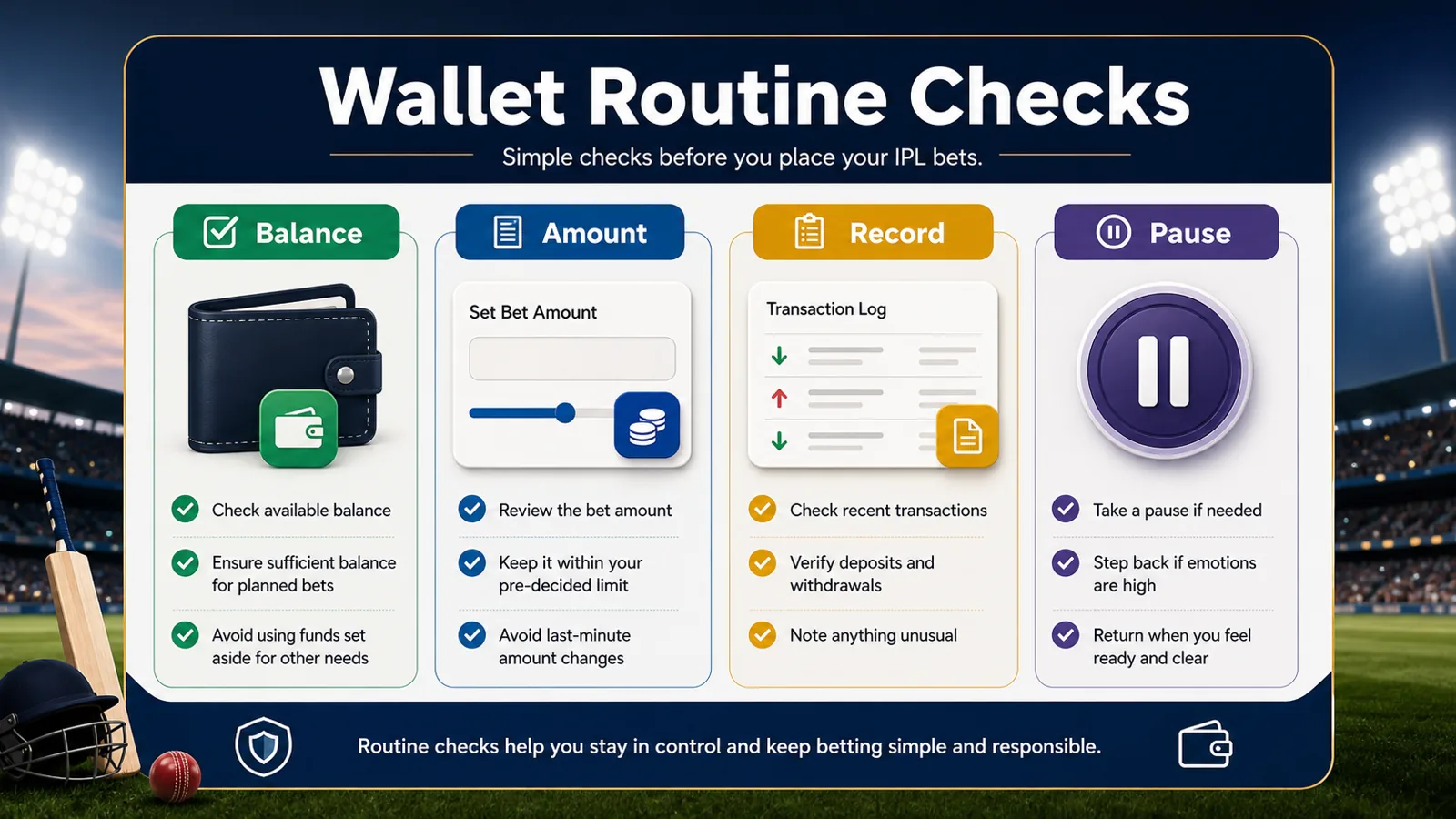
Keep the wallet routine short and repeatable: confirm balance, confirm session amount, confirm the reason for any movement, and record the result immediately. If a transfer is being considered only because the match feels urgent, pause the action and review the session instead.
This kind of structure makes the wallet useful without making it emotionally central. The reader stays in control because the payment step supports the plan instead of rescuing the impulse.
| Wallet Routine Step | What To Do | Why It Helps |
|---|---|---|
| Check balance calmly | Know the starting position before the session begins. | Avoids match-time guesswork. |
| Set the session amount | Choose the total wallet exposure in advance. | Prevents reactive top-ups. |
| Label each transfer | Write why the movement happened. | Creates accountability later. |
| Review after the session | Match transfers against the original plan. | Shows whether emotion affected the wallet side. |
Withdrawal and Record-Keeping Notes
Record-keeping is often the most ignored part of wallet usage, but it is what keeps the session understandable the next day. A simple log of deposit, withdrawal, time, and purpose is enough to show whether the routine stayed disciplined or drifted under pressure.
Readers do not need a complex finance spreadsheet. They need a clear trail that makes it hard to pretend a rushed transfer was part of the plan when it was actually a reaction.
When To Pause the Wallet Step Entirely
If a transfer is happening because the reader feels behind, irritated, or eager to repair the night, that is usually a sign to stop and reassess. Extra funding does not fix a weak match read. It often just gives emotion a larger budget.
A strong wallet guide should normalize that pause. The best transfer is sometimes the one that never happens because the session no longer meets the standard set before the match.
Source and Update Note
This July 2026 refresh keeps the article focused on GCash IPL betting guide Philippines, practical match-day process, and risk-aware decision making for IPL readers.
Readers should still verify current team news, venue updates, line movement, wallet limits, and platform rules before placing any bet or transfer request.
FAQ
What should I check before using GCash on match day?
Check wallet access, planned session amount, likely transfer timing, and how you will record each movement.
Why is payment flow part of betting discipline?
Because rushed deposits and poor records can weaken decision quality just as much as a poor match read can.
How can I reduce reactive top-ups?
Set the session amount before the match and pause any transfer that appears only because the game feels urgent.
Do I need complex tracking for wallet activity?
No. A simple log of deposit, withdrawal, time, and reason is enough to keep the session clear.
When should I stop making transfers?
Stop when the transfer is being driven by frustration, urgency, or a desire to recover the session.