
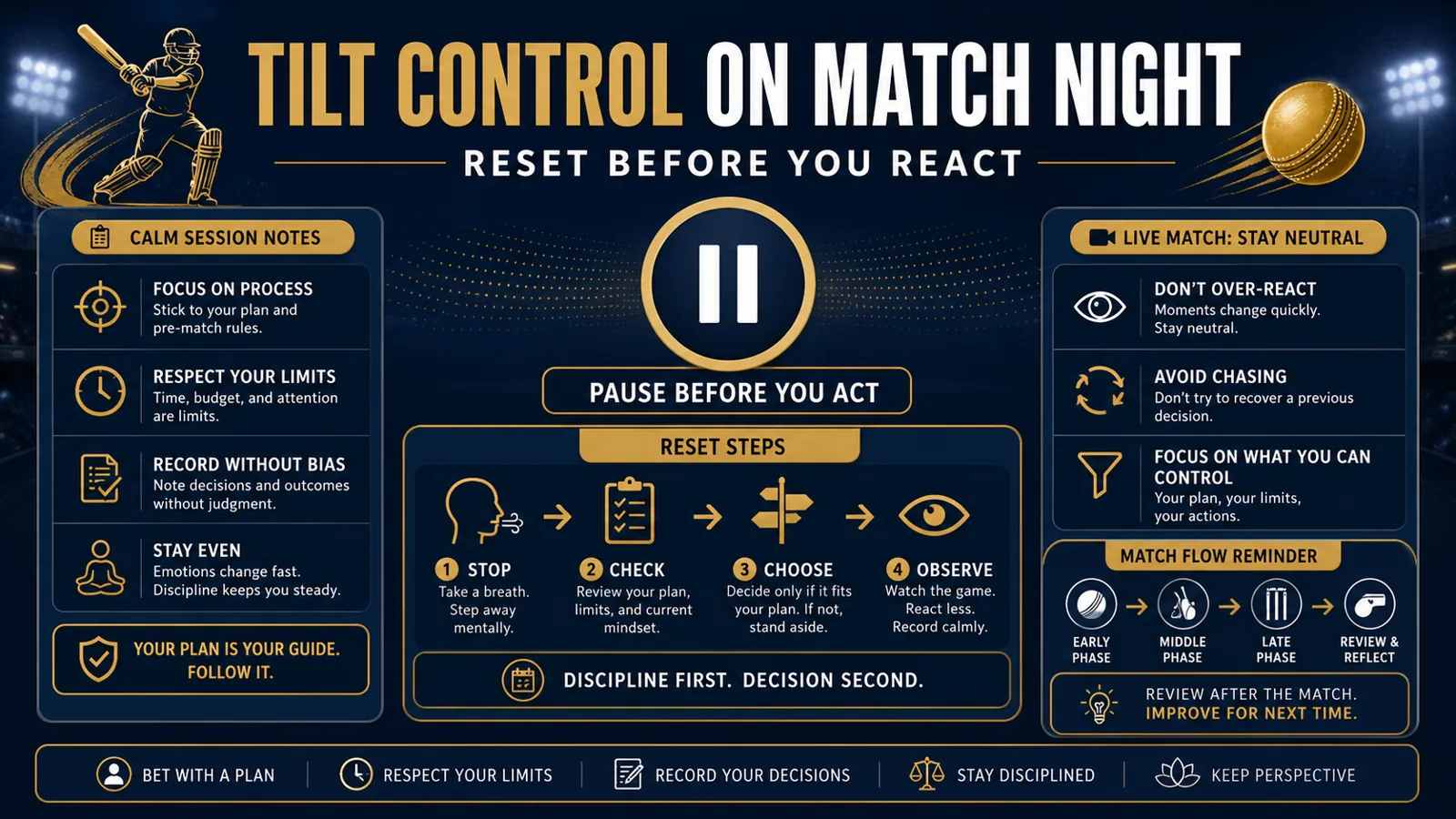
Updated for July 2026: Prepared for readers in the Philippines by IPL Betting Editorial Team. Match-day lineups, injuries, venue conditions, prices, wallet rules, and platform limits can change quickly, so confirm current details before you act.
This article is written as a decision guide, not a promise of results. If the reason for the bet becomes weak after lineups, price checks, or account limits are reviewed, skipping the market is still a valid choice.
Most readers know the technical parts of a match before they notice the emotional ones. The harder part is not always the price or the venue note. It is what happens inside the session after one bad read, one missed chance, or one live swing that suddenly feels personal.
This guide keeps psychology practical. It shows what tilt looks like in IPL betting, how to reset before emotion starts dictating the next move, and how to build a routine that protects judgment even when the night gets noisy.
Quick Answer
IPL betting psychology matters because even a solid pre-match read can fall apart once urgency, frustration, or fear begins to drive the next decision. Discipline is not abstract. It is what keeps the reader’s process intact when the game speeds up.
The most useful mindset routine is simple: notice the emotional signal early, pause the session, return to written checks, and accept that passing is part of the system rather than evidence of weakness.
What Tilt Usually Looks Like on an IPL Match Night
Tilt rarely announces itself with dramatic language. It often appears as a small shift: entering a live market faster than planned, rewriting the reason for a bet after the price has moved, or suddenly feeling that a match must be recovered before the night can end.
Those signals matter because they change the relationship between the reader and the note sheet. Instead of using the plan to filter decisions, the tilted session starts using emotion to edit the plan on the fly.
| Tilt Signal | What It Often Means | Better Response |
|---|---|---|
| Rushing into live markets | The pace of the match has started to outrun the plan. | Pause and restate the trigger in one sentence before acting. |
| Trying to recover the session quickly | Emotion has shifted from analysis to repair mode. | Reset stake size or stop the session entirely. |
| Changing the reason after the fact | The original case was weaker than the emotion around it. | Write the real reason down and test whether it still holds. |
| Feeling irritated by no-bet decisions | The reader is treating action as relief instead of choice. | Step away until passing no longer feels personal. |
Why Good Match Notes Still Fail Without Discipline
A well-written pre-match note can still break under pressure if the session has no emotional guardrails. The note says wait for lineups, but the reader acts early. The worksheet says pass if the trigger is unclear, but the live pace creates a false sense that something must be done now.
That is why psychology belongs inside a betting guide cluster. Technical knowledge and decision discipline strengthen each other. One without the other leaves the session unfinished and unstable.
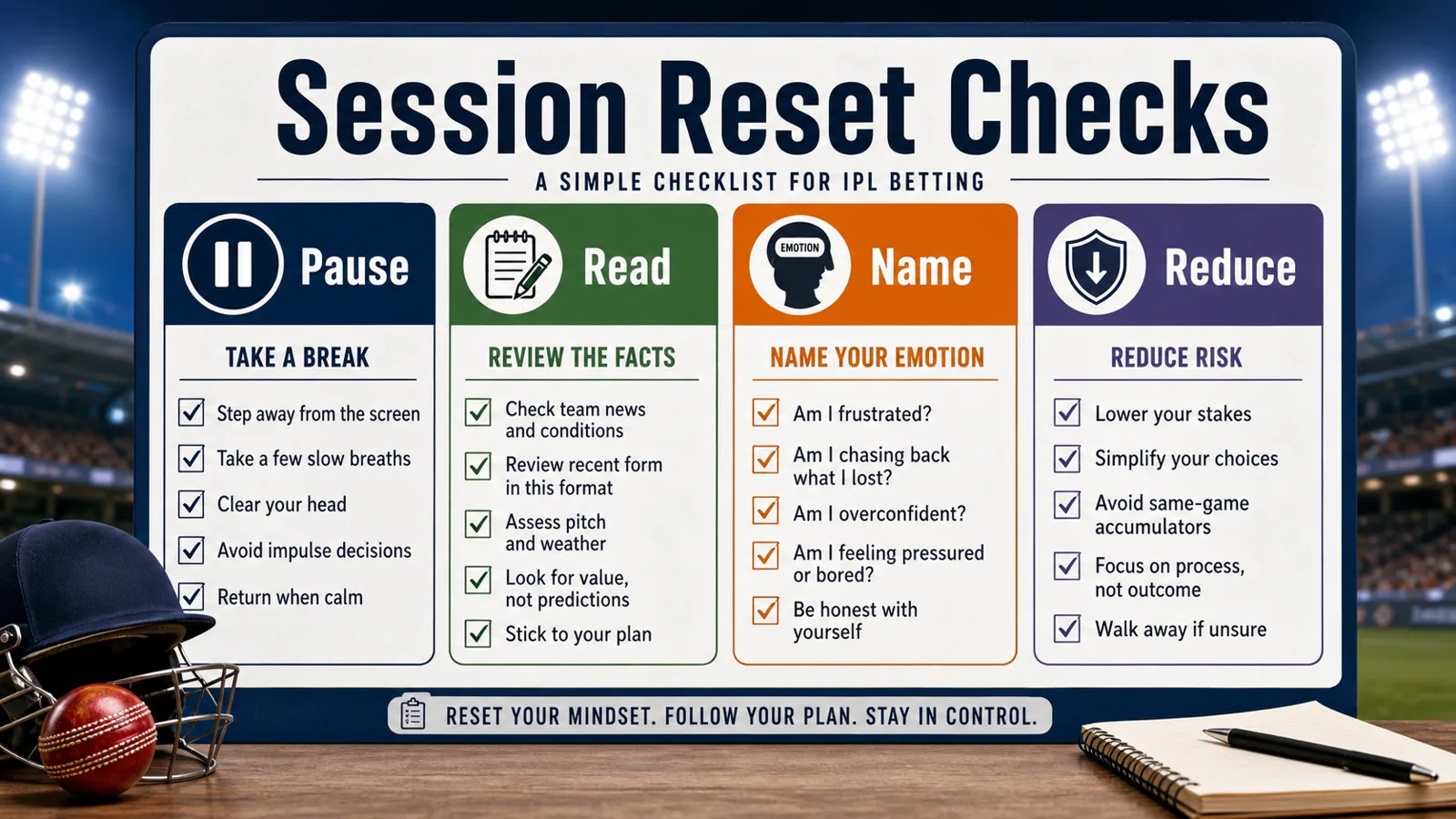
A Match-Day Reset Routine That Actually Works
The best reset routine is short enough to use in real time. Close the live board, reread the original note, name the current emotional state plainly, and decide whether the session still meets the conditions written before the match began.
If the answer is no, the next move is not to search harder for action. It is to reduce exposure or stop. That is what turns discipline from a nice concept into something operational on a busy match night.
| Reset Step | What To Do | Why It Helps |
|---|---|---|
| Pause the screen | Step back from the market view for a moment. | Interrupts speed-driven decision loops. |
| Read the original plan | Compare the current situation to the written trigger. | Reanchors the session in evidence. |
| Name the emotion | Use simple language such as rushed, irritated, or anxious. | Makes the feeling visible instead of letting it steer quietly. |
| Choose the lower-risk option | Reduce size, wait, or stop. | Protects the session from escalation. |
How to Build Better Session Discipline Over Time
Discipline improves when the reader reviews patterns honestly. Which losses were normal variance, and which came from abandoning the process? Which nights felt heavy before the first market even opened? Those answers build a stronger routine than generic motivation ever will.
Keep the review simple: what happened, when emotion entered, and what one earlier decision could have reduced the pressure. That creates progress the next time a similar match environment shows up.
When the Most Disciplined Move Is No More Action
A session can end early for the right reasons. Fatigue, distraction, or emotional residue from earlier results can all weaken judgment faster than the reader realizes. Stopping is not a failed night. It is often the point where the session finally becomes well managed.
A good psychology page should leave the reader with relief, not guilt. The job is to protect decision quality, not to convince the reader to stay active at all costs.
Source and Update Note
This July 2026 refresh keeps the article focused on IPL betting psychology guide, practical match-day process, and risk-aware decision making for IPL readers.
Readers should still verify current team news, venue updates, line movement, wallet limits, and platform rules before placing any bet or transfer request.
FAQ
What is tilt in an IPL betting session?
Tilt is the emotional drift that pushes the reader to act faster, chase losses, or rewrite reasons after the fact.
How do I know when to reset?
Reset as soon as the match pace feels faster than your written process or when passing starts to feel emotionally uncomfortable.
What belongs in a simple reset routine?
Pause the screen, reread the original plan, name the emotion, and choose the lower-risk option.
Can good bankroll rules solve psychology on their own?
They help, but discipline also needs an emotional routine that protects the reader during live pressure.
When should I stop the session completely?
Stop when fatigue, frustration, or urgency has clearly replaced calm evaluation.