
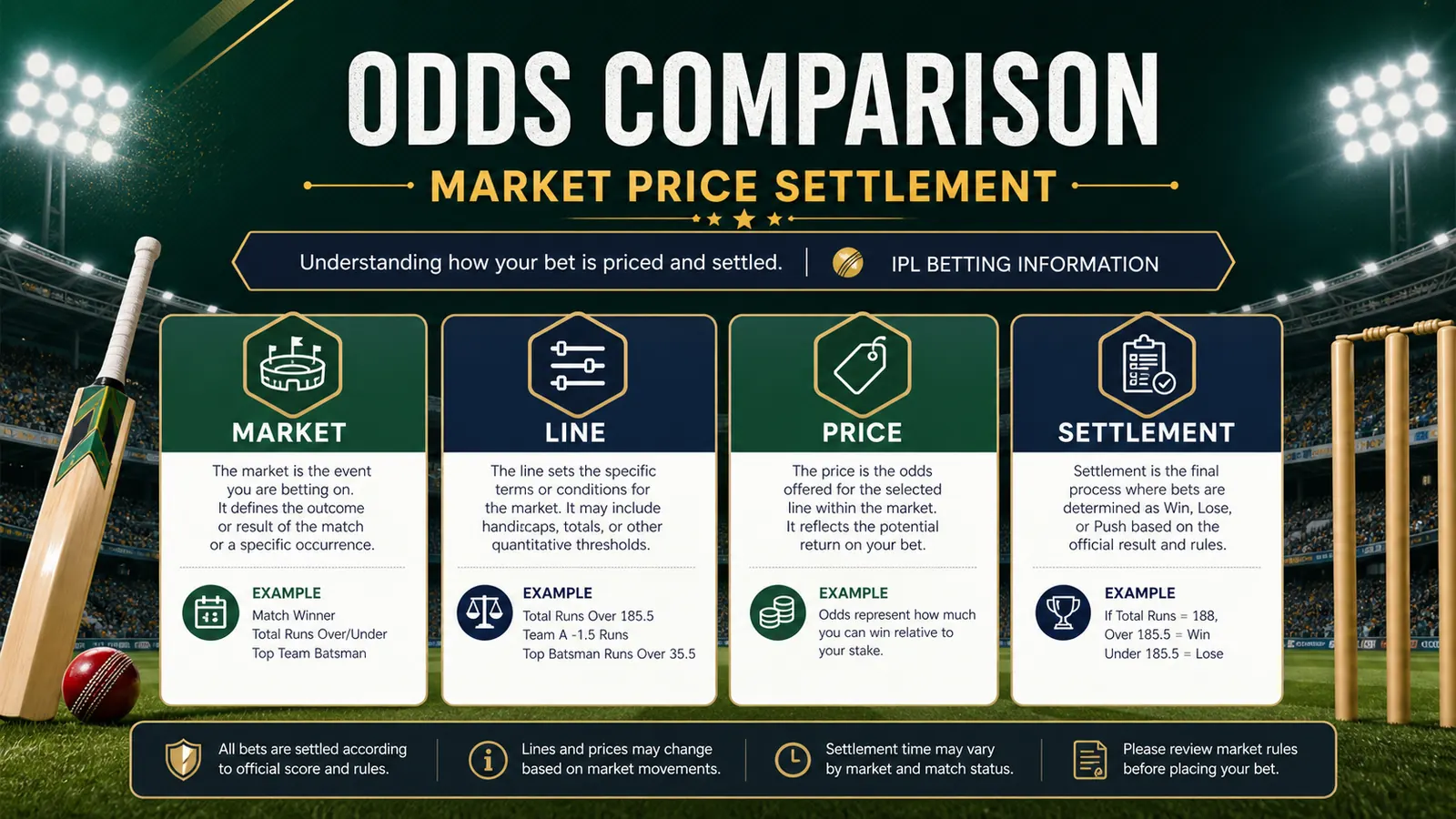
Two prices are not comparable until you know they describe the same market. A team total, match total, first-innings line, and full-match line can sit next to each other while asking different questions.
A careful comparison starts with the wording, not the number. Match the event, line, price format, minimum conditions, and settlement rule before deciding whether a difference is meaningful.
Editorial note: Reviewed by IPL Betting Editorial Team. Last updated: August 2026. Evidence method: compare published competition rules, current match information, and the exact market terms shown by your chosen platform. Match information, team news, weather, prices, and market terms can change, so keep every decision within a planned limit.
Match the Market Before the Price
Write the full market label in your notes. Include the team or player, the line, the innings or match scope, and whether the market is pre-match or live.
If one screen says team total and another says match total, the numbers should not be compared as if they are interchangeable. Clarity at this stage prevents a false price advantage later.
| Field | Example question | Common mistake |
|---|---|---|
| Event | Is this the same fixture? | Comparing two different matches |
| Scope | Team, innings, or full match? | Treating totals as identical |
| Line | Is the number the same? | Ignoring a half-run difference |
| Status | Pre-match or live? | Using a live price as a pre-match reference |
Read the Terms Beside the Number
Settlement terms can define what happens after a rain delay, an abandoned match, a shortened innings, or a player withdrawal. Those rules belong in the comparison because they change the meaning of the price.
Do not copy a number into a spreadsheet without also recording the market wording and the platform time. A price without context is not a complete data point.
| Term | Why to record it | Pause signal |
|---|---|---|
| Minimum overs | Short matches may settle differently | Rule is hidden or unclear |
| Player participation | Props may need appearance rules | Player status is doubtful |
| Void rule | Early finish can change settlement | No clear settlement text |
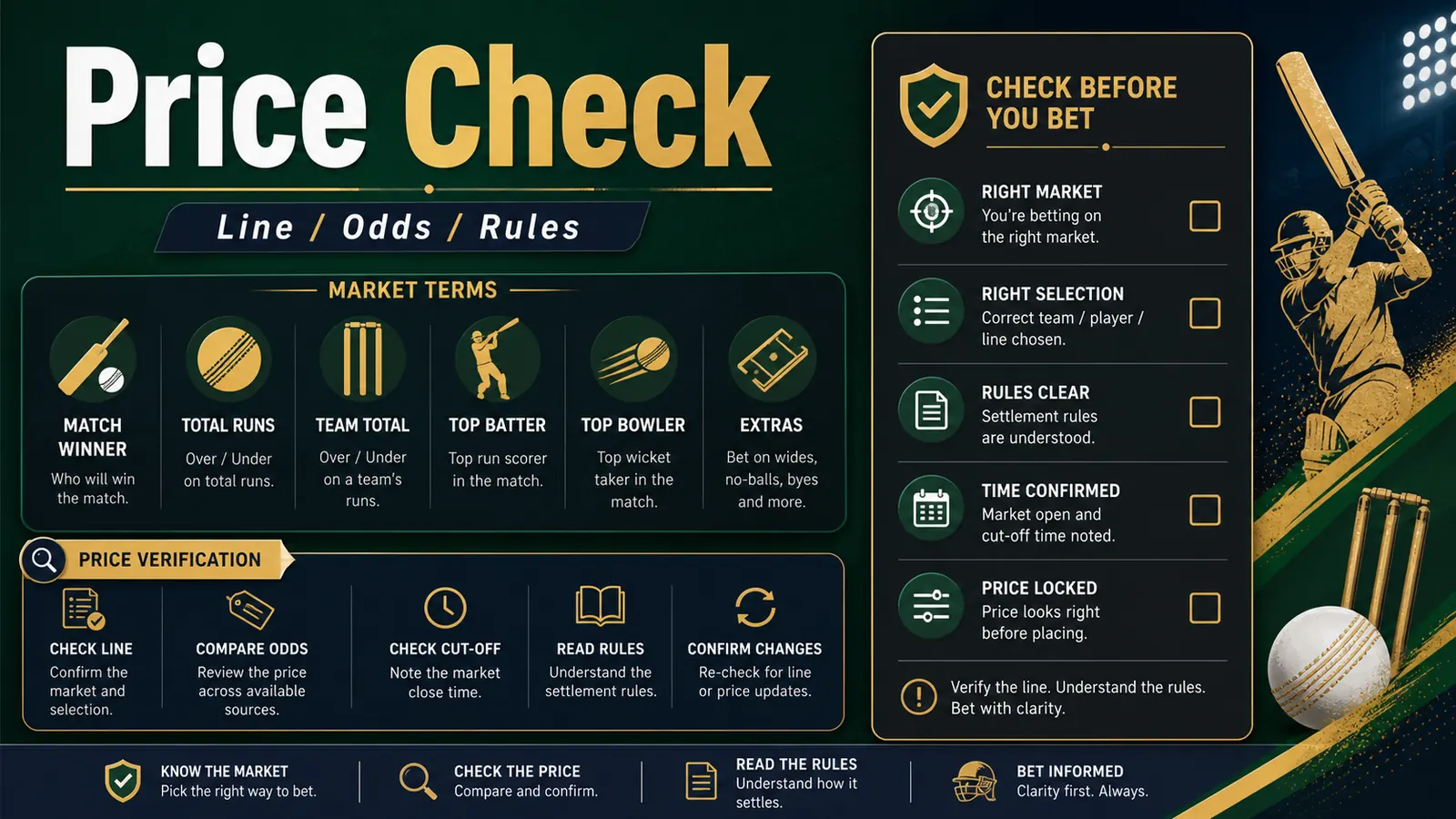
Compare Like With Like
Once the labels match, compare the price and the time. A difference may reflect a new lineup update, a toss result, a weather report, or simply a delay between screens.
The goal is not to chase every difference. Ask whether you can explain the difference using information you have actually verified.
Keep a Clear Decision Note
A useful note contains the market label, price, timestamp, source, and the reason the comparison matters. If you cannot write that sentence clearly, the comparison is not ready.
Price comparison is a checking tool, not a promise about value or results. It helps readers understand what they are looking at before they decide whether to continue.
FAQ
What should be compared first in IPL odds?
Match the event, market scope, line, price format, and settlement terms before comparing the number.
Why can two similar prices mean different things?
They may refer to different teams, innings, lines, participation rules, or settlement conditions.
Should a late price difference always be used?
No. First identify what caused the move and whether the two screens still show comparable markets.
What is the best record for a price comparison?
Keep the market wording, line, price, timestamp, source, and a short reason for the comparison.
Source and update note: This evergreen guide should be checked against current official match information, published competition rules, and the exact market terms shown by your chosen platform before you act.
Related Reading
- How to Read IPL Betting Odds ↗
- IPL Odds Movement Guide ↗
- IPL Over/Under Total Runs Guide ↗
- IPL Betting Guide for Filipino Fans ↗
Take a pause when a material input is unconfirmed or a market rule is unclear. Clear information and a planned limit are more important than forcing a decision.