
Updated for July 2026: This guide is written for readers in the Philippines and should be checked against current IPL fixtures, official team news, and the betting rules shown by your chosen platform before you act.
Quick Answer
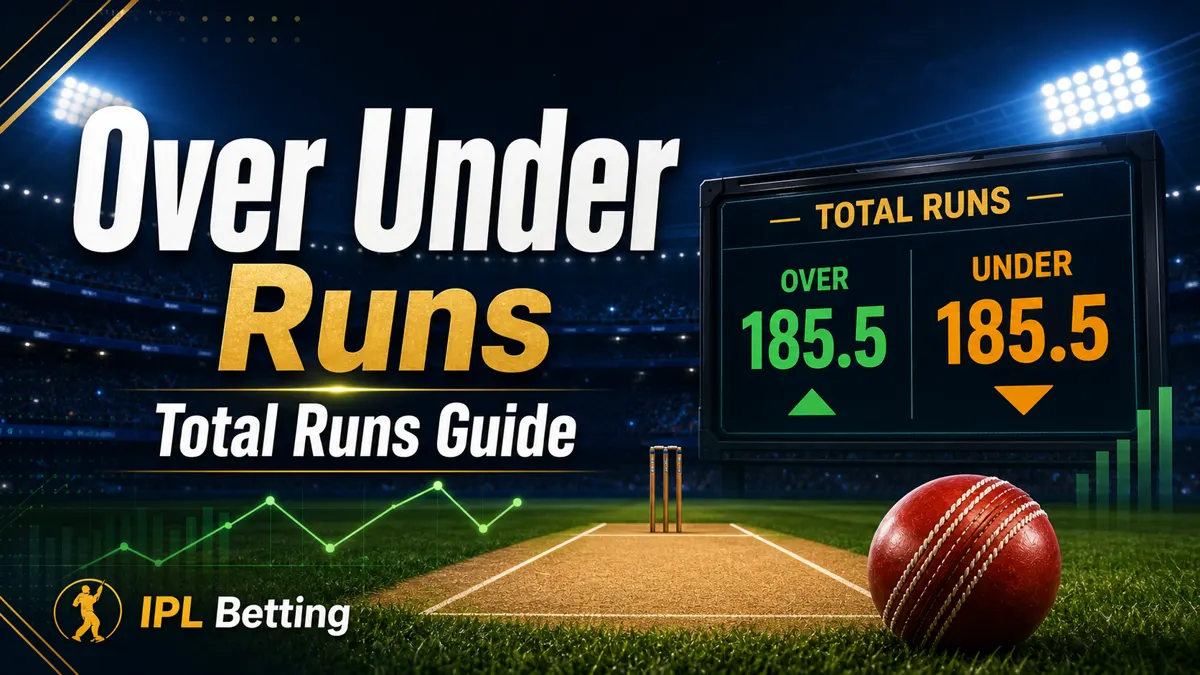
An IPL over/under market asks whether the runs will finish above or below a posted line. The line is not a prediction you must follow. It is a price point to compare with venue, pitch, lineup, and match timing.
Before choosing a side, check whether the scoring conditions support the number. A strong batting lineup still needs the right pitch and innings context.
How Total Runs Lines Work
The market gives a runs line, then asks whether the final score lands above or below it. The same number can be attractive or weak depending on the ground and teams.
| Factor | Why It Matters | Reader Note |
|---|---|---|
| Venue | Ground size and surface affect scoring pace. | Do not treat all IPL grounds the same. |
| Batting depth | Longer batting lineups can protect a high line. | Check the confirmed XI. |
| Bowling roles | Powerplay and death overs shape totals. | A missing death bowler changes the read. |
| Dew | Grip and chasing conditions can shift innings two. | Watch night matches carefully. |
Venue and Pitch Context
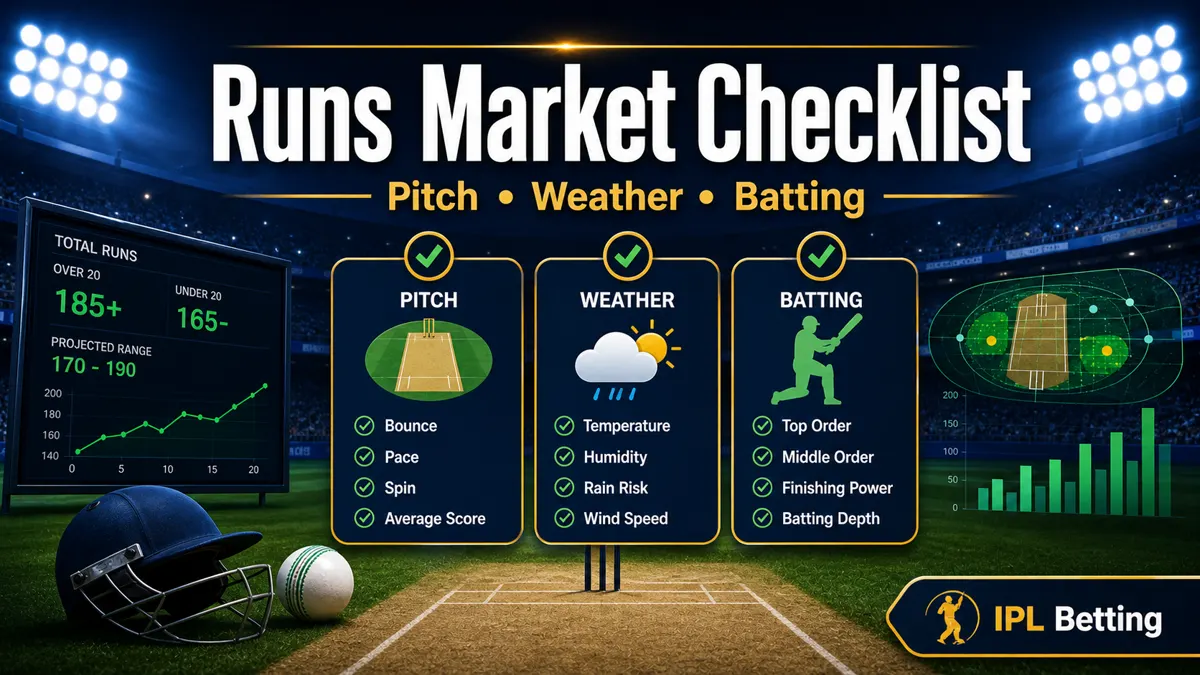
Venue context is the first filter. Some grounds reward aggressive batting, while others slow down after the new ball. The pitch report is useful only when it connects to the market line.
If the posted line already reflects a high-scoring venue, the question becomes whether the price still leaves room for your view.
Dew and Innings Timing
Dew can change grip, fielding, and chasing pressure. It does not matter equally in every match, so treat it as a condition to confirm rather than a slogan.
| Signal | Possible Effect | Market Check |
|---|---|---|
| Visible dew | Ball may become harder to grip. | Second innings scoring can change. |
| Dry surface | Spinners may stay in the game longer. | Overs may slow through the middle. |
| Fast outfield | Boundaries can come easier. | High line may still need wickets in hand. |
| Early wickets | Projected totals can fall quickly. | Do not overreact to one boundary over. |
Live Total Runs Markets
Live total runs lines move quickly. A single over can lift or drop the number, but the better question is whether the new line fits wickets in hand, batting resources, and remaining overs.
Set your live limit before the match. If the line moves faster than your information, step back.
Common Mistakes
The common mistake is choosing over because the match feels exciting, or under because one quiet over happened early. T20 totals need phase context, not mood.
FAQ
What does over/under mean in IPL betting?
It means choosing whether the final runs will finish above or below the posted line.
Is venue important for total runs markets?
Yes. Ground size, surface, weather, and batting style can all affect scoring.
Does dew always help the over?
No. Dew can help chasing, but it depends on timing, visibility, bowling, wickets, and the line being offered.
Should beginners use live totals?
Only with a clear limit and match context. Live totals move quickly and can punish rushed decisions.