
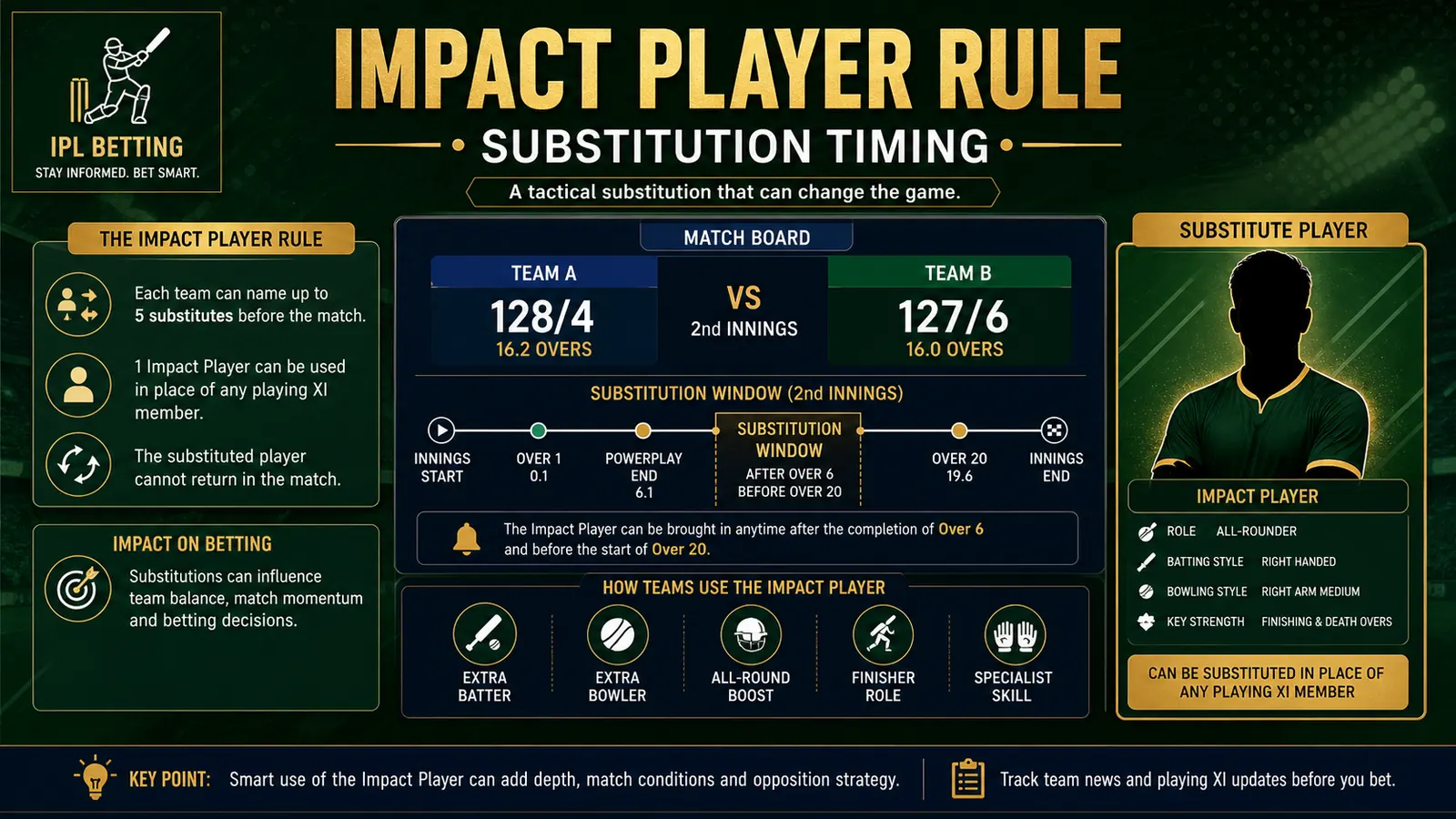
A substitute can change a team’s balance without changing the original expectation of who will play. That makes the Impact Player rule important for readers who study player roles, team totals, or live match conditions.
The key distinction is between availability, selection, and usage. A player may be named as an option but still have a different opportunity from the one assumed by a market note.
Editorial note: Reviewed by IPL Betting Editorial Team. Last updated: August 2026. Evidence method: compare published competition rules, current match information, and the exact market terms shown by your chosen platform. Match information, team news, weather, prices, and market terms can change, so keep every decision within a planned limit.
Separate the Starting XI From the Substitute
Begin with the confirmed starting XI, then identify the named substitute options and the conditions for their use. Do not treat a possible replacement as if the player has already taken part.
The role can also change after the substitution. A batting replacement, bowling replacement, or all-round option creates a different match context, so write the role beside the player name.
| Status | Meaning | Question |
|---|---|---|
| Starting XI | Named to begin | What is the expected role? |
| Substitute option | Available under the rule | What condition allows entry? |
| Used substitute | Has entered the match | What role is now active? |
| Not used | Remained outside the action | Does the market require participation? |
Timing Changes the Read
A substitution before an innings can affect the planned team combination, while a later change may affect only the remaining phase. The same player name therefore does not mean the same opportunity at every time.
Check when the change happened and whether the market reopened after it. A live line can react to the event, but the reaction does not explain every part of the new price.
| Timing | What may change | Reader check |
|---|---|---|
| Before the innings | Team balance and role plan | Review the starting context |
| During batting | Available batting depth | Check participation terms |
| Before bowling | Bowling options and phases | Check expected overs |
| Late phase | Short remaining opportunity | Do not reuse full-match assumptions |
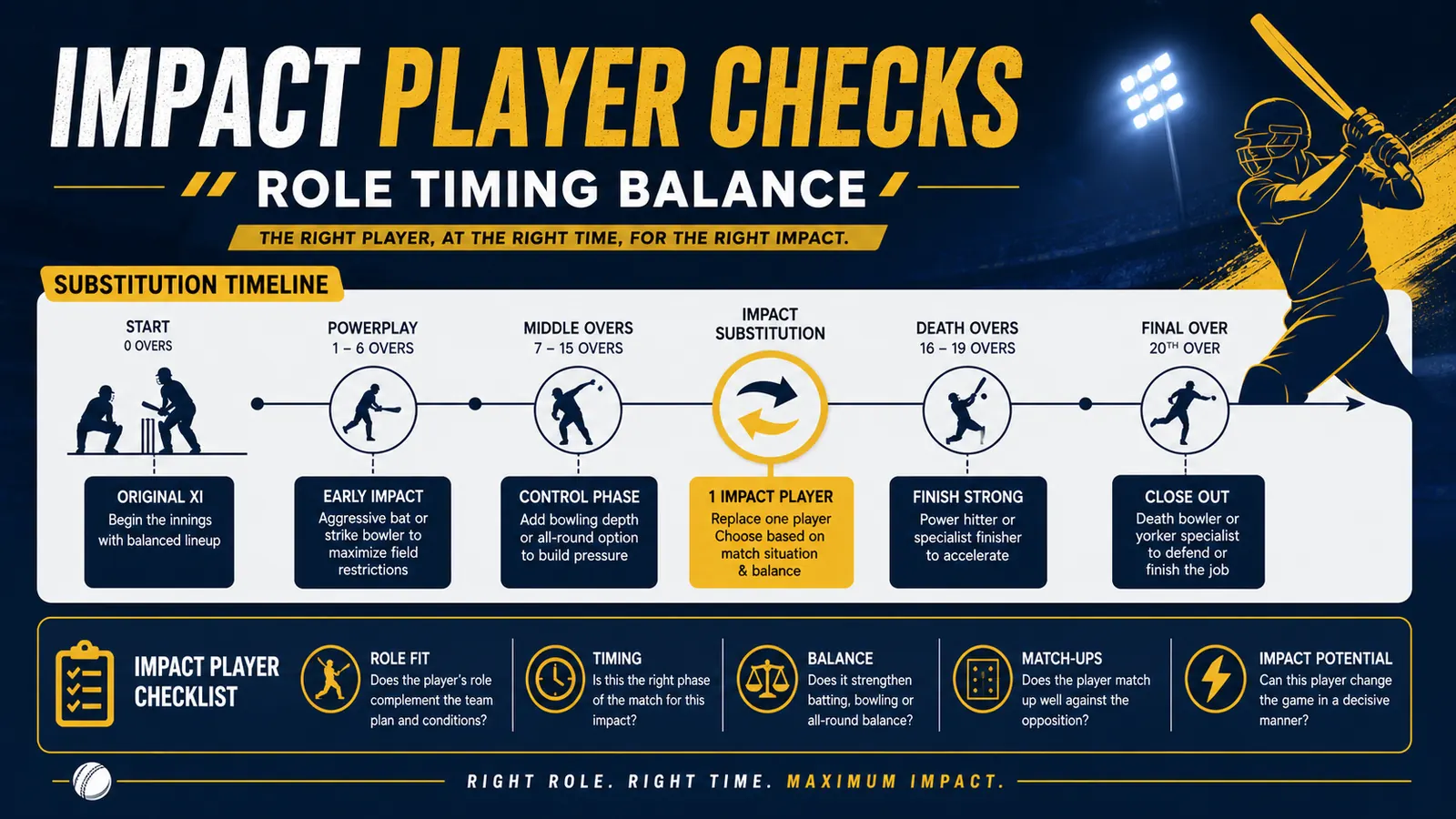
Use Role-Based Market Notes
Player markets need more than a name and recent score. Ask whether the player can face enough balls, bowl enough overs, or enter the match under the stated rules.
Team markets need a different question: does the substitution improve depth, change the likely plan, or only affect one phase? Keep those observations separate.
Check Eligibility and Settlement
A market can define participation differently from a match report. Before using a player prop, read whether an appearance, delivery, ball faced, or other condition is required for settlement.
If the substitution status is unclear or the market has not updated, pause. The Impact Player rule adds information, but it does not remove uncertainty.
FAQ
Does an Impact Player option mean the player will definitely play?
No. Separate the starting XI, named option, and actual substitution status.
Why does substitution timing matter?
The player may have different opportunities before an innings, during batting, before bowling, or late in the match.
Can a player prop use a substitute the same way as a starter?
Not automatically. Check the market’s participation and settlement conditions.
What should be recorded after a substitution?
Record the time, player, role, innings phase, and whether the market reopened or changed.
Source and update note: This evergreen guide should be checked against current official match information, published competition rules, and the exact market terms shown by your chosen platform before you act.
Related Reading
- IPL Team News Verification Checklist ↗
- IPL Player Prop Betting Guide ↗
- IPL Betting Prediction Checklist ↗
- IPL Wicket Markets Betting Guide ↗
Take a pause when a material input is unconfirmed or a market rule is unclear. Clear information and a planned limit are more important than forcing a decision.