
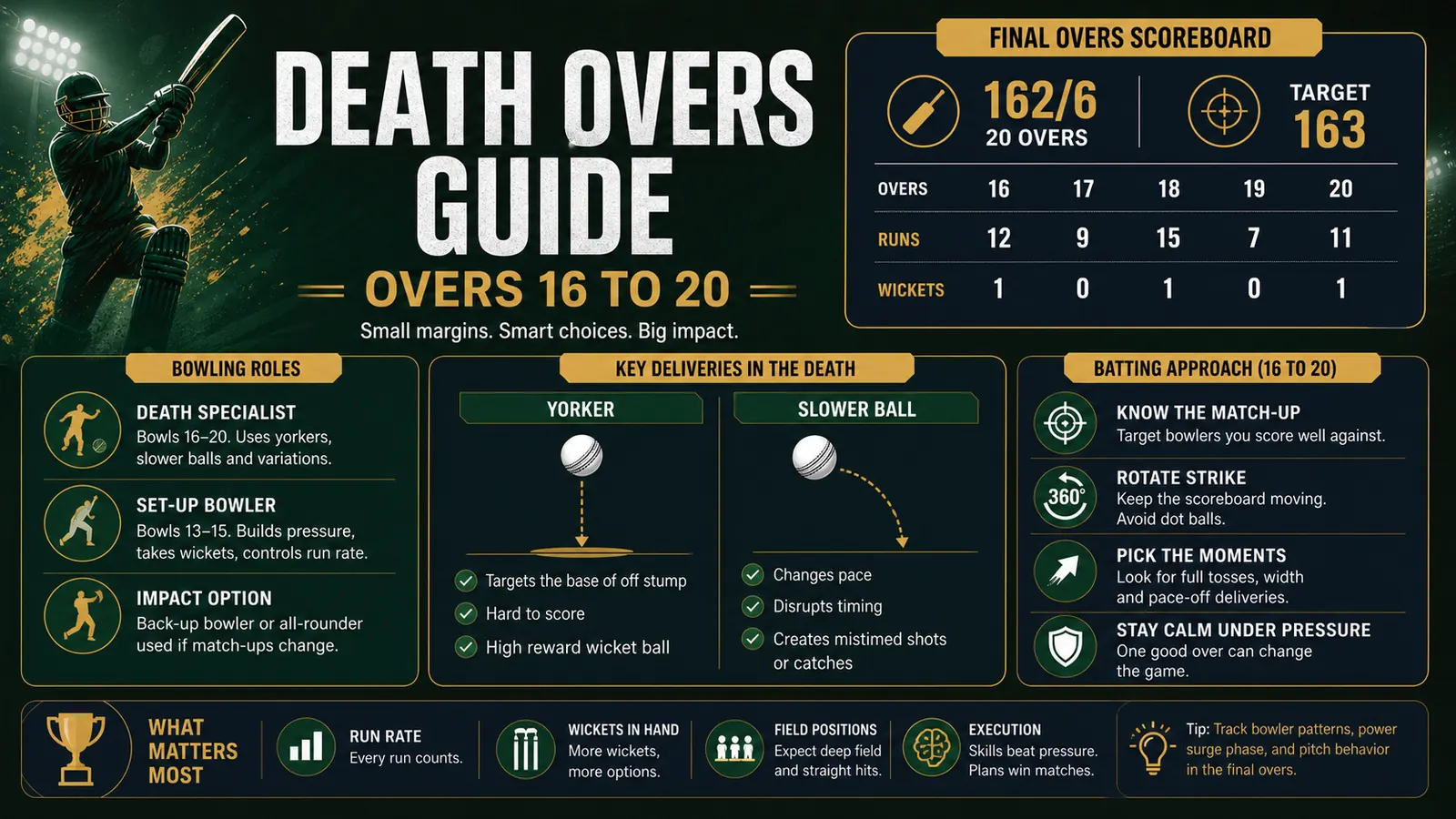
Overs 16 to 20 can make a match look predictable because the scoring is visible and the clock is short. The same phase can also be where a good plan breaks after one wicket, one miss, or one unexpected bowling change.
A useful death-overs read focuses on role and opportunity: which bowlers remain, which batters are set, what the field allows, and whether the market has already reacted to the obvious story.
Editorial note: Reviewed by IPL Betting Editorial Team. Last updated: August 2026. Evidence method: compare published competition rules, current match information, and the exact market terms shown by your chosen platform. Match information, team news, weather, prices, and market terms can change, so keep every decision within a planned limit.
Map the Remaining Bowling Roles
Start by listing the bowlers still available and their likely overs. A death specialist, an all-rounder, and a bowler covering an over can create very different conditions.
The name on the scorecard is not enough. Check whether the bowler has the slower ball, yorker, wide line, or field plan needed for the situation.
| Role | What to check | Why it matters |
|---|---|---|
| Death specialist | Expected final overs | Role may match the phase |
| All-rounder | Whether an over is required | Usage may be uncertain |
| Bowler with overs left | Matchup with current batters | Style can change scoring options |
| Emergency over | Who may cover the phase | Price may not reflect the change |
Read Batting Resources, Not Just Run Rate
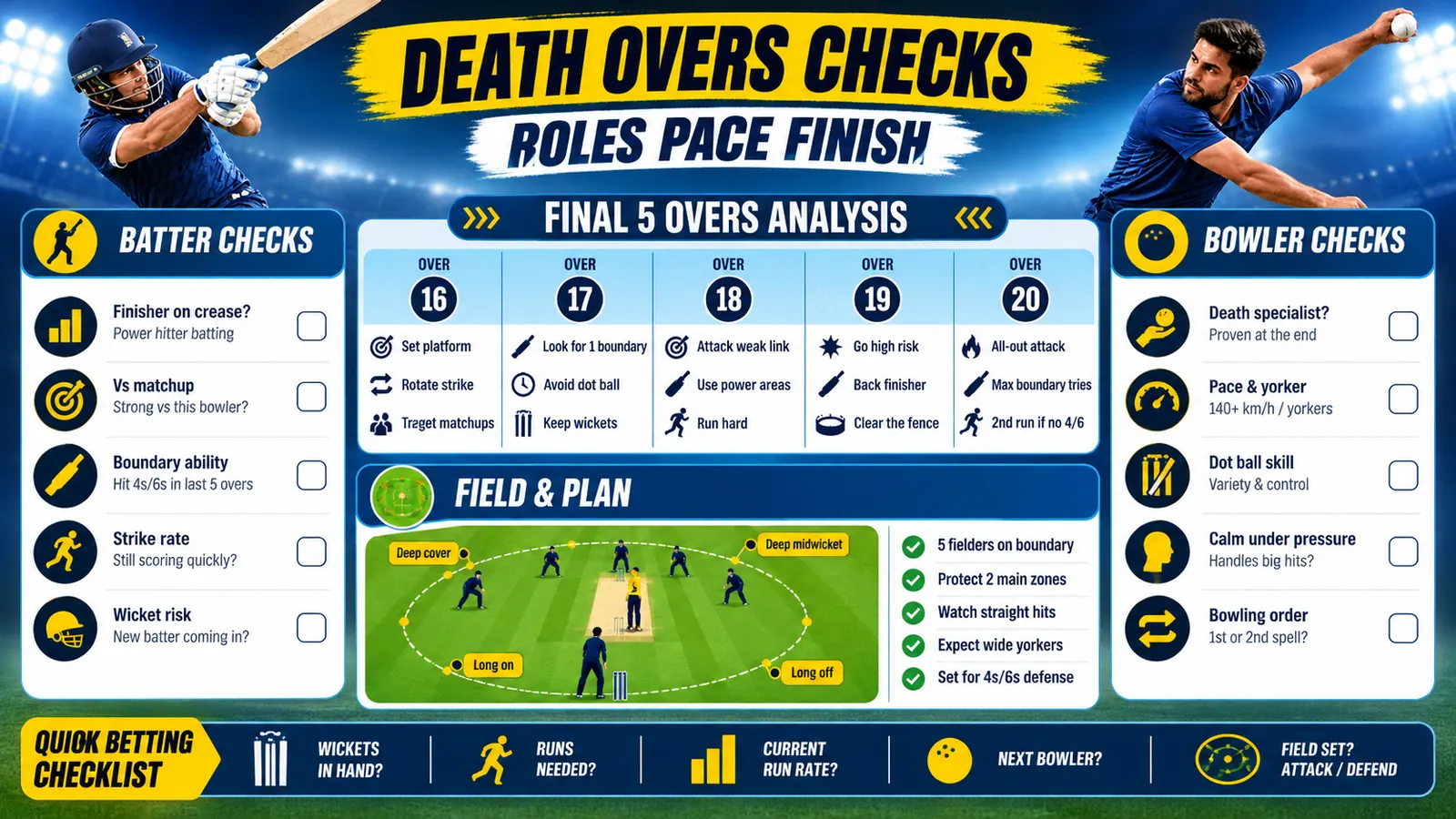
A team with two set hitters can attack a different length from a team rebuilding after wickets. Check the current pair, the batting order behind them, and whether the field is protecting the boundary.
A big over can lower the required rate, but it can also cause a market to move faster than the underlying situation. Write the phase and the change before comparing a new price.
| Batting check | Question | Caution |
|---|---|---|
| Set batter | Has the batter faced enough balls? | Form is not the same as opportunity |
| New batter | What shots are available? | A new pair may need time |
| Lower order | Who remains after the pair? | Depth affects risk choices |
| Field | How many boundary riders? | Field changes scoring options |
Track Pace and Length Changes
A bowler can change pace, length, or angle when a batter is targeting one side. Observe the adjustment before making a broad statement about the whole phase.
If the pitch is slow or the ball is difficult to hit cleanly, the death overs may not follow the high-scoring pattern people expect. Conditions should be checked, not assumed.
Small Phase, Large Emotion
Death overs produce memorable highlights, which can make one boundary feel like evidence of a repeated pattern. A calmer read asks whether the role, matchup, and field setup remain in place.
If the market is changing too quickly to read the terms, watching the phase without forcing a decision is a valid choice.
FAQ
What matters most in the death overs?
Check remaining bowling roles, current batters, wickets, field settings, pace changes, and the exact market scope.
Does a death specialist always control the phase?
No. Role helps describe the plan, but matchup, pitch, execution, and current pressure still matter.
Why can death-over markets move quickly?
There are few overs left and each delivery changes the remaining task, so prices can react rapidly.
Should one big over change the whole view?
It should trigger a fresh check, not an automatic conclusion. Reassess the roles, field, and terms.
Source and update note: This evergreen guide should be checked against current official match information, published competition rules, and the exact market terms shown by your chosen platform before you act.
Related Reading
- IPL Middle Overs Betting Guide ↗
- IPL Run Chase Betting Guide ↗
- IPL Wicket Markets Betting Guide ↗
- IPL Odds Movement Guide ↗
Take a pause when a material input is unconfirmed or a market rule is unclear. Clear information and a planned limit are more important than forcing a decision.