
Season note: IPL 2026 has ended. Historical examples and results are for review; they are not a schedule of upcoming matches.
The useful way to revisit IPL 2026 is to compare what you knew before a match with what the scorecard later showed. A season review should preserve the original price and reasoning instead of rebuilding a winning prediction after the result.
This guide supports a review of the completed IPL 2026 season: how markets work, what odds movement can mean, when live betting becomes risky, and how to keep a bet size sensible. No preview, statistic, or odds move can promise a match result.
Editorial note: Prepared by IPL Betting Editorial Team. Cricket availability, team news, and betting prices can change, so confirm current details and keep every stake within a planned budget.
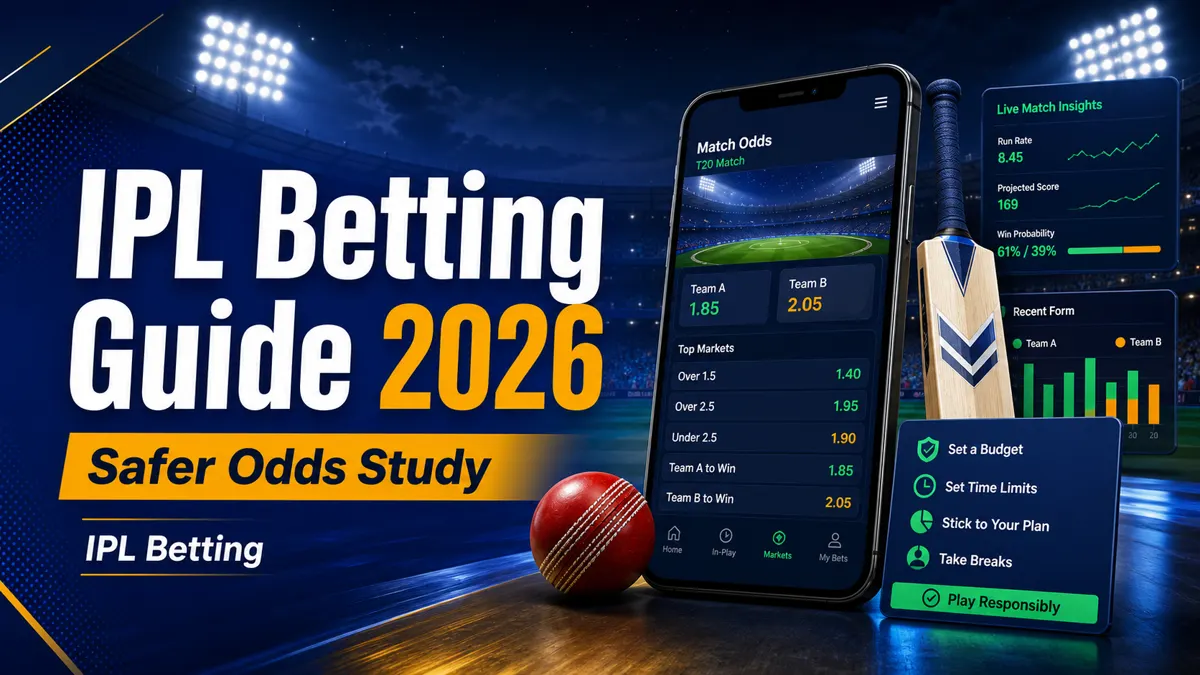
Quick Answer
Review the market you actually recorded: match winner, total runs, or a player selection. Keep the original line and quoted price beside the official result. If those details are missing, you can discuss the cricket, but you cannot reliably reconstruct the betting decision.
For Filipino readers, the extra practical step is timing. Many IPL matches finish late at night in the Philippines, so rushed live bets after midnight can become emotional. A written limit before the toss is more useful than trying to decide while odds are moving.
Where the 2026 Review Fits
Use this page as a season-review worksheet. Refer to the market guides for definitions, then return to the recorded 2026 fixture to check what you knew at the time.
| Reader Need | Best Next Check | Why It Matters |
|---|---|---|
| New to prices | Read the odds format and price movement first. | A clear price read prevents rushed market choices. |
| Reviewing a recorded match | Set time, toss, lineup, and stake notes as they were recorded at the time. | A written routine reduces emotional decisions. |
| Night match conditions | Check dew, venue, and innings timing before total runs or chase markets. | Conditions can change how a second innings plays. |
| Choosing a market | Match the market type to the information you actually have. | Different markets need different evidence. |
Which 2026 Market Did You Record?
Most IPL markets look simple on the surface, but each one needs a different kind of cricket context. Match winner asks who is more likely to win. Total runs asks how scoring conditions might behave. Player markets depend on batting order, bowling role, and matchups.
| Market | What It Means | Best Time to Study | When to Be Careful |
|---|---|---|---|
| Match winner | Pick the team expected to win the match. | After confirmed squads and toss context. | When the price is short but team news is uncertain. |
| Total runs | Estimate whether the combined score lands above or below a line. | After venue and pitch checks. | When weather, dew, or lineup changes are unclear. |
| Player props | Focus on a batter, bowler, or all-rounder market. | After role and batting order are known. | When the player may not get enough balls or overs. |
| Live markets | React to in-play score, wickets, and run rate. | Only when watching the match clearly. | When odds move faster than your information. |
Use the Original 2026 Price
Odds show the price being offered at that moment. They do not explain the full reason behind the price. A short price may reflect public support, strong recent form, or confirmed team news. A drifting price may reflect uncertainty, but it can also be normal market movement.
The safer habit is to compare the price with a short checklist. Is the team news confirmed? Is the venue known for high scoring or slower batting? Is the price still useful after fees and stake size? If the answer is unclear, waiting is often better than forcing a bet.
Reconstruct the Pre-Match Record
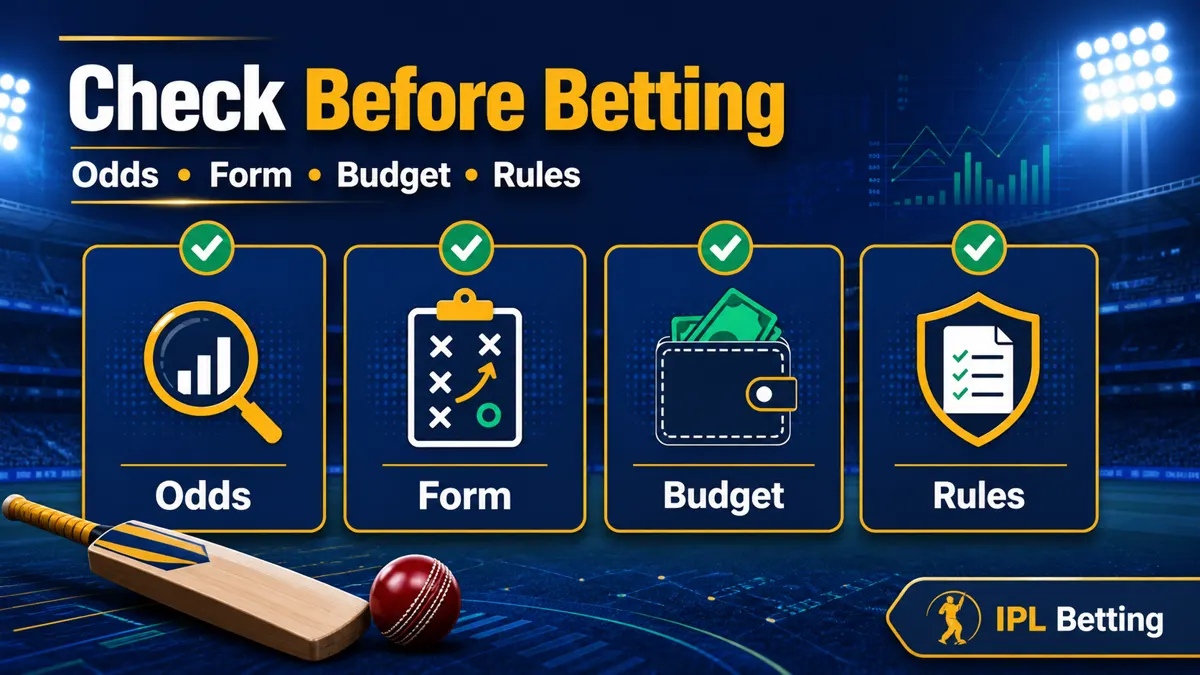
A checklist protects the article reader from treating one stat as the whole answer. Use it to check what was recorded before a selection, without adding hindsight.
| Check | Question to Ask | Why It Matters |
|---|---|---|
| Odds | Has the price changed sharply, and do I know why? | A move without context can lead to late entry at poor value. |
| Team news | Are the playing XIs or injury notes confirmed? | IPL roles change quickly when overseas players rotate. |
| Venue | Does the ground usually help batting, pace, or spin? | The same market can behave differently by venue. |
| Budget | Is this stake inside my planned limit? | Good analysis still needs loss control. |
| Time | Am I making this decision calmly? | Late-night live markets can encourage rushed choices. |
Check the Timestamp of a Live Decision
When reviewing a live decision, remember that IPL odds can move after every boundary, wicket, and bowling change. That movement is exciting, but it also makes mistakes expensive. If you are not watching the match or do not understand why the price changed, skip the market.
A useful live rule is to decide the maximum stake before the match starts. If the match becomes chaotic, your limit is already set. That keeps the decision tied to your plan instead of the last over you watched.
Review Errors to Avoid
The biggest mistake is treating a favorite as automatic. IPL matches change quickly because of toss conditions, death-over bowling, impact substitutes, and short boundaries. Another mistake is chasing a previous loss with a larger live bet. That is not analysis, it is reaction.
A better approach is slow and repeatable: one market, one reason, one stake size, and one note after the match. Over time, that gives you a clearer view of which markets you actually understand.
Review the Completed 2026 Season Without Hindsight
IPL 2026 is a completed season, not an upcoming betting schedule. The official final report records the final on May 31, 2026. Use this page to study past decisions alongside scorecards; use the beginner guide for a first explanation of markets.
For each reviewed match, create two columns: what was known before the toss and what became known afterwards. Keep the original line, odds, observation time, lineup information, and weather note in the first column. Put the result and actual player usage in the second. A winning outcome cannot retroactively make an unsupported pre-match claim well researched.
Use a declared sample: for example, all ten matches you watched, not only three memorable wins. Record losses, skipped markets, and missing prices too. If a price was never recorded, label the decision untestable rather than assigning a hypothetical profit. Do not carry 2026 squad roles or market terms into a later season without checking them again.
FAQ
Which recorded market is easier to review first?
Start with a recorded slip whose event, market, line, price, and acceptance time are all readable. A simple label is useful for practice, but it does not establish that the bet was safer.
How should I compare past live and pre-match decisions?
Compare the evidence available at each acceptance time. A live selection needs a recorded score and timestamp; a pre-match selection needs the news and price known before play. The final result alone cannot tell you which decision was better supported.
Can IPL odds predict the final result?
No. Odds reflect a market price, not a promised outcome. They can help you compare risk and reward, but cricket results can change in a few overs.
What stake information belongs in a season review?
Record the original stake, fees, quoted odds, and the limit set at the time. Add the money exposed across the same fixture. Missing stake information means a monetary result cannot be reconstructed reliably.
Source and update note: This guide is written for readers in the Philippines and should be checked against current IPL fixtures, official team news, and the betting rules shown by your chosen platform before you act.
Related Reading
- How to Read IPL Betting Odds
- IPL Betting Daily Routine
- Dew Factor and Weather in IPL Betting
- Best IPL Betting Markets Explained
Prepared by IPL Betting Editorial Team. Updated 4 October 2026. This guide explains the checks and hypothetical examples shown above. Competition rules and operator terms determine how a particular match or market is treated; the examples do not predict results.