
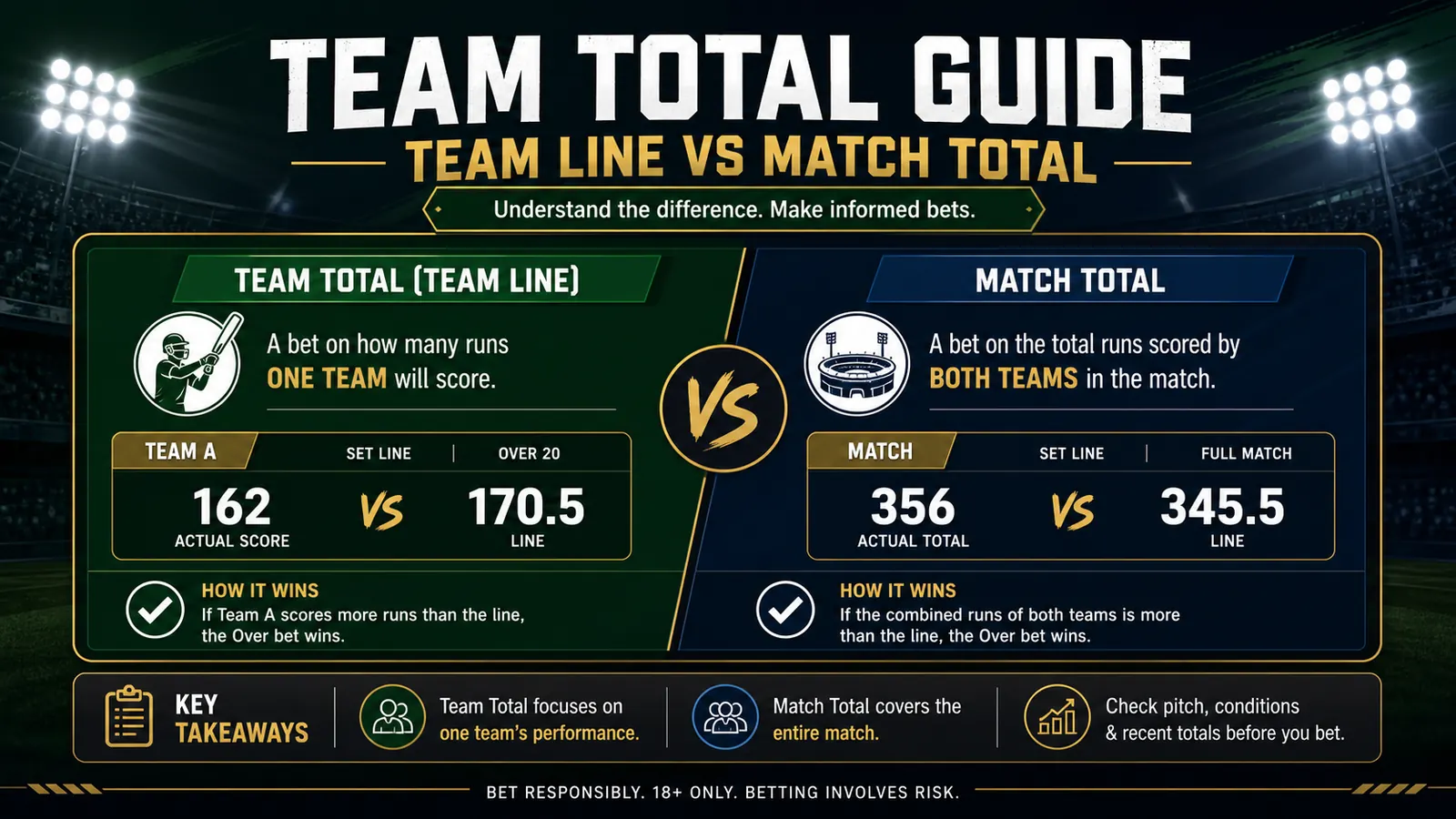
A team total asks about one side’s runs. A match total usually covers both innings or a defined match scope. The labels can look similar on a mobile screen, but the information needed to read them is different.
Start by writing the full market name, then check the innings, line, price, and minimum-play rule. This prevents a team’s expected score from being mixed with the total runs of the match.
Editorial note: Reviewed by IPL Betting Editorial Team. Last updated: August 2026. Evidence method: compare published competition rules, current match information, and the exact market terms shown by your chosen platform. Match information, team news, weather, prices, and market terms can change, so keep every decision within a planned limit.
Team Total Versus Match Total
A team total is tied to one batting innings, so lineup depth, batting order, and the likely length of that innings matter. A match total depends on two batting sides, bowling changes, toss context, and the chance of interruptions.
The first check is not which line looks higher. It is whether the market is asking about the same number of innings and the same settlement scope.
| Market | Scope | Main context |
|---|---|---|
| Team total | One team’s innings | Batting role and lineup depth |
| First innings total | The opening innings | Toss, pitch, and batting plan |
| Match total | Defined match scoring | Both innings and match conditions |
| Live total | Remaining or current scope | Score, overs, wickets, and terms |
Check the Team’s Scoring Plan
Team totals are easier to describe when you know the likely opening pair, batting depth, and the phase in which the side usually wants to attack. The plan can change after an early wicket or a slow surface.
Use venue information as a setting, not a shortcut. A high-scoring ground does not remove the need to check the actual lineup, pitch report, and current bowling matchup.
| Team check | Question | Limit |
|---|---|---|
| Opening pair | Who is likely to face the first overs? | Availability may change |
| Depth | Who can bat after the top order? | Early wickets matter |
| Phase plan | Where will the attack come? | Run rate is not flat |
| Surface | How is timing and grip? | Venue history is not today’s pitch |
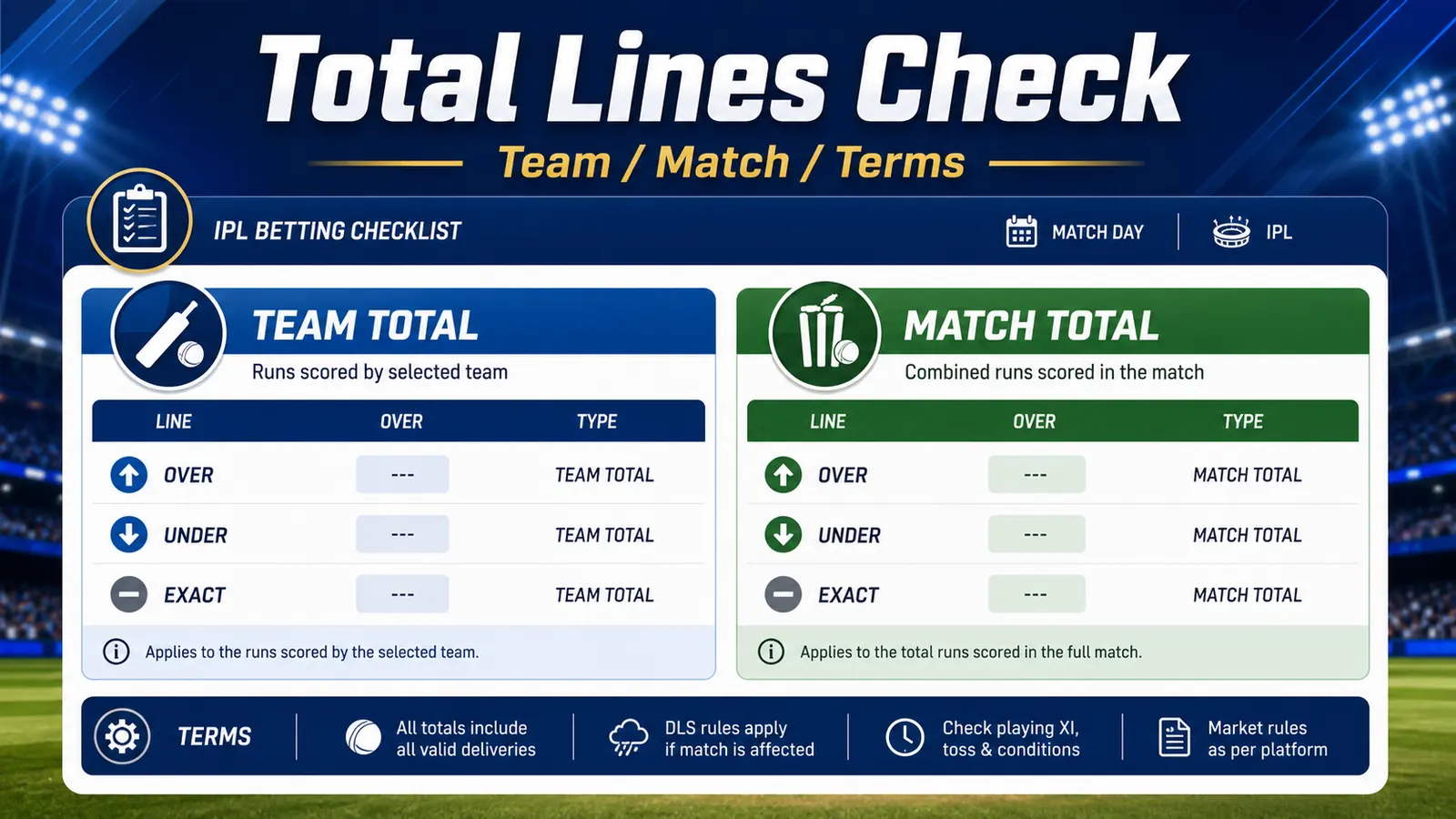
Read the Line and the Timing
A team total can move after a lineup announcement, toss, weather update, or early wicket. Record the time before comparing the line with a previous number.
If a market is suspended or reopened, check whether the rule or innings scope changed. The same team name on the screen does not prove the same market is still active.
Settlement Deserves Its Own Line
Check what happens when an innings is shortened, a match is abandoned, or a player does not take part. Team totals and match totals can have different minimum conditions.
A careful reader does not have to use every total market. When the scope or settlement rule is difficult to locate, staying with a clear market is a reasonable choice.
FAQ
What is a team total market?
It asks about the runs scored by one named team within the market’s stated innings and settlement rules.
How is a match total different?
A match total covers a defined match scoring scope, often involving more than one innings. Read the exact label.
Does venue history decide a team total?
No. It adds context, but lineup, pitch, toss, weather, and the current line still need to be checked.
What happens if rain shortens the innings?
The market’s minimum-overs and settlement terms determine the treatment. Do not assume the original line remains unchanged.
Source and update note: This evergreen guide should be checked against current official match information, published competition rules, and the exact market terms shown by your chosen platform before you act.
Related Reading
- IPL Over/Under Total Runs Guide ↗
- IPL First Innings Betting Guide ↗
- IPL Venue Betting Guide ↗
- IPL Betting Odds Comparison Checklist ↗
Take a pause when a material input is unconfirmed or a market rule is unclear. Clear information and a planned limit are more important than forcing a decision.