
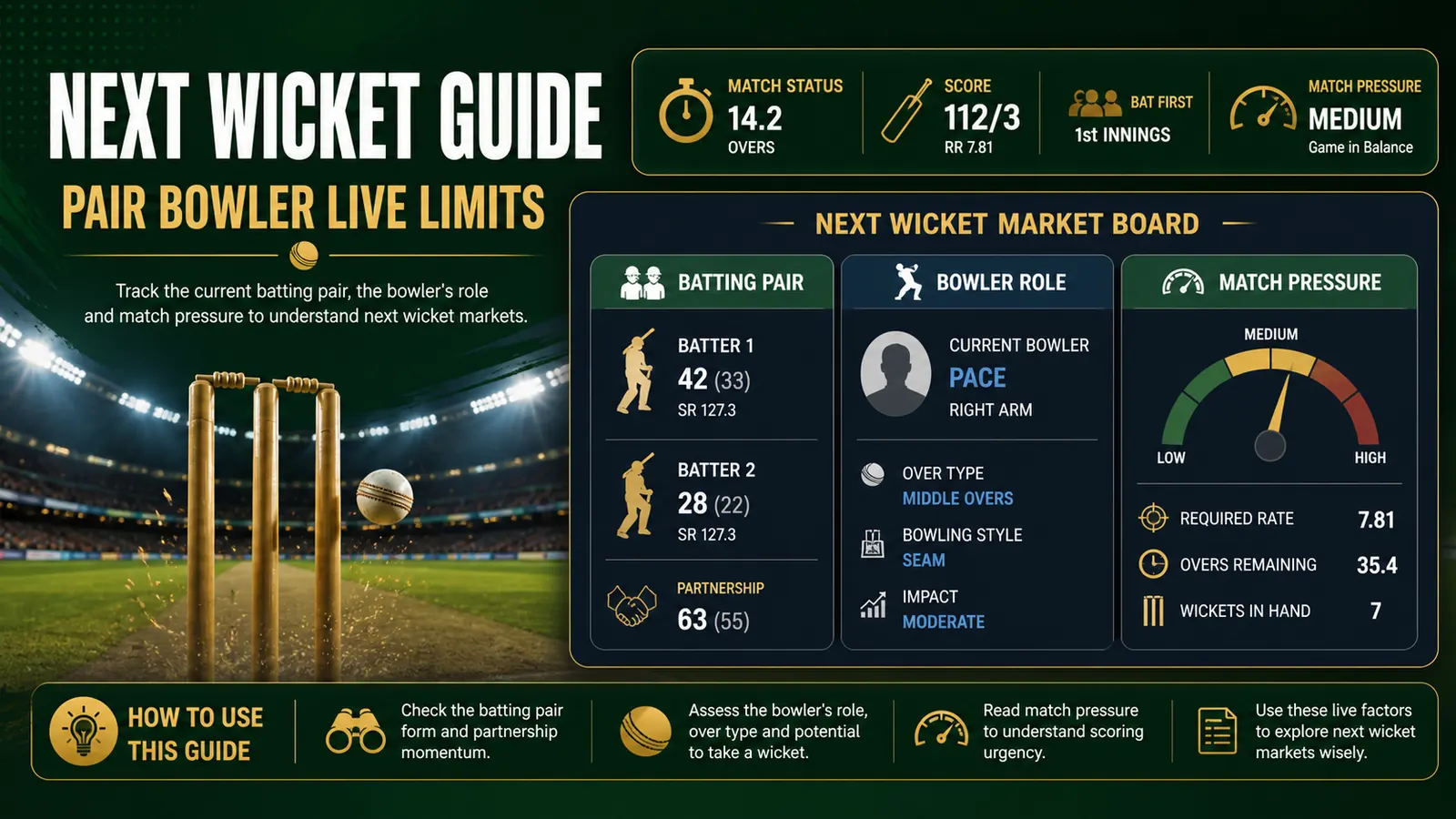
A next-wicket market is a short-window question. It depends on who is batting, which bowler is about to bowl, how much pressure the chase creates, and whether the market is still open under clear rules.
The right starting point is the next phase, not the last highlight. A wicket may feel close after a loud over, but the opportunity can change when the field, bowler, or batter changes.
Editorial note: Reviewed by IPL Betting Editorial Team. Last updated: August 2026. Evidence method: compare published competition rules, current match information, and the exact market terms shown by your chosen platform. Match information, team news, weather, prices, and market terms can change, so keep every decision within a planned limit.
Check the Batting Pair
Write down the two batters, who is new, and who is facing the next delivery. A settled pair can rotate strike differently from a new batter joining a long-standing partner.
Also check the batting order behind them. A team with depth may absorb a wicket differently from a team protecting one remaining specialist.
| Pair detail | Question | Why it matters |
|---|---|---|
| Striker | Who faces the next ball? | Immediate matchup changes |
| Non-striker | Is the partner set or new? | Partnership stability matters |
| Wickets | How many remain? | Pressure and risk change |
| Next batter | Who is likely to enter? | Role affects the next phase |
Identify the Next Bowler
The next wicket opportunity depends partly on the bowler’s role and the phase. A new-ball spell, a middle-overs spinner, and a death over create different questions.
Do not treat a bowler’s recent wicket as proof that the next over will follow the same path. Check the matchup, length, field, and whether the bowler is actually expected to bowl.
| Bowler check | What to note | Caution |
|---|---|---|
| Phase | Powerplay, middle, or death | Role is not interchangeable |
| Style | Pace, spin, angle, variation | Batter matchup changes |
| Overs | Available and expected | A named bowler may not be next |
| Field | Attack or boundary protection | Plan can shift after one ball |
Use Pressure Without Overstating It
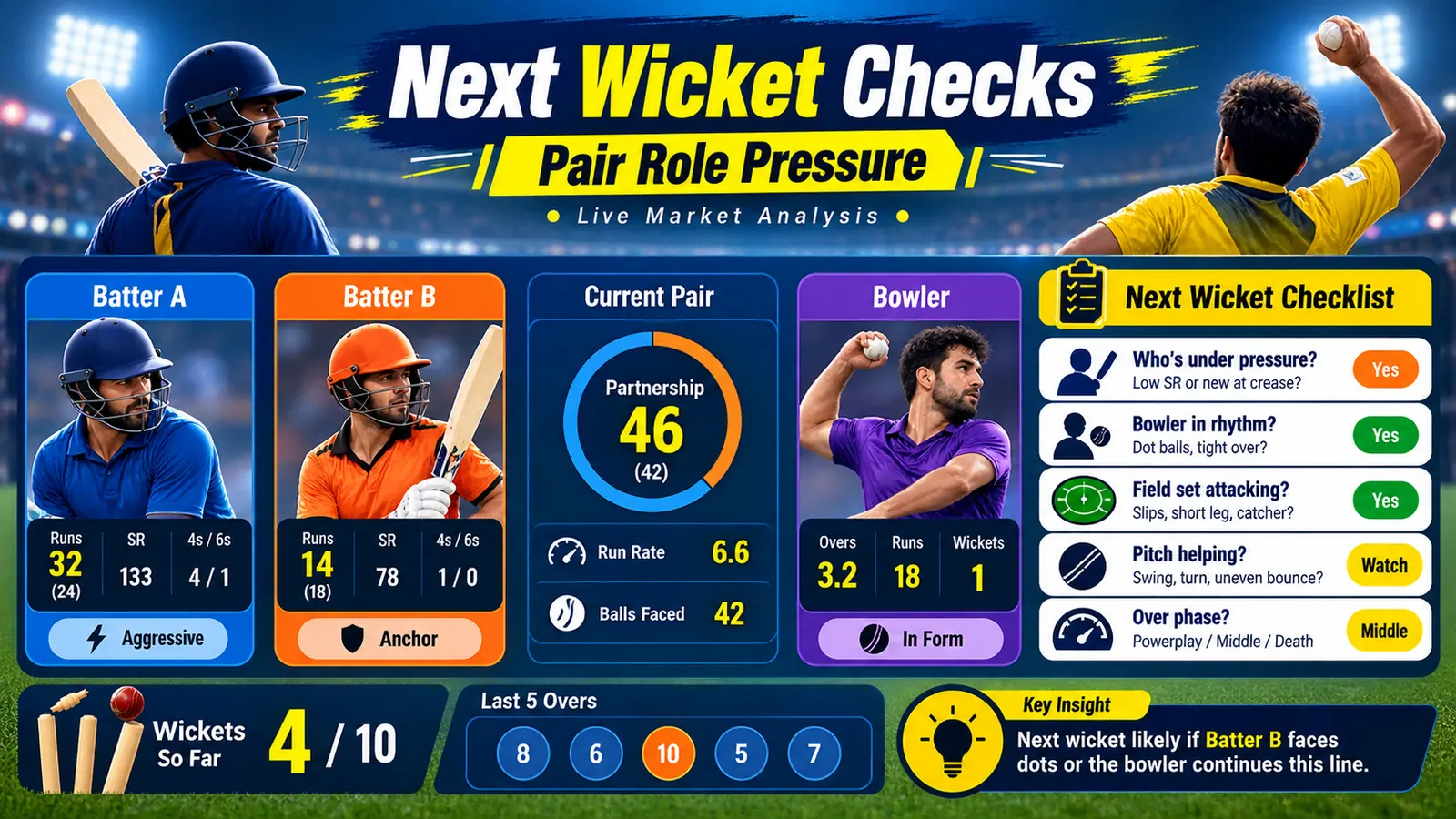
Required rate, a new batter, or a long partnership can create pressure. The pressure should be described as a condition that may alter shot selection, not as a prediction that a wicket must arrive.
If the market is live, the delay between the ball and the displayed line also matters. A screen may suspend or move while the next event is already developing.
Check Live Limits and Settlement
Live markets can have limits, suspension rules, and participation conditions that differ from pre-match markets. Read the market detail before entering a short-window selection.
When the next bowler is not confirmed, the line is suspended, or the exact settlement condition is hidden, pause. A short market should not require a long guess.
FAQ
What is a next-wicket market?
It generally asks about the next wicket event within the market’s stated innings, player, or team scope. Check the exact rules.
Why does the batting pair matter?
Striker, non-striker, partnership stability, and the next batter all affect the immediate match context.
Does a strong bowler guarantee a wicket chance?
No. Check whether the bowler is next, the phase, the matchup, and the field plan.
What makes a live next-wicket market difficult?
It can suspend quickly, have limited time and limits, and use settlement terms that need to be read before the next delivery.
Source and update note: This evergreen guide should be checked against current official match information, published competition rules, and the exact market terms shown by your chosen platform before you act.
Related Reading
- IPL Wicket Markets Betting Guide ↗
- IPL Run Chase Betting Guide ↗
- IPL Middle Overs Betting Guide ↗
- IPL Player Prop Betting Guide ↗
Take a pause when a material input is unconfirmed or a market rule is unclear. Clear information and a planned limit are more important than forcing a decision.