
Published by IPL Betting. Sources checked on 11 September 2026; examples are illustrative.
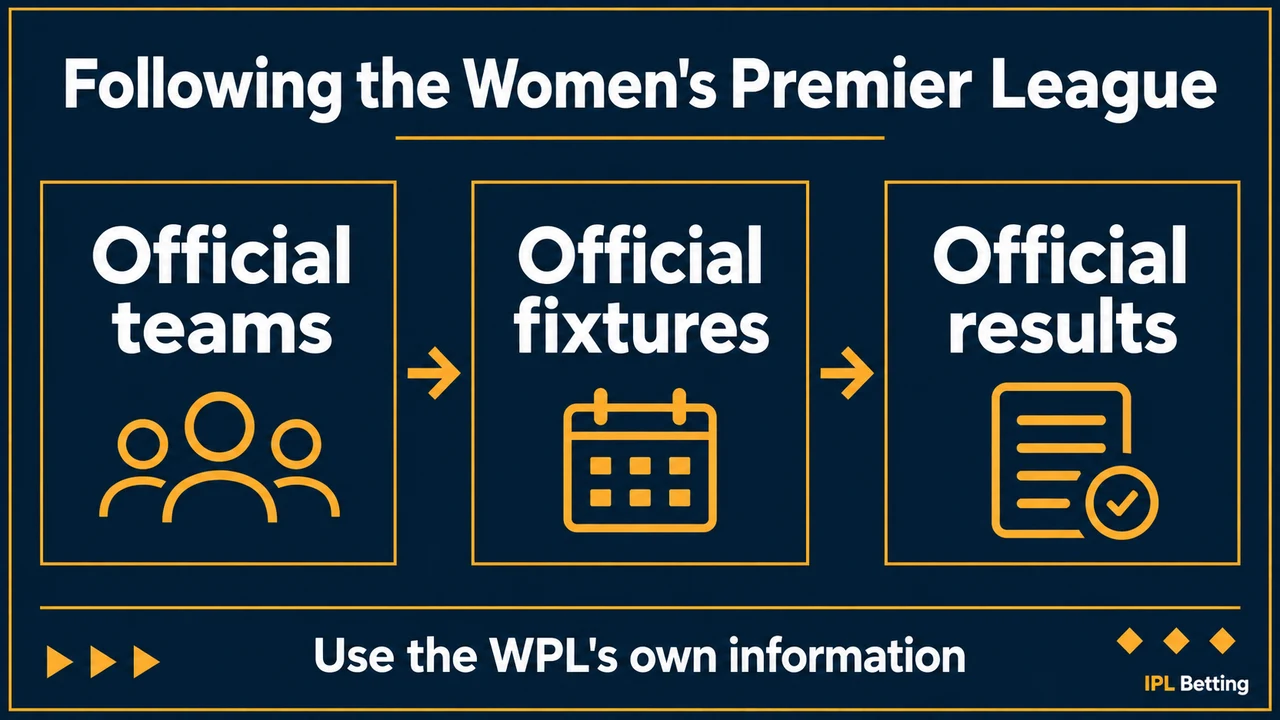
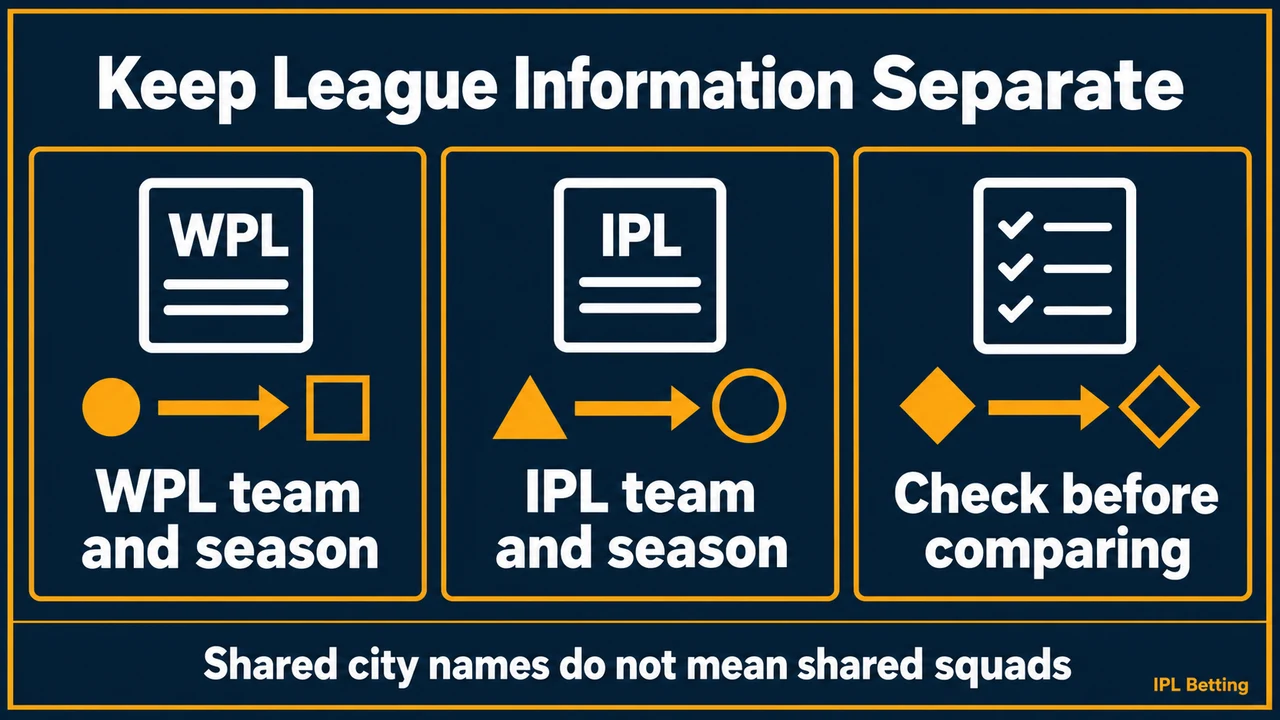
You may recognise a team name in the Women’s Premier League before you know any of its players. The players, results, and season record belong to the women’s competition. An IPL scorecard or squad page cannot fill those gaps just because the branding looks familiar.
If you already follow the IPL, you have a starting vocabulary for watching cricket. Open the WPL team page and check the season before reading its squad or latest match report. This guide focuses on those viewing habits rather than assuming every technical rule is shared between the leagues.
Start with the official five-team directory
The official WPL teams page, checked on 11 September 2026, lists Delhi Capitals Women, UP Warriorz, Mumbai Indians Women, Gujarat Giants, and Royal Challengers Bengaluru Women. Use those entries to reach the women’s team pages. A shortened name in a social post can omit the very word that distinguishes the competition.
For example, a search for “Delhi squad” is too broad for a reliable match note. Add the competition and season, then confirm you have arrived at the WPL team page. Do the same for player profiles: the full name and team association are better identifiers than initials or a shared surname.
You do not need to memorise every squad before your first match. Start with the two teams playing and identify the opening batters, wicketkeeper, and the bowlers used at the beginning and end of the innings. Those roles give the next scorecard a structure you can recognise.
Keep the season attached to every result
The official WPL homepage provides match reports and video material, including its 2026 final and eliminator reports. Check the season and match label before reading a result as current. A recently surfaced clip may describe a match from an earlier campaign.
Build a small viewing note with four fields: competition, season, opponents, and match date. If one field is missing, verify it before adding the result to your record. This takes less time than correcting a list that mixes the men’s and women’s leagues or two separate seasons.
A fixture time and a report publication time serve different purposes. Use the fixture’s stated local time and time zone for planning to watch. Use the match identifier and date to connect the report to the event. Do not treat the timestamp beside an uploaded highlight as the scheduled first ball.
Learn the players through what they actually did
For your first few matches, track actions rather than reputations. Who faced the new ball? Who bowled when the field was spread? Who remained available near the finish? A player’s contribution is easier to understand when it is attached to a situation instead of a highlight count.
Suppose an invented scorecard shows one batter with 35 from 22 and another with 35 from 31. The first scored faster in those innings, but the identical run totals do not tell you who entered at a more difficult moment or faced the stronger spell. Look at the fall of wickets and the partnership before deciding what the two innings accomplished.
Similarly, a bowler’s wicket total needs the overs and match situation beside it. Two wickets in a short spell are not evidence of the same workload as two across a full allocation. Record what happened first; leave broad claims about consistency until you have enough comparable matches.
Do not import an IPL scoring benchmark
A total you remember as ordinary in an IPL match is not automatically a neutral baseline for a WPL match. Even within one competition, venues, surfaces, lineups, and interruptions can change the scoring context. Use comparable WPL scorecards rather than transferring an impression from another league.
Here is a hypothetical comparison problem: a list contains five matches from one venue and two from another, with one rain-shortened innings. Averaging all seven totals produces a number, but it mixes different opportunities to score. Separate the shortened innings and label the venues before deciding whether the average says anything useful.
That is a reason to be careful with comparisons, not a claim that one league is easier or more predictable. A small collection of results can be interesting without supporting a confident forecast. Watching more matches should improve the questions you ask before it increases the certainty of your conclusions.
Check the rule you need, not the rule you remember
When a substitution, review, or interruption seems unfamiliar, identify the exact point of confusion. Then consult the current WPL playing-conditions page and the match officials’ explanation. Do not rely on a men’s IPL rule graphic merely because both competitions are T20 leagues.
For a question about substitutes, overseas players, or reviews, use the WPL document for that season. Those details require the relevant current document. It is better to leave a specific technical question open than to turn a familiar rule into an unsupported explanation.
A manageable first-match routine
Before the match, confirm the competition, date, and teams from the official source. At the toss, distinguish the announced playing side from a broader squad list. During the first innings, note the score, overs, and wickets at a few natural breaks. During the chase, follow the target and remaining deliveries together.
Afterward, compare your notes with the full scorecard and match report. Add one observation that the highlights missed: a quiet over, a partnership after wickets, or a change in who bowled. That small habit gives you a more reliable understanding of the women’s league than starting with borrowed assumptions about its teams.
Questions readers ask
Can I use an IPL squad page to identify WPL players?
Use the WPL team page instead. A familiar franchise name does not mean the men’s squad belongs to the women’s competition. Confirm the competition and season before copying a player list.
How do I know whether a highlight is from the match I mean?
Match the competition, season, opponents, and match date to the official report. The video’s upload time may be later than the event and is not a substitute for the fixture date.
Should I judge a WPL total against an IPL total I remember?
Start with comparable WPL matches and label the venue, innings length, and conditions. A total from another competition may describe a very different situation, so it is a poor standalone benchmark.
Related reading
Indian Premier League Explained: Format, Teams, Match Rhythm, and the Best Starting Point for New Readers; IPL Teams Guide 2026: Styles, Roles, and Match-Day Notes; IPL Impact Player Rule Guide: What Mid-Match Substitutions Change.