
A ball appears to bend away from the batter, then changes direction again after landing. Calling the whole delivery “swing” hides when the movement occurred. Movement through the air and movement off the surface are different observations, and one delivery can contain both.
Watch the release, the flight, the bounce and the path towards the bat in that order. You may be able to describe when the direction changed even if the camera cannot establish the exact grip or physical cause. This is a replay-reading guide, not a diagnosis of a bowler’s technique from one clip.
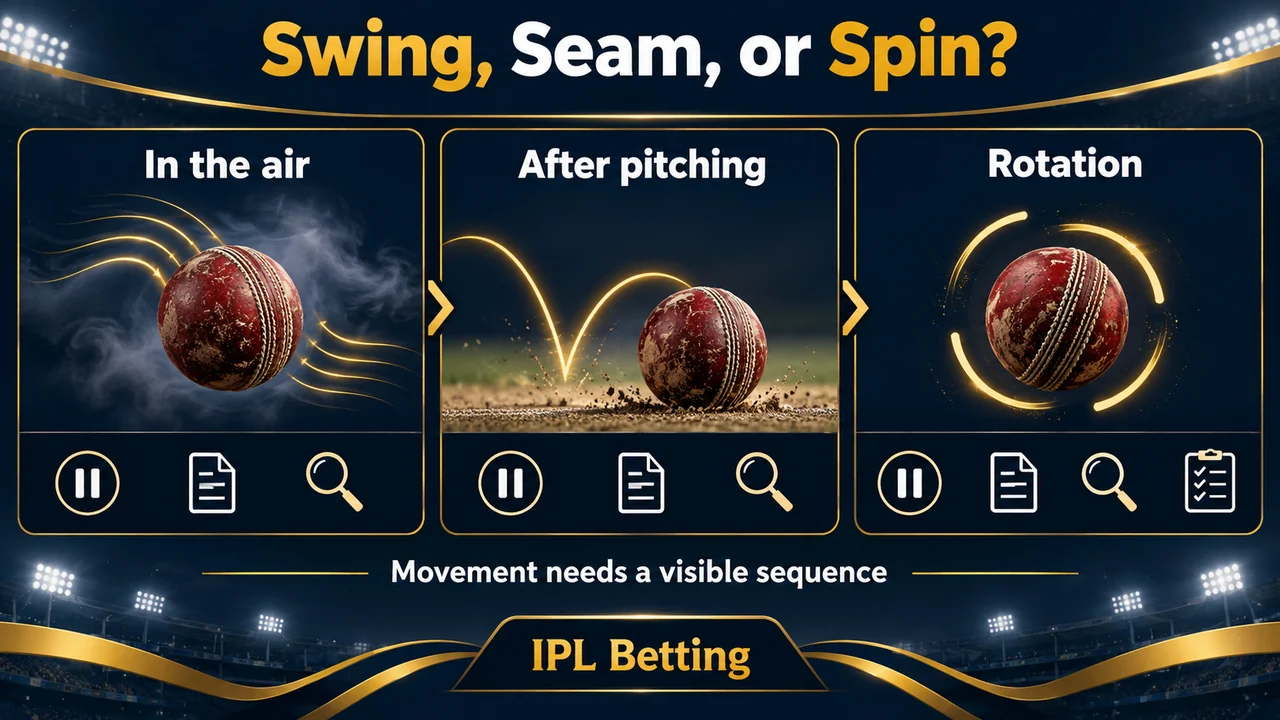
Start with when the change occurs
Swing describes sideways movement during flight. Seam movement refers to deviation associated with the ball’s contact with the pitch. Spin bowling uses rotation; a spinning delivery can have movement in flight and turn after pitching. A single word on commentary may name the bowling style rather than each movement visible in the replay.
Cricket Australia’s report on wobble-seam bowling distinguishes seeking movement in the air from seeking a reaction off the pitch, through first-person accounts by bowlers. The aerodynamics paper held in NASA’s technical repository examines swing and surface/seam effects. Those sources explain why the phases matter; they do not prove what happened in an unidentified television clip.
A replay notebook, not a verdict
| Stage | Observation to record | What remains uncertain |
|---|---|---|
| Release | Visible hand and initial angle | Grip may be hidden by the camera. |
| Flight | Curving path before the bounce | Perspective can make a path look different. |
| Pitch contact | Where the ball lands | A cropped frame can hide the precise point. |
| After bounce | Change towards or away from the bat | The visible change alone may not establish its cause. |
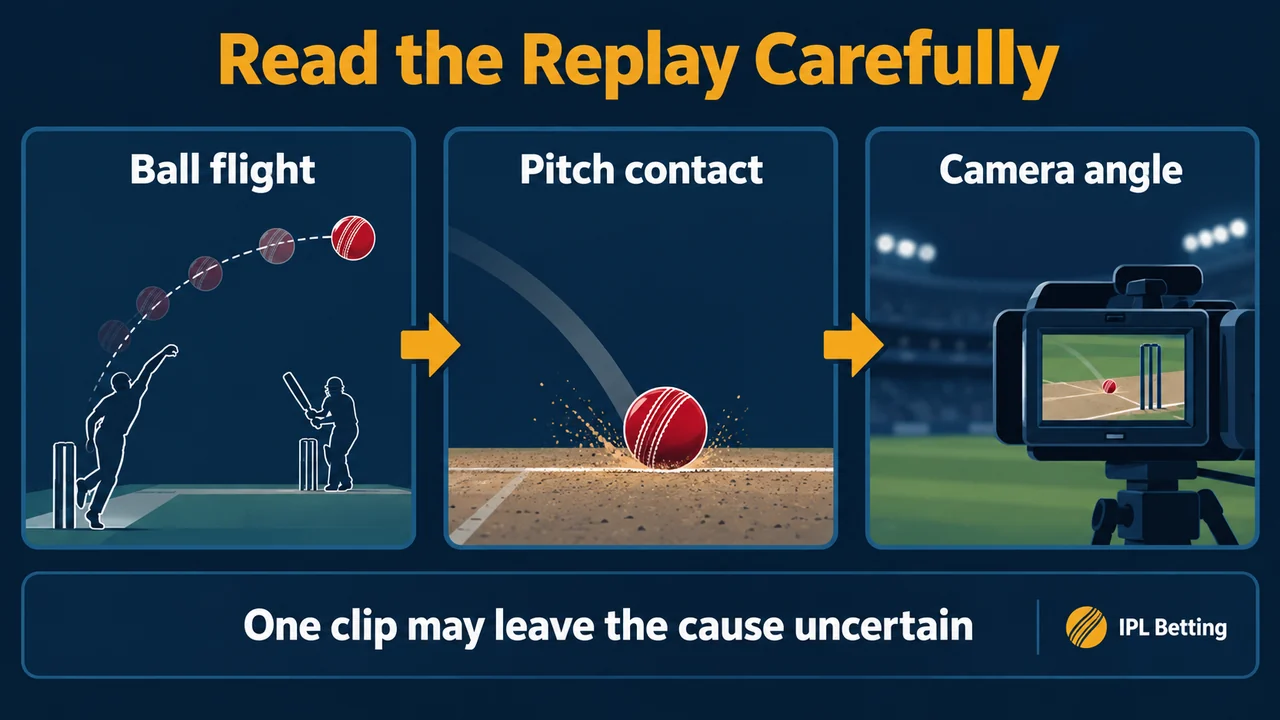
Do not use the batter’s miss as a measurement of movement. A batter can misjudge a straight ball or change a shot late. Describe the ball’s route first, then the response. That leaves space for the replay to confirm or contradict your initial impression.
Exercise one: two changes, not one label
Imagine a right-handed batter facing a delivery that gradually curves away in flight and then deviates towards the stumps after bouncing. Your note can say “away before pitching; inward after pitching.” That description preserves the evidence without requiring you to claim a precise seam position.
If commentary calls it an outswinger, you can understand the flight label while still noticing the later movement. The two observations do not cancel each other. Similarly, “seamer” can name a pace bowler’s style, while a particular ball from that bowler may show visible swing.
Compare two angles if available. One may show the release more clearly; another may make the bounce easier to locate. Do not stitch them into a falsely continuous measurement if they show different deliveries. The over and ball label can help establish that both replays refer to the same event.
Exercise two: a turning ball
In another invented clip, a slower delivery changes direction noticeably after the bounce. The bowler’s action and a close view of the release suggest spin, but the seam is not visible. A cautious viewing note is “spin delivery; visible turn after pitching,” rather than a precise claim about revolutions or a named variation you cannot identify.
The direction towards or away from the batter must be related to that batter’s stance. Physical movement to the same side of the pitch can be towards one batter and away from another. Reset your reference when a left-hander replaces a right-hander. Do not reuse the television screen’s left and right as permanent off-side and leg-side labels.
What one angle cannot tell you
A ball viewed from an offset camera may appear to cross the stumps because of the original release angle. Crossing a line on the screen is not necessarily curving. To claim visible curve, you need enough of the flight to distinguish a changing direction from a straight path seen at an angle.
The ball can be blurred or briefly hidden. If the broadcast cuts from release to the bat, the missing frames may contain the very bounce you are trying to classify. Mark that observation unavailable. A slow replay improves viewing time; it does not restore detail that was never captured.
Nor should you infer a whole pitch’s behaviour from one ball. A single deviation is an event. Repeated observations under comparable angles can suggest a pattern, but different lengths, ball condition and bowling choices complicate the comparison. Keep those qualifications beside the note rather than turning one dramatic wicket into a venue rule.
A useful sentence during the next over
Try this form: “The ball appeared to move away before bouncing; the later path was obscured.” It is more informative than “the pitch is swinging.” If the next replay supplies the missing view, revise the sentence. If it does not, you still have an honest description of what you saw.
Understanding the movement helps you follow commentary. It does not make the next delivery predictable or establish an advantage in a betting market.
Related reading: Cricket rules introduction; IPL Left-Hand vs Right-Hand Matchups: What the Data Can Actually Tell You; IPL Pace vs Spin Matchup Guide: Pitch, Roles, and Sample-Size Checks.
Prepared by IPL Betting Editorial Team. Updated 4 October 2026. The linked official materials support the rules identified in this guide. Match examples are invented exercises, and a competition’s published conditions can differ from the general Laws.