
Updated for July 2026: Prepared for readers in the Philippines by IPL Betting Editorial Team. Match-day lineups, injuries, venue conditions, prices, and platform rules can change quickly, so confirm current details before you act.
This article is written as a decision guide, not a promise of results. If the reason for the bet is unclear after lineups and price checks, skipping the market is still a valid choice.
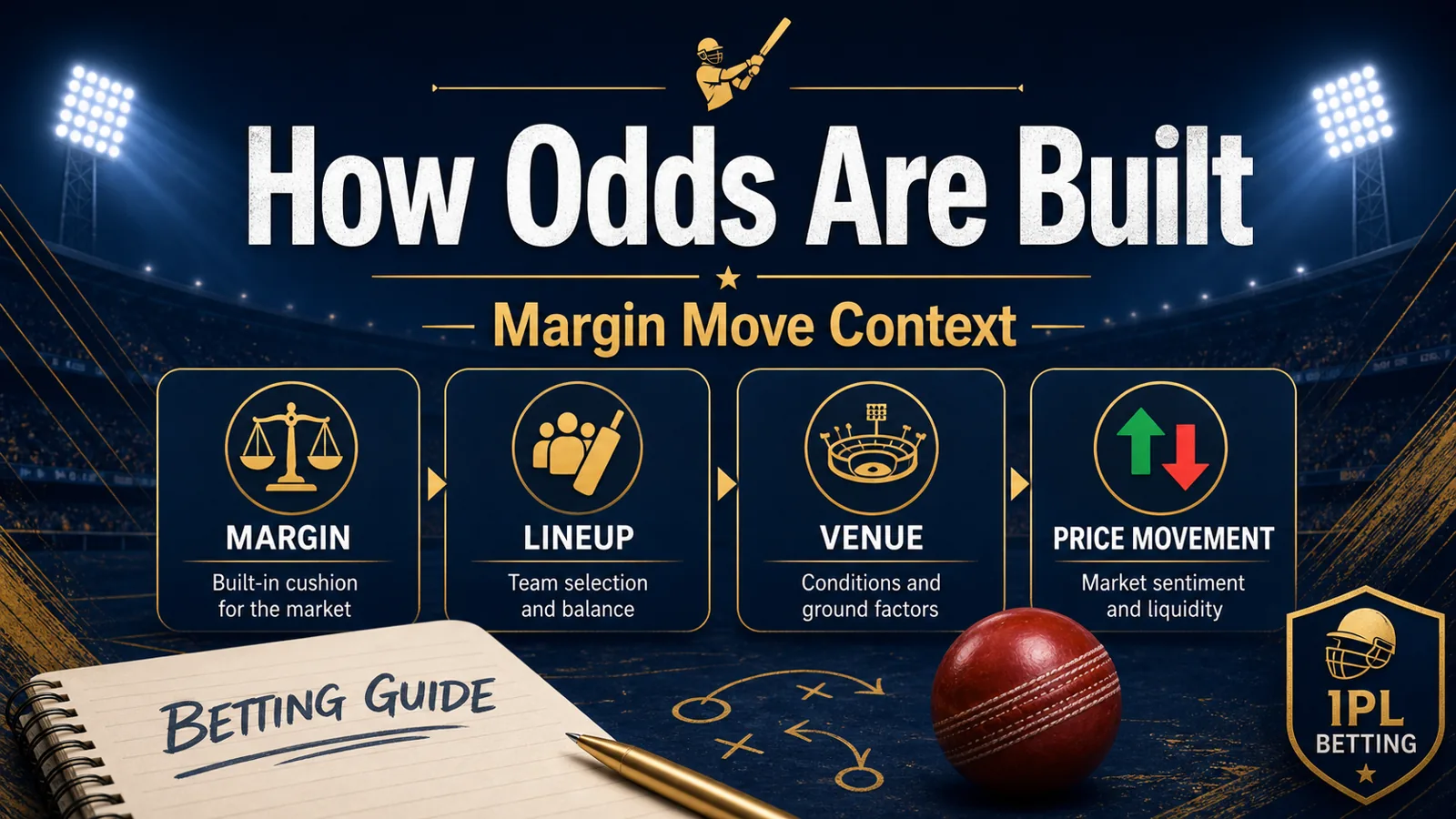
An IPL price is not pulled from thin air. Bookmakers start with team strength, venue profile, likely scoring range, player availability, and then add their own margin before the market ever opens.
That means a moving number is not automatically a signal to chase. A better habit is to ask what changed, who benefits from the change, and whether the current price still matches the cricket reason you had in mind.
Quick Answer
Bookmakers usually build an IPL price from a base view of team quality, likely playing roles, venue behavior, toss impact, and expected public demand. After that they add margin and adjust the number when new information arrives.
For readers, the job is not to guess the bookmaker model in full detail. The job is to decide whether the current price still reflects the match in a way that makes sense after lineups, venue, and timing are checked.
What Shapes an Opening IPL Price
Before the first public number appears, a bookmaker has already translated cricket factors into risk. The opening line is a summary of that work, not a simple popularity poll.
| Factor | What Bookmakers Read | Why Bettors Should Care |
|---|---|---|
| Team balance | Top order, death bowling, spin options, and fielding depth. | A famous team can still be overpriced if the current balance is weak. |
| Venue profile | Average totals, boundary size, pitch pace, and late-innings behavior. | Some grounds reward batting depth while others punish loose bowling faster. |
| Player availability | Confirmed lineup, workload, injuries, and late role changes. | A small lineup shift can matter more than a week of headlines. |
| Toss and innings shape | Whether chasing or setting usually changes the match picture. | If toss matters at that ground, the opening number may need a second look later. |
| Market demand | Public support and expected money flow on a popular side. | Popularity can shorten a price even before the strongest cricket reason appears. |
Margin Is Why Two Prices Can Both Feel Expensive
Bookmaker margin is the built-in cushion that allows a market to function. It means the displayed prices do not add up like a perfect fair coin. That is why a number can look close to your estimate and still offer little room for error.
The practical takeaway is simple: do not treat a short price as trustworthy just because it looks familiar. Ask whether the price still leaves enough breathing room after margin, venue, and lineup uncertainty are accounted for.
Price Movement: Signal or Noise
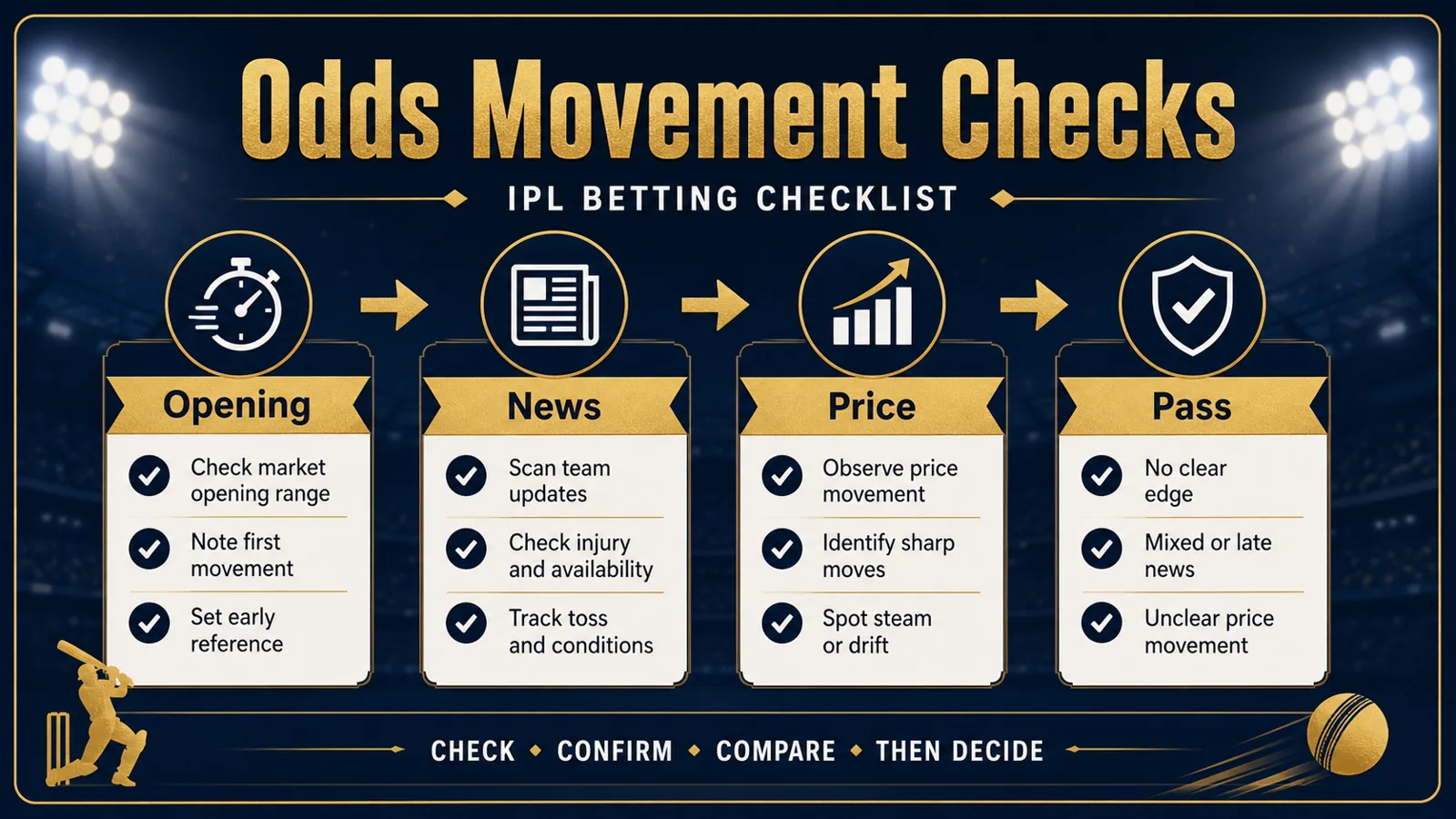
Some moves deserve attention. Others are just the market getting busy. A calm reader reacts differently to each type of change.
| Move | Likely Cause | Better Response |
|---|---|---|
| Small early drift | Routine balancing before stronger information arrives. | Note it, but wait for lineup and toss before changing your view. |
| Sharp move after team news | A meaningful role or availability update. | Recheck the matchup and decide whether the new price still fits your original plan. |
| Late public steam | Heavy support on a popular side close to the start. | Avoid paying a worse number just because the market became noisy. |
| Frozen price after a rumor | The book is managing uncertainty or waiting for confirmation. | Treat the market as incomplete and do not force a read too early. |
| Wild live swing | A wicket, boundary burst, or short overreaction window. | Check wickets in hand and phase context before assuming the new number is correct. |
A Better Match-Day Worksheet
Before you act on an IPL number, write down four lines: what the opening view was, what changed, whether the change was cricket-related, and what the current price now asks you to pay.
If you cannot explain the movement in one or two clean sentences, that is usually a sign to wait rather than chase.
When Not to Read Too Much Into the Number
Do not overread a move when the lineup is still uncertain, the toss matters heavily, or public money is clearly crowding the same side late.
In those moments, the best use of the market is often as a warning light. It tells you the number is changing, but not that you must follow it.
Post-Match Review
After the match, note whether the final price move reflected genuine cricket information, simple public demand, or a mix of both.
That review habit makes the next price easier to read than memorizing one dramatic move from a single match.
Source and Update Note
This July 2026 refresh keeps the article focused on how bookmakers calculate IPL odds, match-day process, and risk-aware decision making for IPL readers.
Readers should still verify current team news, line movement, match conditions, and the house rules shown on their chosen platform before placing any bet.
FAQ
Do bookmakers only look at team strength when setting IPL odds?
No. They usually blend team quality, player roles, venue profile, toss expectations, and market demand before the line opens.
Why can an IPL price move before the toss?
Because lineup hints, public support, or bookmaker balancing can move a market before toss information arrives.
Does line movement always mean sharp information?
No. Some movement is meaningful, but some is just late demand or routine balancing. Context matters more than the move alone.
How should beginners use opening odds?
Use them as a starting reference, then compare them with lineup, venue, and price movement before making a final decision.
What is the safest response to a price that no longer makes sense?
Pass the market. A confusing number is often a sign that the match is not offering a clean decision yet.