
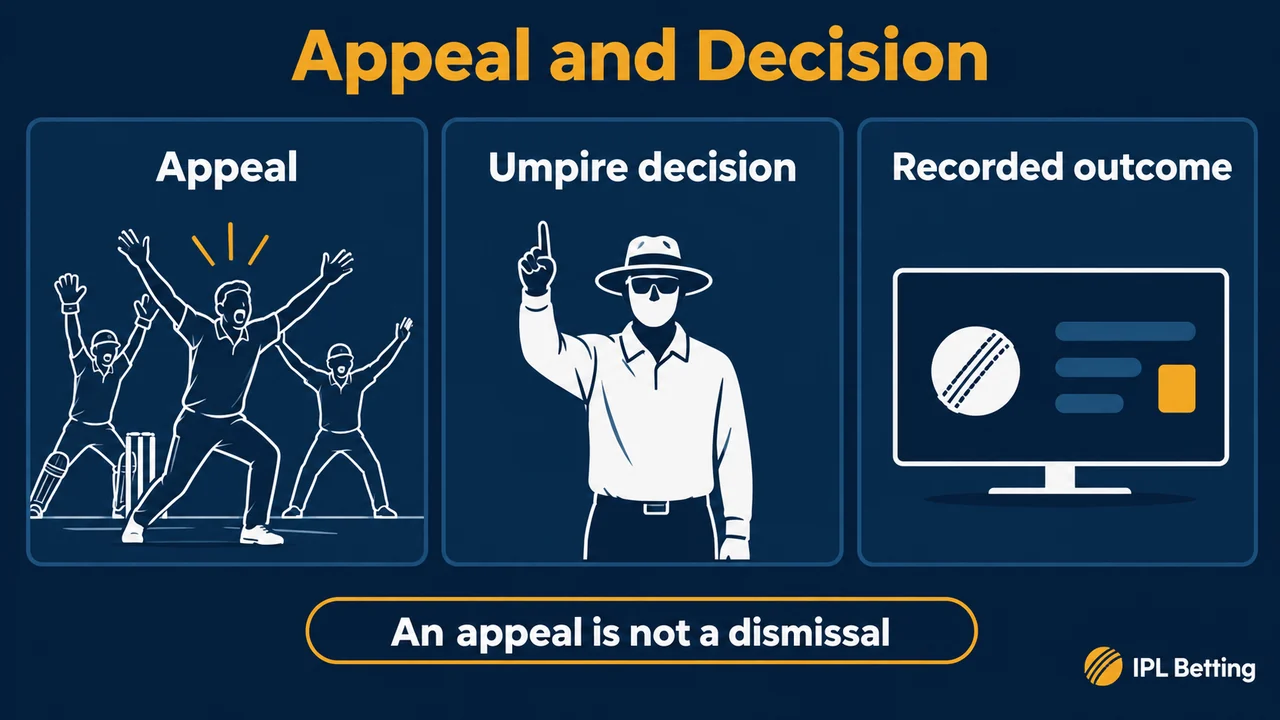
The fielders shout, the batter looks towards the umpire, and nothing happens for a moment. An appeal asks for a decision; the volume of the shout is not the decision itself. Watch the responsible umpire’s ruling before changing the wicket count in your notes.
An appeal, a ruling, and a review are separate stages. This guide follows the first two, including why a batter may return after walking away. It does not supply any league’s DRS timer or review allowance.
“How’s that?” asks a broad question
MCC Law 31 treats “How’s that?” as an appeal covering all dismissal methods. It generally requires a fielder’s appeal before an umpire gives a batter out, while allowing a batter who is out to leave without waiting for one.
For a viewer, that means the appeal does not have to name the dismissal correctly before the officials consider it. Commentary may begin with “caught behind” while another issue is also relevant. Wait for the announced method instead of treating the first description as the scorecard entry.
Which umpire answers?
Law 31 assigns striker-end hit-wicket, stumping and run-out appeals at the keeper’s end to the striker’s-end umpire. Other appeals belong to the bowler’s-end umpire. The officials can consult about facts one may have seen better.
| What you are following | Useful camera target | Avoid |
|---|---|---|
| An appeal at the keeper’s wicket. | The relevant striker-end official. | Assuming the bowler-end official decides everything. |
| An LBW appeal. | The bowler-end official and final announcement. | Treating a pad close-up as the ruling. |
| Consultation between officials. | The decision after the discussion. | Calling the pause a dismissal. |
| An announced review. | The original call, then the review result. | Skipping the original call. |
These are viewing cues, not a demand that a broadcaster show a particular angle. If the camera stays on the batter, the decision may occur off-screen. Use the announcement and official record to fill that missing view.
The end of an over is not the whole appeal window
The law’s appeal timing test is tied to the next run-up or bowling action and the call of Time. Calling Over does not itself remove an otherwise valid appeal before the following over starts. The exact law and any competition procedure should be checked for the match.
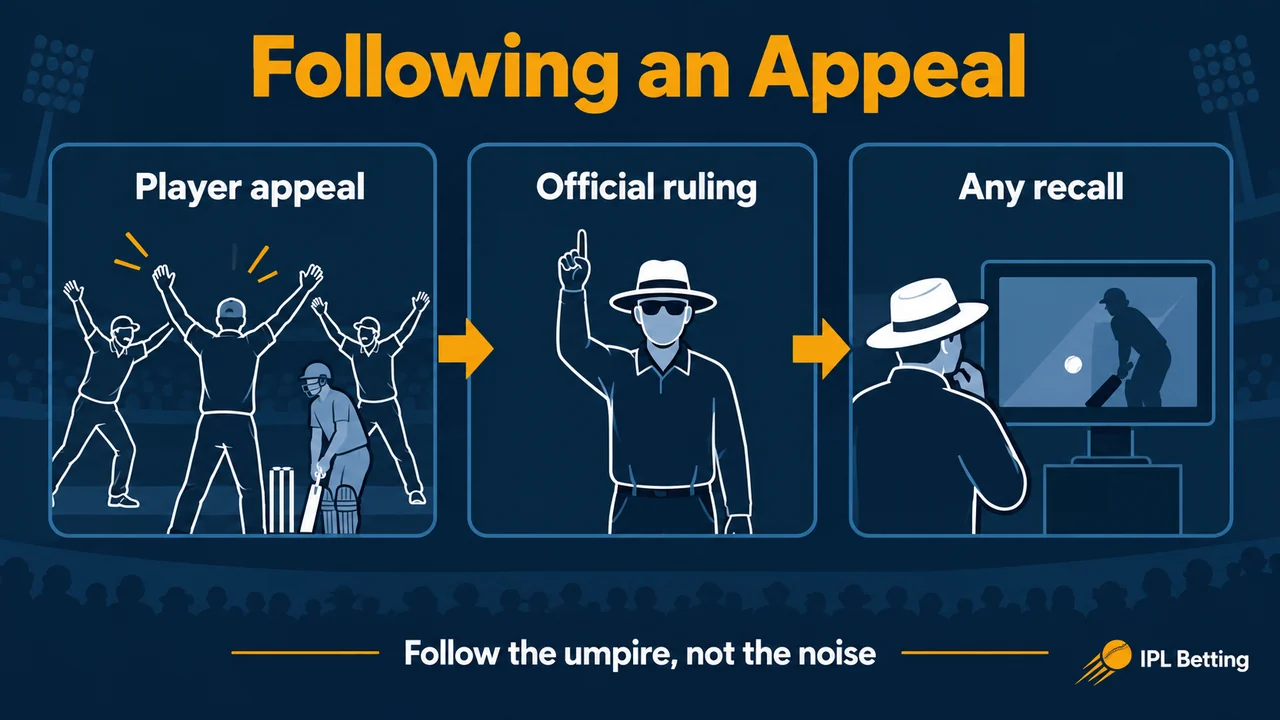
Imagine a fielding side discussing a possible dismissal after the sixth delivery. Your viewing note should say “discussion after over,” not “too late” merely because the camera has changed ends. Whether an appeal was made within the permitted window is the decisive missing fact.
Conversely, a replay appearing in the next over does not establish that a valid appeal was made late. A replay shown at 8.1 overs may concern an appeal made after 7.6. Broadcast time and on-field time are different records. Preserve those two timestamps rather than drawing a timing conclusion from the edit.
Two different reasons a batter can be recalled
Law 31 distinguishes a batter leaving under a mistaken belief that they were out from a captain withdrawing an appeal with the responsible umpire’s consent. A recall is an official act, not a general right for players to reverse any outcome by agreement whenever they choose.
In a hypothetical clip, a batter walks towards the pavilion before any out signal. The umpire intervenes and calls the batter back. Do not file that automatically as a review overturning the decision: there may have been no out decision to overturn.
In another hypothetical clip, an out decision has been made, then the fielding captain asks to withdraw the appeal. Record the umpire’s response and whether the withdrawal was accepted within the permitted window. A handshake between players is not enough evidence that the scorebook should remove the wicket.
Build a four-part account
Use this order when explaining the incident to a friend: what the fielders appealed for, which official answered, the decision given, and any subsequent authorised change. If one part is missing, describe the gap instead of attaching a confident dismissal label.
For the resulting batting entry, read our dismissal and bowling-credit guide. If a review followed, use the LBW and DRS guide. Neither the excitement of an appeal nor its duration tells you whether a bet was correctly settled; that needs the final result and the particular market terms.
Source and method: Prepared by IPL Betting Editorial Team from the linked official material. The viewing exercises are invented, not match records. MCC’s 2026 Laws took effect on October 1; that date alone does not establish IPL adoption. For a specific fixture, check its season’s playing conditions.
For surrounding context: Cricket rules made simple; Cricket Dismissals Explained: Team Wickets, Bowler Credit, and Retired Batters; LBW and DRS Explained: Following a Cricket Review from Appeal to Decision.