
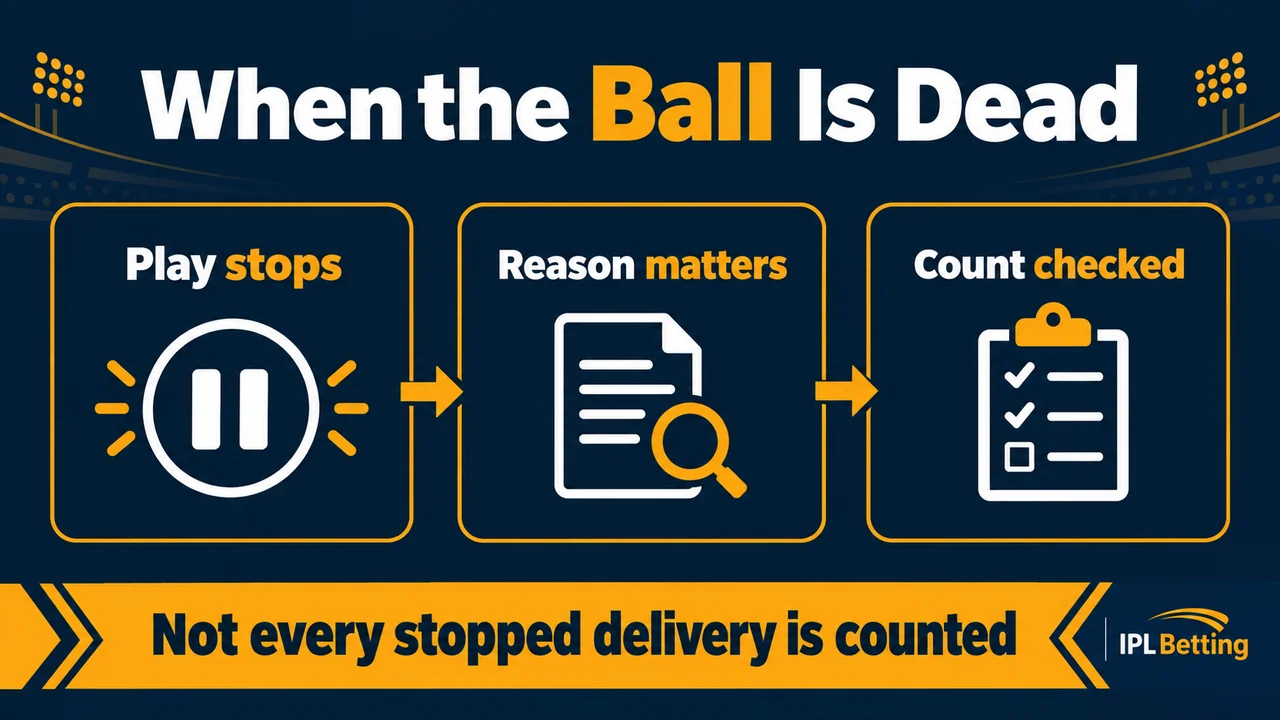
A bowler delivers, the umpire calls Dead ball, and the batter steps away. Should the over advance? The words “dead ball” alone do not answer that. They tell you play has stopped; the reason and timing determine how the delivery is counted.
Keep three questions separate: when did the ball become dead, did this delivery count, and what runs or penalties were awarded? Do not erase runs, penalties, and the delivery row together merely because play stopped.
An ordinary delivery ends too
Under MCC Law 20, the ball becomes dead in ordinary situations as well as exceptional ones. A completed play is not active forever. The law also states that a decision change cannot bring that same delivery back into play once it is dead.
Picture a legal dot ball safely gathered by the keeper, with both sides treating play as finished. That is different from an umpire interrupting a delivery before the striker has an opportunity to play it. A stopped ball and a cancelled valid-ball count are therefore not synonyms.
When watching, do not use body language as the only clock. A batter strolling away may believe the play has ended, but the official status still matters. Follow the umpire’s call and reason, then compare the final record.
Opportunity to play is a key checkpoint
Law 20.7 generally distinguishes whether the striker had an opportunity to play the delivered ball. No-ball, wide, and specified exceptions must still be checked. A striker not being ready has a particular test involving an adequate reason and no attempt to play; merely waving a hand is not a universal exemption.
| Teaching situation | Question to resolve | Viewing note |
|---|---|---|
| Ordinary legal dot, play ends normally. | Was there any separate reason not to count it? | Ending play does not automatically undo the ball. |
| Stop before a fair opportunity to play. | What reason did the umpire give? | Hold the count open until the stated reason and official record resolve it. |
| Striker steps away but tries a shot. | Does the stated not-ready test apply? | Do not decide from the step alone. |
| A penalty accompanies the stop. | Which rule awarded it? | Keep the penalty separate from valid balls. |
These rows are invented viewing exercises. They omit unusual interference and dismissal disputes so that the counting question stays visible. They are not rulings on a real match.
Do not use a stopped ball to invent a zero
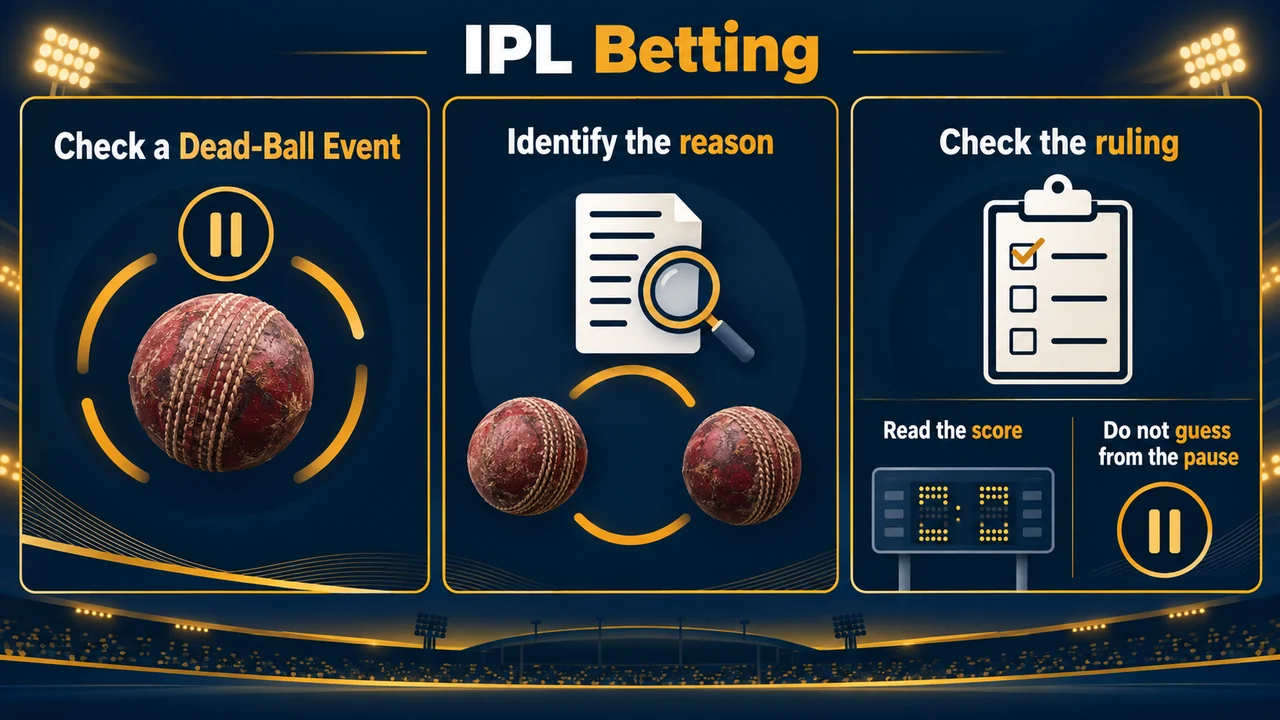
Suppose your worksheet starts at 45/1 after five valid balls of an over. An event follows, then the umpire stops play. Write an unresolved row with the official reason still blank. If you enter zero runs and the sixth valid ball immediately, you have made two decisions that the call alone may not support.
After the announcement, update the run award and valid-ball flag independently. If the official record keeps a penalty but repeats the delivery position, those fields are answering different questions. MCC Law 17 supplies the surrounding over-count framework. There is no need to force events to equal valid balls.
If an app replaces its entry a few seconds later, replace that row in your notes. Do not append a second physical delivery unless another ball was actually delivered. Save the original and corrected timestamps when you want to investigate the change afterwards.
A simple order for following the restart
First identify the stop signal. Next listen for the reason. Then wait for the officials’ instructions and the updated record. Only then decide which ball position comes next. This order works better than trying to infer everything from a frozen total.
The MCC Laws are a general baseline. For an IPL clip, the season’s competition conditions remain relevant; publication of a newer law edition does not prove that its every change governed an earlier IPL fixture. Betting settlement is a further, separate question for the operator’s terms.
Where should an unexplained event go?
Leave it in an exceptions list: “Dead ball signalled; count not yet confirmed.” That makes the missing information easy to revisit. A deliberate balancing run or a guessed dot ball would hide the uncertainty.
Our ball-by-ball worksheet guide explains how to reconcile a completed over. The extras guide explains allocation after the call is known. Use them after resolving the stop reason, rather than borrowing an answer from an unrelated extra.
Source and method: Prepared by IPL Betting Editorial Team from the linked official material. The viewing exercises are invented, not match records. MCC’s 2026 Laws took effect on October 1; that date alone does not establish IPL adoption. For a specific fixture, check its season’s playing conditions.
For surrounding context: Cricket rules made simple; Cricket Ball-by-Ball Data: Rebuilding an Over Without Double-Counting Runs; Cricket Extras and Free Hits: Where the Runs and Deliveries Go; Cricket Rules Made Simple for IPL Fans in the Philippines.