
Two batters cross for a single. One turns immediately; the other hesitates as the fielder picks up the ball. The second run is a new decision, not an automatic continuation of the first. Both batters and the ball are moving, and the broadcast may show only part of that picture.
To follow running between wickets, watch the call, whether each batter has made their ground, the turn and the fielder’s collection. Speed matters, but a quick runner cannot resolve two partners setting off in different directions. The examples below are invented viewing exercises, not coaching prescriptions or records of real run-outs.
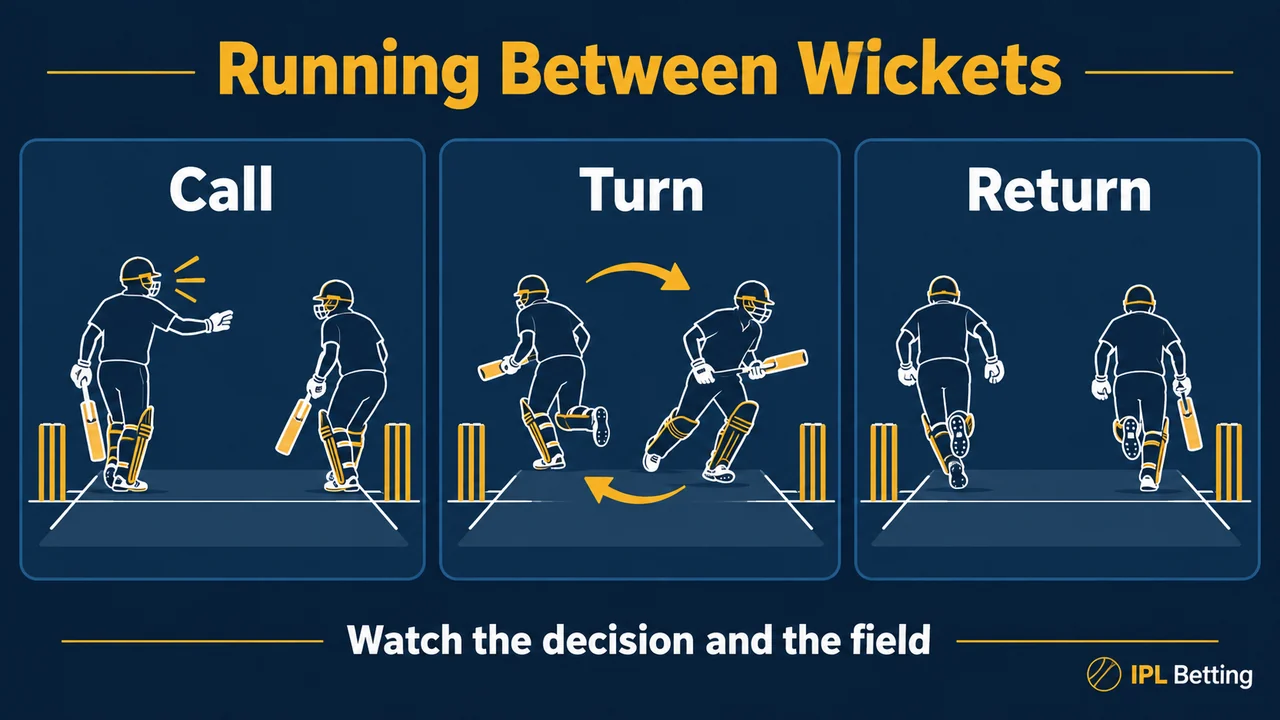
Hear the call, then check the response
“Yes,” “no” and “wait” are communication cues. In a broadcast, you may hear one clearly, hear crowd noise over it or hear a commentator repeat it afterwards. Use the audio alongside the visible movement. The partners’ movement helps show whether both understood the same decision.
Watch the non-striker as well as the batter who hit the ball. A close camera can miss the partner’s initial response. If a later replay shows one player already moving while the other remains near the crease, that may explain the confusion, but it does not prove who made or changed a call you could not hear.
Ground is more than reaching the painted line
MCC Law 30 defines a batter’s ground through the bat or person grounded behind the popping crease, with a protection for subsequent loss of contact after properly grounding while running or diving towards and beyond it. Being near the crease is not the same as satisfying the stated condition.
MCC Law 18 treats a completed run as the batters crossing and making good their ground from end to end. It also addresses short runs and runs completed before a run-out. These are general-law references; competition conditions and the official decision govern a particular match.
Do not freeze the replay only when the runner appears closest to safety. The relevant time for a possible run-out involves the wicket being fairly broken and the batter’s ground, subject to the applicable dismissal conditions. This article follows the running sequence without deciding those conditions from an incomplete clip.
Three fictional fielding situations
| Scene | What to follow | What not to assume |
|---|---|---|
| Ball rolls towards a close fielder | Initial call and both players’ response | A soft shot guarantees a safe single. |
| First run completes as an outfielder collects | Both turns and the release of the throw | Completing one makes the second safe. |
| Throw goes to the opposite end | Runner at that end and any relay | The batter who hit the ball must be the one at risk. |
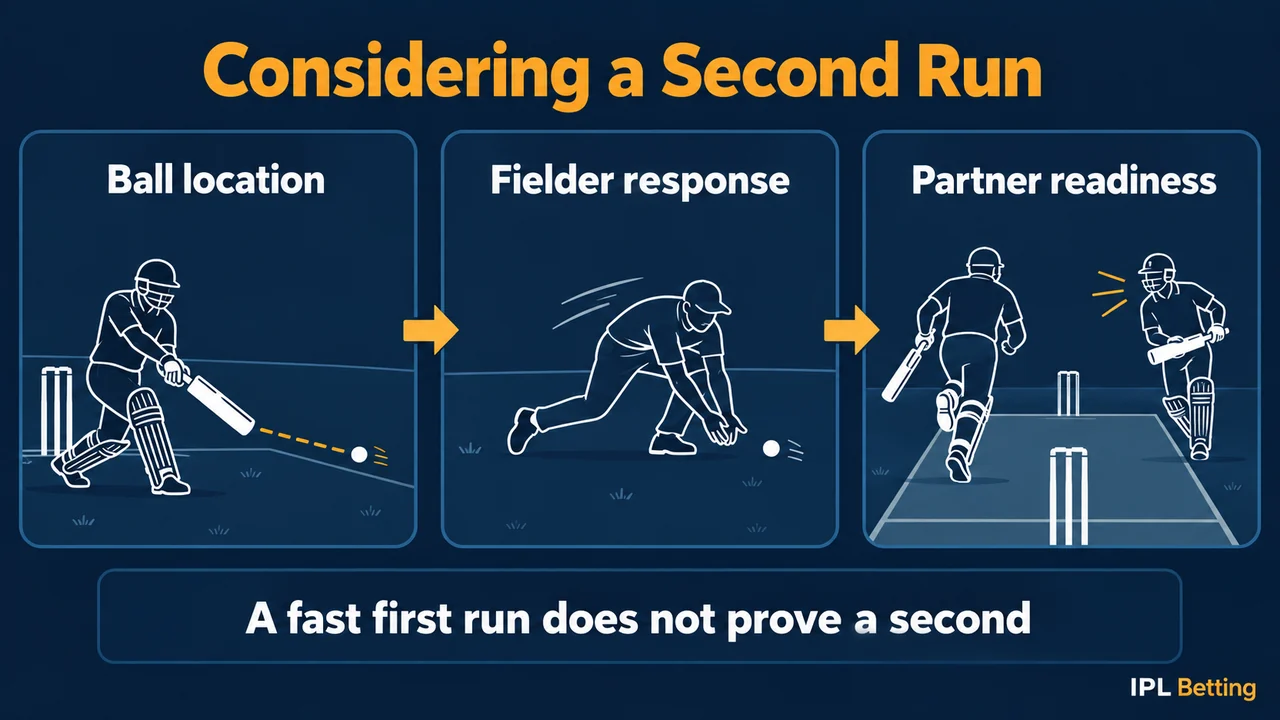
These observations work even when you do not know every field-position name. Locate the ball and the two batters first. A throw’s destination can shift the immediate focus from one runner to the other.
Scene one: the single that was called off
Imagine a batter taps the ball towards a close fielder and starts forward. The partner takes several steps, then both return. The score stays unchanged. That is not necessarily a failed scoring entry: they may have attempted no completed run.
Watch when the fielding pickup became apparent and whether both players had time to respond. A commentator might call the movement indecisive, but the replay may not show the original call. Your note can record the observable action: “both started, then returned; no run completed.”
Scene two: one completed, second abandoned
In another invented play, both batters complete the first run and begin turning. The outfielder gathers cleanly and prepares a throw. One batter signals a stop and both remain at the ends reached after the single. If there is no other event affecting the score, the single remains; considering another run did not erase it.
Now vary one detail: one runner had not made good their ground while turning. That raises a short-run question, rather than a general claim that running speed was insufficient. Keep the turn, the ground and the scoring decision together. A fast turn can be inefficient if it sacrifices the required grounding.
Scene three: a throw to the other end
Suppose the striker finishes nearer the safer end while the partner has a longer remaining distance to the end receiving the throw. The camera may follow the striker out of habit, but the risk is at the other wicket. Both runners need to be part of the sequence you reconstruct.
Do not infer the final dismissal from the throw alone. A miss, a relay, a broken wicket or a grounded bat can change the event. Wait for the final ruling and scorecard entry. This exercise explains why the throw matters, not whether any named batter was out.
Build a four-event viewing note
Write “call / collection / turn / throw.” Add whether each is visible or audible. For example: “call unclear; fielder gathers before second turn; throw goes to bowler’s end.” That note identifies the part of the play you can explain and the part that remains missing.
A partnership total does not capture these decisions individually. The running sequence is useful for enjoying the fielding contest, even when you are not recording statistics or following a market.
Related reading: Cricket rules introduction; Cricket Ball-by-Ball Data: Rebuilding an Over Without Double-Counting Runs; Cricket Dismissals Explained: Team Wickets, Bowler Credit, and Retired Batters.
Prepared by IPL Betting Editorial Team. Updated 4 October 2026. The linked official materials support the rules identified in this guide. Match examples are invented exercises, and a competition’s published conditions can differ from the general Laws.