
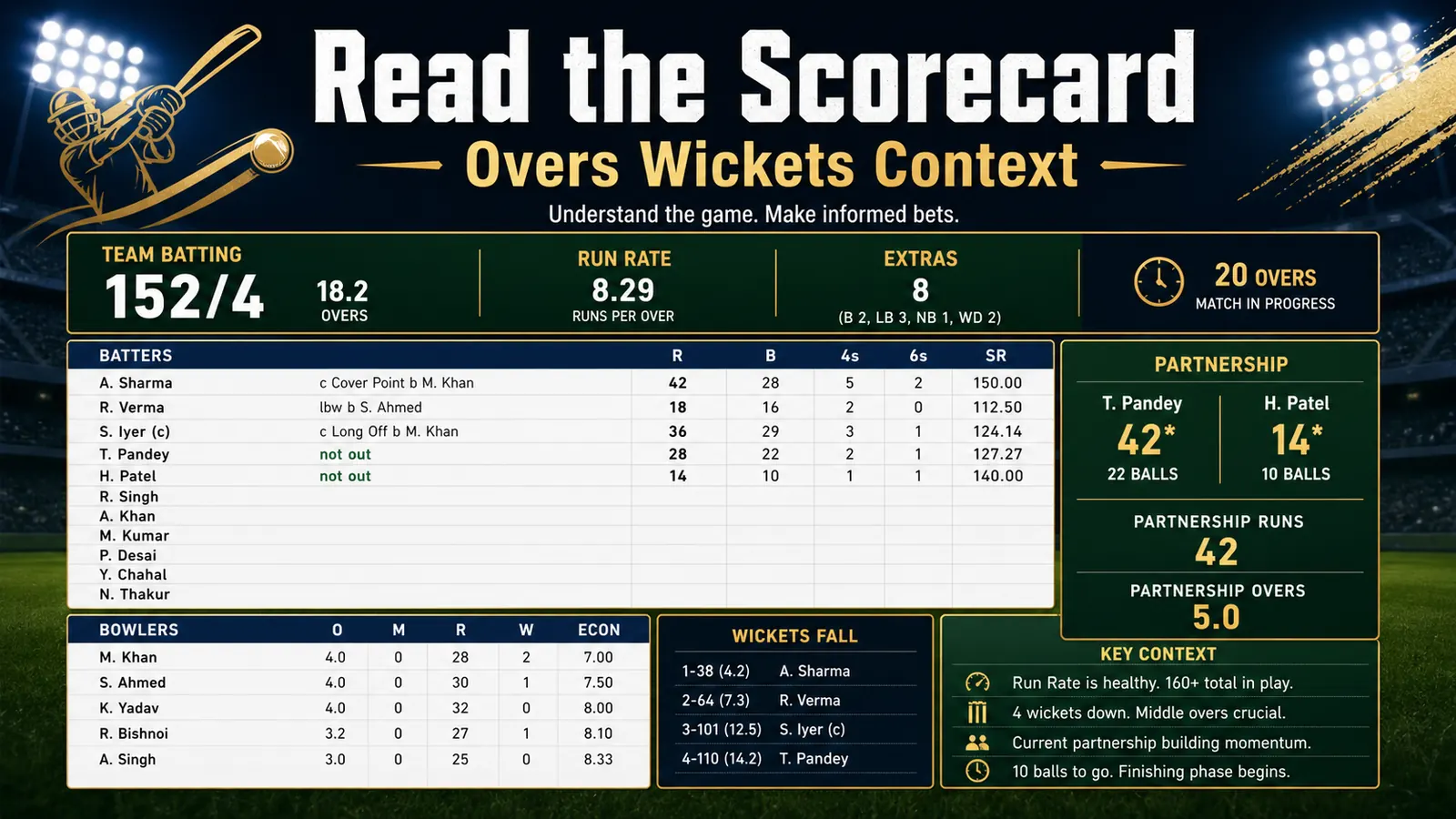
A scorecard is a compact record of what has happened, not a complete explanation of what will happen next. The useful details sit in relationship: runs with overs, wickets with batting depth, and run rate with match context.
Once those fields are read together, a scorecard becomes easier to use for match analysis. It also becomes easier to spot when a quick number is being used without the information around it.
Editorial note: Reviewed by IPL Betting Editorial Team. Last updated: August 2026. Evidence method: compare published competition rules, current match information, and the exact market terms shown by your chosen platform. Match information, team news, weather, prices, and market terms can change, so keep every decision within a planned limit.
Start With the Innings Line
Read the team score, wickets, overs, and run rate together. “120 for 4” has a different meaning after 15 overs from the same score after 12 overs.
Check whether the innings is complete, still in progress, shortened, or subject to a revised target. The header often tells you which context applies.
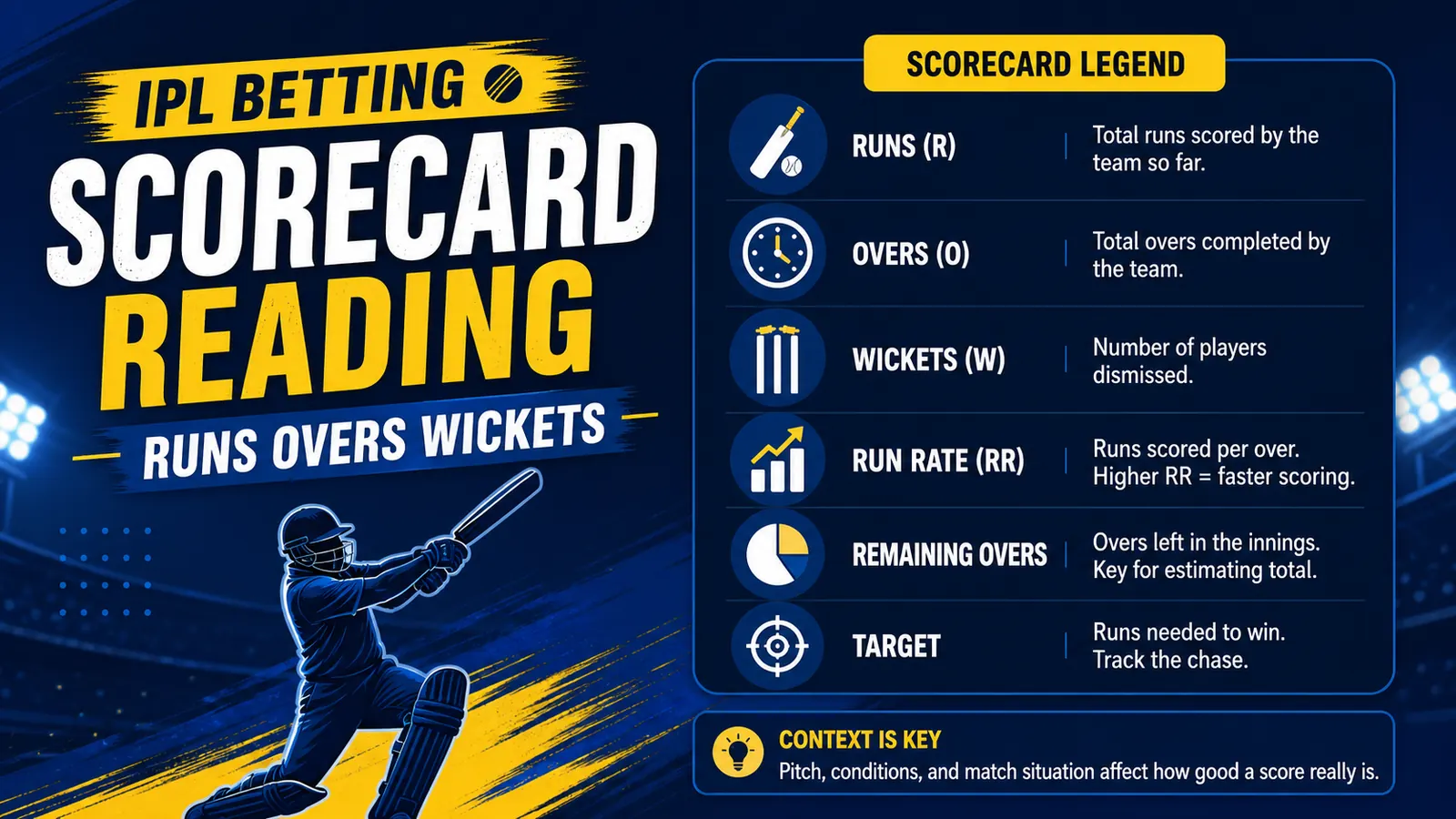
| Scorecard field | Meaning | Context question |
|---|---|---|
| Runs | Total runs scored | How many overs were used? |
| Wickets | Dismissals recorded | Which batting resources remain? |
| Overs | Balls completed in overs format | How much time is left? |
| Run rate | Runs per over | Is it rising with wickets or falling? |
Read Batting and Bowling Together
The batting table shows who made the runs and how many balls they used. The bowling table shows overs, runs conceded, wickets, and sometimes economy. Neither table is complete on its own.
A batter’s score can reflect time at the crease, while a bowler’s economy can reflect field, phase, and match state. Use the figures to ask a question about the next phase.
| Pair of fields | What it reveals | Avoid |
|---|---|---|
| Runs + balls | Scoring tempo | Calling a high score alone “good” |
| Wickets + overs | Resources and time | Ignoring the phase |
| Bowler overs + economy | Control and usage | Assuming all overs were equal |
| Partnership + wickets | Stability of the innings | Missing a turning point |
Use Partnerships as Context
A partnership can show whether the innings is rebuilding, rotating, or attacking. Check when it began, how many wickets remain, and which bowlers are operating.
Partnership size is not a guarantee of the next phase. A new bowler, a field change, or a wicket can alter the balance quickly.
Read the Situation Before the Number
The same run rate can describe a controlled chase, a risky recovery, or a score that needs a late surge. Add the target, overs remaining, wickets, and current pair before interpreting it.
A scorecard is strongest when it helps you describe the match clearly. It is weakest when one number is made to carry the whole story.
FAQ
What does “overs” mean on an IPL scorecard?
It shows completed legal balls in cricket’s overs format; six legal balls make one over, subject to match rules.
Why read wickets with run rate?
Wickets show the batting resources left, so the same run rate can carry different pressure.
What is a partnership?
It is the runs added by the two batters between wickets, giving context about stability and phase.
Can a scorecard predict the result?
No. It records the current state; conditions, roles, remaining overs, and match events still matter.
Source and update note: This evergreen guide should be checked against current official match information, published competition rules, and the exact market terms shown by your chosen platform before you act.
Related Reading
- IPL Run Chase Betting Guide ↗
- IPL First Innings Betting Guide ↗
- IPL Stats for Betting Guide ↗
- IPL Partnership Markets Guide ↗
Take a pause when a material input is unconfirmed or a market rule is unclear. Clear information and a planned limit are more important than forcing a decision.