
Updated for July 2026: Prepared for readers in the Philippines by IPL Betting Editorial Team. Match-day lineups, injuries, venue conditions, prices, and platform rules can change quickly, so confirm current details before you act.
This article is written as a decision guide, not a promise of results. If the reason for the bet is unclear after lineups and price checks, skipping the market is still a valid choice.
Venue notes are useful because they help you read the number through the ground rather than through team names alone. They become less useful when readers treat one old scorecard or one pitch label like a fixed law.
For IPL readers in the Philippines, the better habit is to use venue as a filter. Check what the ground changes about the market, then decide whether the number still makes sense in today’s match.
Quick Answer
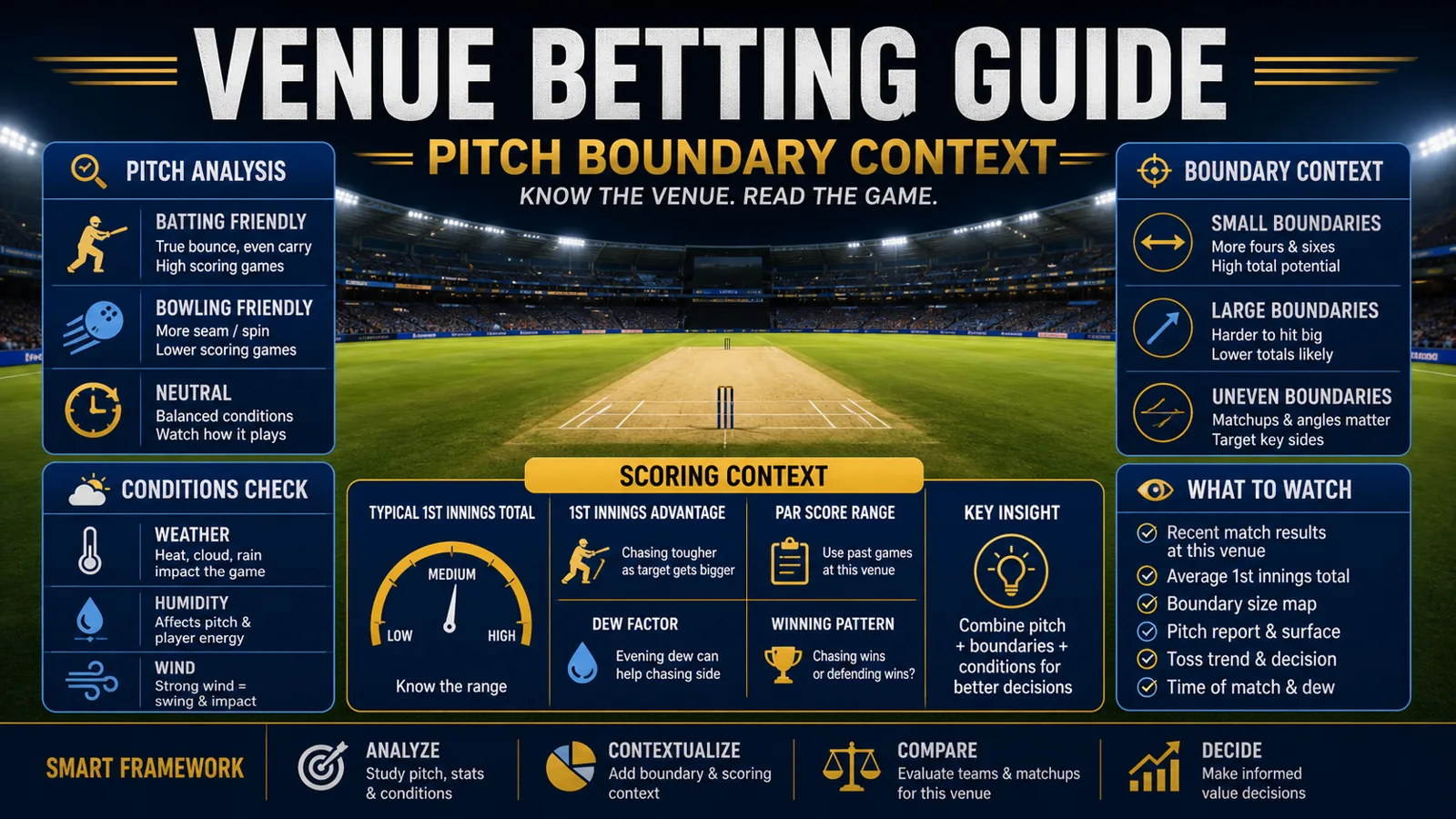
An IPL venue matters because it changes scoring pace, boundary value, bowling comfort, and chase pressure. It does not decide the result by itself.
Use venue as one of the first filters before a bet. The ground should help you judge the line, not replace lineup, role, toss, and price discipline.
What a Ground Actually Changes
Ground notes are most useful when they connect directly to a market. A short boundary can change a total runs line differently from the way a tacky surface changes a wickets market.
| Venue Factor | Why It Matters | Market Impact |
|---|---|---|
| Pitch pace | Changes timing, grip, and shot quality. | Affects totals and phase scoring. |
| Boundary size | Changes the reward for aerial hitting. | Can shift runs and boundary markets. |
| Dew tendency | Changes grip and chase comfort later. | Matters for second-innings reads. |
| Surface wear | Can slow the middle overs or reward cutters. | Useful for wickets and tempo markets. |
Venue Context Still Needs Match Context
A high-scoring ground can still produce a lower total when lineups are weak, bowling roles are sharp, or early wickets change the innings shape. The ground is part of the read, not the whole read.
That is why one old venue headline should be tested against today’s batting depth, toss pressure, and current market line before the venue story becomes a betting reason.
Venue Worksheet
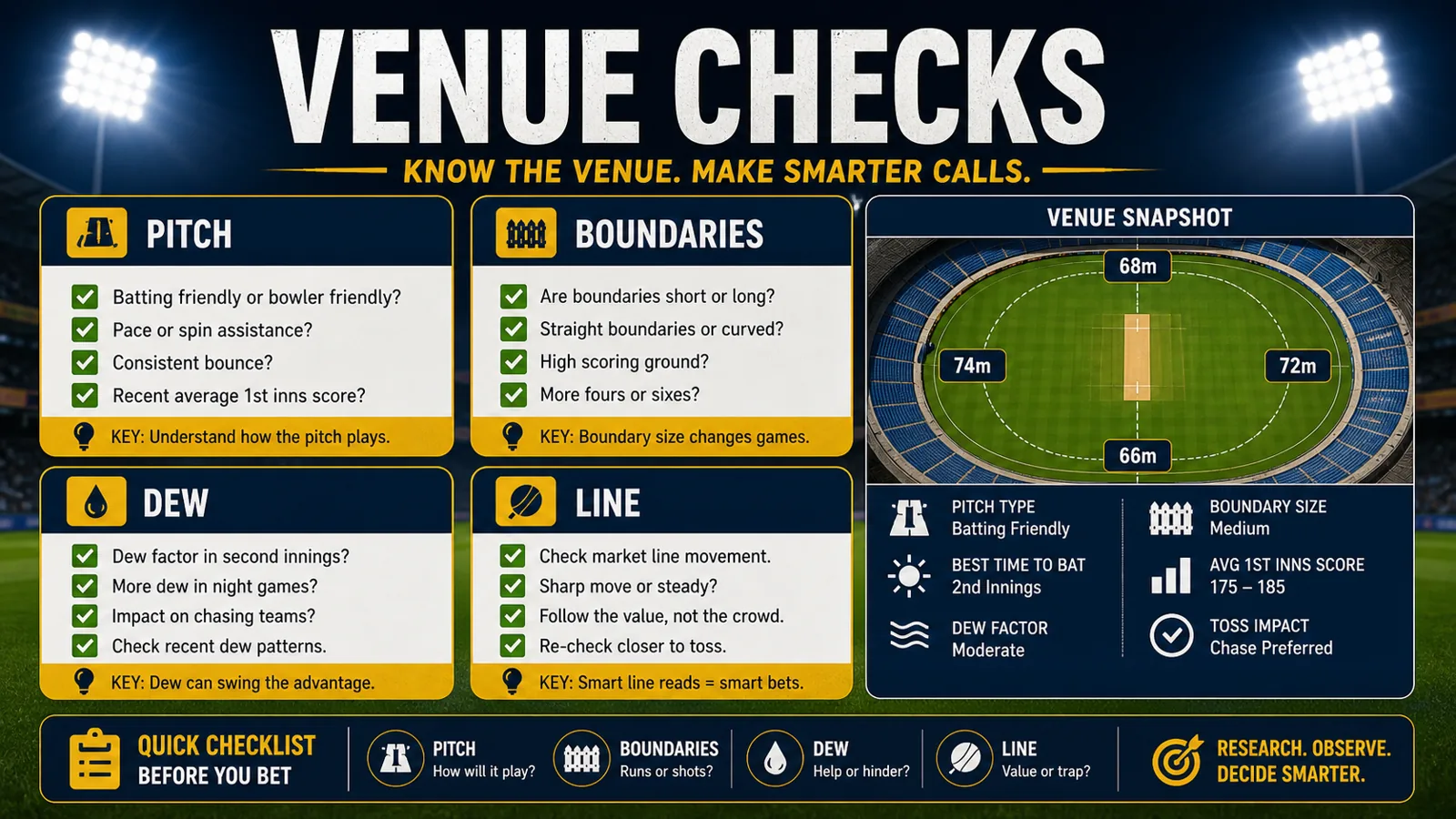
Use this worksheet before you let a ground note influence the price.
| Check | Question | Action |
|---|---|---|
| Pitch pace | Does the surface still support the scoring label people are using? | Avoid copying an old pitch label without today’s context. |
| Boundary value | Does this ground reward the kind of hitters in the match? | Tie the venue note to actual lineup roles. |
| Dew risk | Could the second innings play differently after sunset? | Recheck chase ideas after the toss. |
| Market line | Did the book already adjust for the venue story? | Pass if the number already absorbed the obvious angle. |
| Recent evidence | Am I leaning on one old result too heavily? | Use a small set of relevant examples, not just one memory. |
When Venue Notes Get Overused
Venue notes get overused when readers treat a ground like a brand instead of a condition. Terms like batting paradise or spin track become less useful once they are repeated without checking the actual match setup.
If the venue story feels stronger than the lineup, toss, and price story combined, it is probably doing too much work.
Pair Venue with the Right Market
A venue note should point you toward the right market, not push you toward every market. Some grounds help total runs, others help phase scoring or wickets, and some only change the value of the price slightly.
The smarter question is not whether the venue matters. It is where the venue matters most in the market board you are reading.
Post-Match Review
After the match, check whether the venue note actually explained what happened or whether the result turned more on lineup quality, wickets in hand, or execution.
That review keeps venue talk useful and stops it from turning into shorthand for certainty.
Source and Update Note
This July 2026 refresh keeps the article focused on IPL venue betting guide, match-day process, and risk-aware decision making for IPL readers.
Readers should still verify current team news, line movement, match conditions, and the house rules shown on their chosen platform before placing any bet.
FAQ
Why do IPL venues matter for betting?
They change scoring pace, boundary value, bowling comfort, and chase pressure, which can shape how a market line should be read.
Should one old venue result change my bet?
Not by itself. Test the old result against today’s lineups, toss context, and market number before you decide.
Does dew always change a venue read?
Not always. Dew is important when it actually affects grip and chase comfort, so it still needs confirmation on match day.
What is the biggest venue-betting mistake?
Treating a pitch label or one old scorecard as the full answer instead of pairing the ground note with the market you want to read.
Which markets use venue notes best?
Total runs, phase scoring, and some wickets markets usually benefit most when the venue note is tied to today’s line and lineup.