
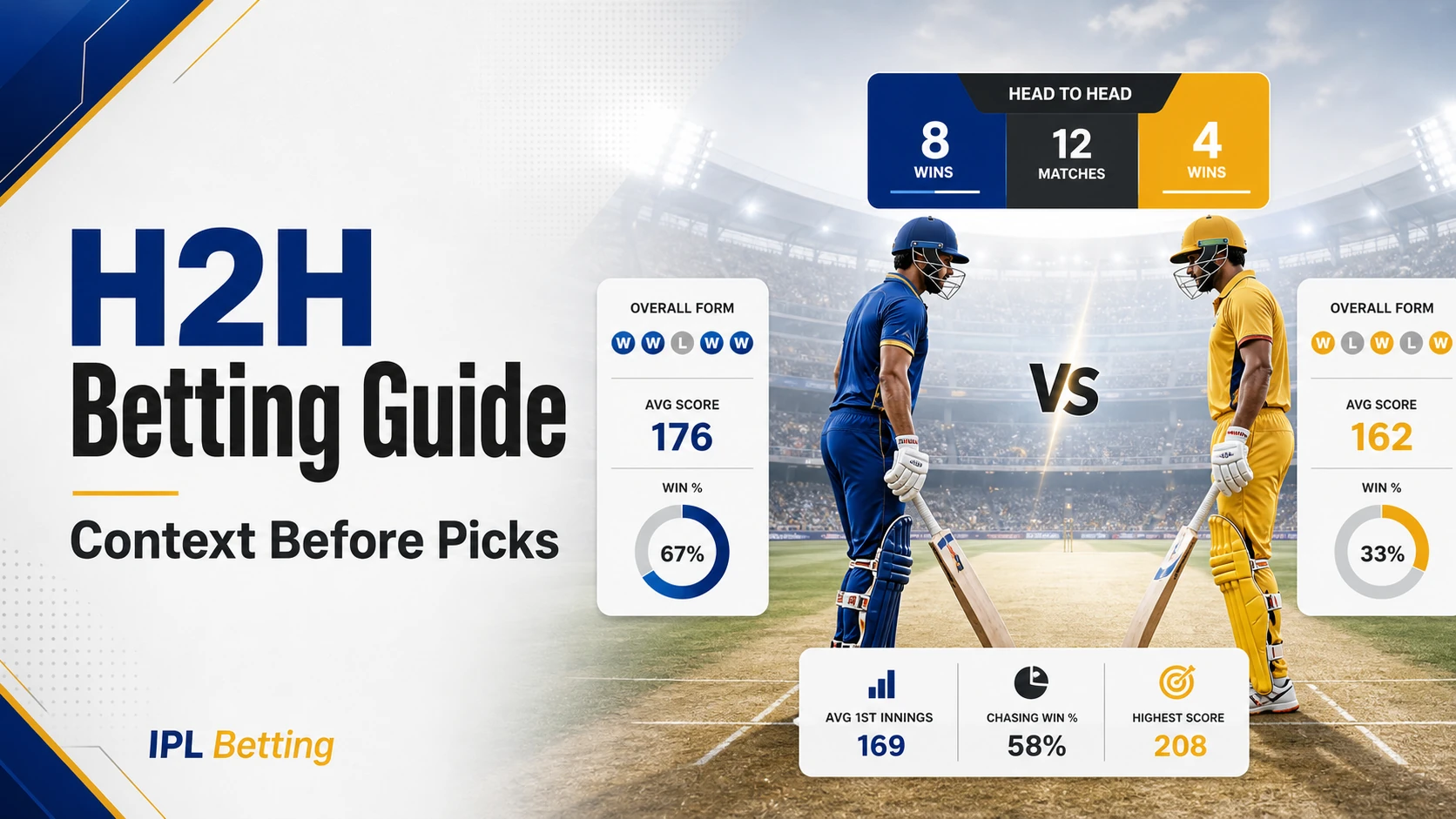
Updated for July 2026: This guide is written for readers in the Philippines. Use head-to-head notes as part of a match study, then check confirmed XIs, venue conditions, price movement, and house rules on your platform before you place anything.
Quick Answer
A head-to-head record becomes useful only when it still overlaps with the next match. If the core batting roles, bowling phases, and venue conditions look similar, the history may carry weight. If those pieces changed, the record is mostly background noise.
The sharper question is not who leads the rivalry. It is which part of that rivalry still survives into tonight's market. That keeps you from paying a short price for an old story.
What an H2H Record Is Really Measuring
Some H2H notes are just win-loss counts. Others describe a repeatable problem, such as one team struggling against leg-spin in the middle overs or leaking runs at the death against the same batting core. The second type is far more useful because it gives you something to test on match day.
Before you trust the record, compare it with the role-based numbers in our IPL stats guide. If the players responsible for the old pattern are no longer in the same jobs, the headline record can sound stronger than it really is.
| H2H Signal | Why It Can Matter | What Can Break It |
|---|---|---|
| Same opening pair versus the new ball | Early overs tempo and dismissal pattern may repeat. | A new opener or powerplay bowler can reset the matchup. |
| Same venue dimensions | Boundary value and chase tempo stay closer. | A different surface preparation or weather shift changes scoring. |
| Same finisher profile | Death-over pressure can stay familiar. | A batting-order shuffle or injury removes the old edge. |
| Same spin or pace balance | Middle overs pressure may look similar again. | Toss and dew can force a different bowling plan. |
When Old Meetings Still Matter
Older meetings still matter when you can point to a living matchup, not just an archived result. If the same left-hand pair still faces the same off-spin problem, or the same death bowlers still protect the final overs, then the history has a real bridge to the present.
Venue overlap matters too. A record built on slow, gripping surfaces should be treated differently from a record brought into a flatter night game. If dew is likely, compare the note with our dew and weather guide before using any chase angle.
Team Record Versus Player-Duel Notes
A team record tells you who won more often. A player-duel note tells you where the pressure may appear inside the match. For IPL betting, the second layer is often more useful because markets move on overs, totals, wickets, and player roles, not just the final result.
For example, a team may trail the full rivalry record but still hold a live edge if its current top order attacks one weak bowling phase, or if a death specialist keeps removing a familiar finisher. That detail travels better into match-winner, runs, and wickets markets than a simple rivalry line.
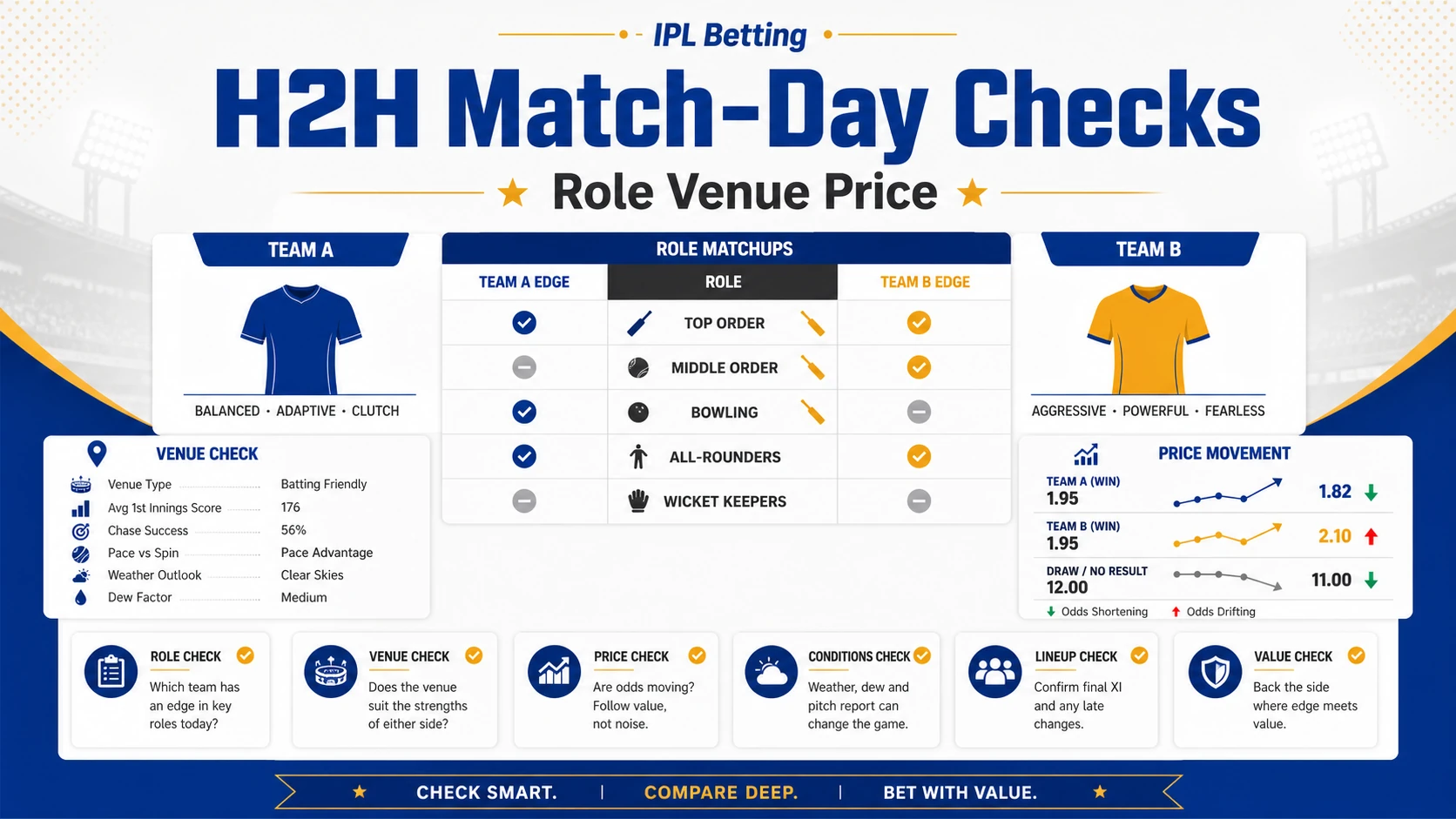
Match-Day Worksheet for Filipino Readers
Write a short note before the toss and a second note after the XI is confirmed. The goal is to keep the H2H angle connected to today's version of both teams.
| Check | What to Ask | Why It Matters |
|---|---|---|
| Role overlap | Are the main batters and death bowlers from the old meetings still in comparable jobs? | Without role overlap, the record loses shape. |
| Venue fit | Is this ground likely to produce the same scoring tempo or bowling value? | The same rivalry behaves differently on different surfaces. |
| Toss pressure | Does chasing or batting first still look important in this matchup? | Toss can change how much the old record means. |
| Price context | Did the market already shorten because the H2H story is obvious? | A correct idea can still be expensive. |
| Lineup surprise | Did a replacement player change one key phase? | One change can invalidate a familiar trend. |
If two of these five checks fail, downgrade the H2H note. If three fail, treat it as background only.
Many readers find it easier to make that call inside a repeatable IPL betting daily routine instead of rebuilding their process after the toss.
When the Market Has Already Priced the Story In
The market often reacts fast to a clean rivalry headline. If one team has beaten the other repeatedly, that information is rarely hidden. The real question is whether the price still leaves room for your view.
That is why head-to-head notes should be read beside the number, not ahead of it. Use the framework in how to read IPL odds to judge whether the line moved on reputation, lineup news, or a real matchup edge.
Pre-Match Versus Live Use
Pre-match, H2H is best used as a filter. It helps you notice repeat patterns before the toss, especially when the same bowling phase or venue habit keeps returning.
Live, the bar should be higher. Once the match starts, wickets in hand, pace of the surface, and over-by-over changes usually tell you more than the old rivalry count. If you are looking at changing totals, compare the live picture with our IPL over-under runs guide rather than leaning on history alone.
Common H2H Mistakes
Most weak H2H reads fail for the same reason: the record is treated like a result instead of a clue. This table shows where the breakdown usually starts.
| Mistake | Why It Hurts | Better Move |
|---|---|---|
| Using full-history wins only | Old squads can inflate confidence. | Start with recent role overlap and current phases. |
| Ignoring price | A fair angle can become poor value. | Compare the story with line movement before acting. |
| Confusing team trend with player market | Team wins do not guarantee player output. | Map the note to a specific market and role. |
| Skipping venue and dew checks | Rivalry patterns do not always travel. | Retest the note against current conditions. |
| Forcing a bet because the pattern feels familiar | Comfort can replace discipline. | Pass when the current match does not confirm the story. |
If you cannot explain the H2H note in one sentence that mentions role, venue, or price, it is probably too thin to carry a bet.
Post-Match Review
After the match, write down what actually decided the angle. Did the old rivalry matter, or did the result turn on selection, powerplay wickets, or one death-over swing? The answer sharpens the next note more than collecting extra trivia.
That review habit also helps separate repeatable matchup edges from memorable but one-off scorecards.
FAQ
Are IPL head-to-head records enough to pick a side?
No. Use them with lineups, venue, toss, and price context before you make a decision.
What part of an H2H note is usually most useful?
The part that still matches the current roles, bowling phases, and ground conditions.
Should I trust a long-term rivalry record?
Only after checking whether the teams still share the players and conditions that created it.
Can head-to-head data help live betting?
Only lightly. Once the match starts, current overs, wickets, and surface behavior usually matter more.
When should I skip an H2H angle completely?
Skip it when the lineup changed sharply, the venue context is different, or the price already absorbed the story.